Brother vs Singer for Beginners: Sewing Machine Guide
In-depth, data-driven comparison of Brother and Singer sewing machines for beginners. Learn features, usability, warranty, and which brand suits your learning style, with practical buying tips from Sewing Machine Help.


For beginners, both Brother and Singer deliver reliable entry-level options with friendly setups and broad support. Brother often leans into modern conveniences and quick-start features, while Singer emphasizes straightforward stitch options and broad availability. Sewing Machine Help recommends you choose based on how you learn best, your local service options, and the tasks you plan to tackle first.
Why the Brother vs Singer debate matters for beginners
Choosing between Brother and Singer as a starter sewing machine is more than a brand preference. The first machine you own shapes your learning curve, confidence, and long-term enjoyment of sewing. A beginner-friendly model from either brand typically includes guided threading, simple stitch selection, and a supportive community of users. According to Sewing Machine Help, the right starting point is less about logo and more about how approachable the machine feels in your hands, the ease of setup, and the availability of local service. You’ll also want to consider parts availability, price breadth, and the learning resources each brand offers. The goal is to reduce frustration and encourage steady practice so you can build skills quickly and safely.
Core design philosophy: Brother vs Singer
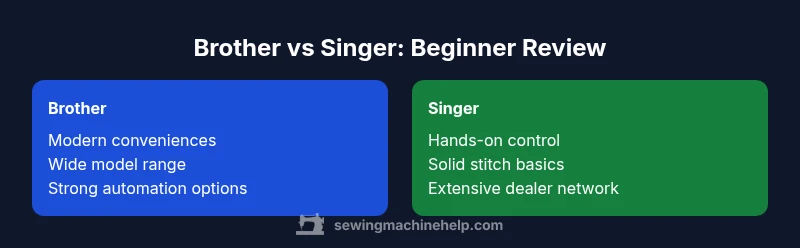
Brand design philosophy informs how a machine behaves out of the box. Brother machines for beginners often prioritize modern conveniences like automatic needle threading, jam-resistant bobbins, and compact footprints for smaller spaces. They frequently include guided help via LCD prompts or intuitive dials to ease first-time users into more complex stitches later. Singer models tend to emphasize classic, straightforward operation with clear stitch options, robust manual controls, and a wide dealer and service network. The contrast isn’t about one being superior; it’s about which approach aligns with your learning style, room setup, and comfort with manuals and on-device prompts.
Beginner-friendly features to compare
Key features to evaluate when you’re shopping:
- Automatic needle threader and reverse stitching to speed up setup and tangling-free beginnings.
- Drop-in bobbin design for easy threading and fewer jams.
- Presser foot pressure control, slip-resistant feet, and simple buttonhole options.
- Onboard stitch library and clear labeling to help you plan projects without confusion.
- Space for larger spools and accessible threading paths that reduce frustration for new users.
- Learning aids such as built-in beginner projects, helpful diagrams, and in-box instructional materials.
Both brands offer models with these essentials, but Brother often expands automation and display features, while Singer frequently emphasizes tactile controls and consistent stitch quality. Your choice should reflect how you prefer to learn: guided tech vs. hands-on control.
Stitch quality, tension, and consistency for novices
Stitch quality and consistent tension are the backbone of successful beginner projects. In many entry-level machines from both brands, you’ll notice the following:
- Even stitches with adjustable length and width, which help beginners master seaming and hem work.
- Stable tension dials that are easy to adjust without extensive trial-and-error.
- Consistent feed dogs action to prevent skipped stitches or fabric snags during practice.
- Noise levels and vibration dampening, which affect comfort during longer sewing sessions.
Brand differences may show up in how quickly you can adjust tension for different fabrics. Brother models tend to respond smoothly to subtle tension adjustments, while Singer machines often provide crisp, predictable results across a range of fabrics, especially when starting with lighter-weight textiles.
Build quality, reliability, and support network
Durability and reliable support are critical for beginners who will practice regularly. Look for:
- A sturdy frame and smooth mechanical components that resist misalignment with frequent use.
- Accessible service networks and widely available parts through local retailers.
- Clear warranty terms covering labor and parts for a reasonable period.
- Comprehensive user manuals and online tutorials from reputable sources.
Both Brother and Singer have broad support ecosystems, with dealer networks and online communities guiding new sewists through common setup challenges and basic repairs. Consider proximity to a service center, the ease of finding replacement parts, and the availability of instructional content when evaluating models.
Usability and learning curve for beginners
The learning curve isn’t only about features; it’s about how naturally a machine fits into your routine. Important usability considerations:
- Front-load vs. top-load bobbin access and whether it minimizes hand awkwardness during threading.
- Foot pedal sensitivity and the availability of variable speed to accommodate beginners who start slowly.
- LCD display clarity or intuitive dials that reduce guesswork on stitch selection.
- In-box projects and guided tutorials that reinforce technique while you learn.
Brand differences affect the initial confidence you gain. Brother’s additional automation can reduce setup time, while Singer’s strong manual controls can empower learners who prefer tactile feedback and direct control over every stitch. Both paths support steady progress with consistent practice.
Warranty, service, and community resources
A strong warranty and easy access to service can make a big difference in your early experience. Consider:
- Length and scope of warranty covering parts and labor.
- Availability of repair centers within a reasonable driving distance.
- Online communities, video tutorials, and user forums that provide troubleshooting help for beginners.
- Availability of compatible accessories and compatible parts across models.
Sewing Machine Help emphasizes that long-term success for beginners comes from choosing a brand with reliable support channels and an active user community. This reduces downtime and helps you keep momentum when tackling new projects.
Real-world scenarios: when each brand shines
Understanding typical use cases can clarify what to expect from Brother vs Singer in real life:
- Quick-start projects and small projects like buttons, simple hems, and basic alterations often benefit from models with automatic threading and quick-stitch options.
- Beginner quilting or embroidery attempts may be better served by machines offering a wider stitch library and reliable feed mechanisms.
- Space constraints in a shared room or apartment favor compact, lightweight models with straightforward setup.
If you’re a first-time sewist focused on learning basic techniques, test both brands in-store to compare how their controls feel in your hands, how loud the machines run, and how quickly you can complete a simple project. Your comfort during initial practice matters as much as the features themselves.
How to choose: a practical decision guide
Before purchasing, run through a practical decision checklist:
- Define your first 3 project types (e.g., hems, tote bags, simple garments).
- Compare machines that have automatic threading, easy bobbin loading, and clear stitch labeling.
- Assess local support: find nearby service centers and authorized dealers for each brand.
- Consider price ranges for entry-level models and what’s included in the package (accessories, beginner guides, warranty).
- Try both machines in-store to gauge how it feels on fabric and your preferred learning style.
With these steps, you’ll align your choice with your goals and reduce the risk of buyer’s remorse, setting a solid foundation for future sewing skills.
Comparison
| Feature | Brother | Singer |
|---|---|---|
| Target user | Brand with quick setup and modern conveniences for beginners | Classic, straightforward operation with broad dealer network |
| Beginner-friendly features | Automatic needle threader, drop-in bobbin, guided prompts | Clear stitch options, simple controls, accessible support |
| Stitch variety and control | Wide library including utility/decorative stitches, adjustable length | Solid selection of basic stitches with clear labeling and control |
| Build quality & reliability | Modern chassis, consistent performance across models | Durable mechanical design with broad service network |
| Price range (entry-level) | $150–$500 for beginner models | $100–$400 for beginner-friendly models |
| Warranty & support | Extensive dealer network and online resources | Comprehensive warranty options and repair support |
| Best for | Learners who value automation and quick starts | Learners who prefer tactile controls and straightforward stitching |
Strengths
- Strong beginner-ready features from both brands
- Extensive customer support and online resources
- Wide dealer networks for easy access
- Good resale value due to brand recognition
Negatives
- Model variance within brands can confuse beginners
- Repair costs may vary by model
- Some lower-end models may lack advanced features
Both brands serve beginners well; pick based on learning style and local support
Choose Brother if you value modern conveniences and quick-start features. Choose Singer if you prefer tactile controls and a straightforward set of basic stitches; ensure local service availability supports your choice.
Your Questions Answered
Is Brother better for beginners than Singer?
Both brands offer solid beginner options. Brother may feel more modern and automated, which helps new sewists who want quick results. Singer often appeals to learners who prefer tactile control and straightforward stitches. Your choice should align with how you learn and your local support options.
Both brands work well for beginners. If you like automation and quick setup, choose Brother; if you prefer direct control with simple stitches, choose Singer.
Which brand has more stitch options for starters?
Singer generally provides a broad range of stitches in its beginner line with a focus on dependable utility stitches, while Brother often adds decorative and specialty stitches in newer entry models. Consider what projects you anticipate and pick accordingly.
Singer tends to emphasize a wide set of basic stitches; Brother adds decorative options in newer beginner models.
Is the learning curve steeper with Singer or Brother?
The learning curve depends on the model rather than the brand. Brother’s newer models may feel more guided due to automation, while Singer’s controls can be more tactile for hands-on learners. Test both to find which interface you prefer.
It varies by model: Brother can feel guided by automation, Singer often offers straightforward manual controls.
What should I consider about warranties?
Look for at least a one- to two-year warranty covering parts and labor, available local service, and easy parts replacement. Brand reputation and service networks influence how smoothly issues are resolved for beginners.
Check the warranty length, what it covers, and whether local service centers are nearby.
Can I upgrade later without changing brands?
Yes. Both brands offer broader model families with progressive features. If you start with a beginner model, ensure the line you choose has compatible accessories and a smooth upgrade path within the same brand.
You can upgrade within the same brand to higher features; confirm accessory compatibility.
Where can I find the best resources for beginners?
Start with manufacturer manuals, official support pages, and local sewing communities. You’ll also find beginner-friendly tutorials, troubleshooting guides, and project ideas from Sewing Machine Help and trusted educational sites.
Check manuals, official support, and community forums for beginners.
The Essentials
- Evaluate beginner-friendly features first, then stitch options
- Check local service centers before buying
- Test both brands in-store for feel and noise
- Choose a model with strong learning resources