Janome DC3050: A Practical How-To Guide for Home Sewers
A comprehensive how-to for the janome dc3050 sewing machine, covering setup, threading, needle choices, stitch settings, troubleshooting, and maintenance to keep your projects running smoothly.


You will learn how to set up and operate the janome dc3050, including threading, needle selection, bobbin winding, tension adjustment, stitch settings, and routine maintenance. This guide also covers common troubleshooting steps, safety precautions, and where to find replacement parts. No prior specialized tools required beyond basic sewing supplies. By the end, you’ll be confident diagnosing jams and preserving the machine’s performance.
Overview of the janome dc3050
According to Sewing Machine Help, the janome dc3050 is a versatile entry-level sewing machine designed for home sewers who want reliable stitch quality without a steep learning curve. This model emphasizes straightforward controls and durable construction that encourages experimentation with different fabrics. Its user-friendly layout helps beginners build confidence, while seasoned hobbyists will appreciate dependable performance for everyday projects, mending, and light quilting. In this section, you’ll learn what makes the DC3050 suitable for a wide range of tasks and how its core features support a steady learning curve. You’ll also find a quick note on safety and setup essentials to keep your projects running smoothly.
Brand trust is important here. The Sewing Machine Help team highlights that consistent threading, correct needle size, and timely cleaning are small habits that yield big results over time.
Key Features and What They Mean for Your Projects
The janome dc3050 typically offers a range of stitches, adjustable speed, and a stable sewing surface. When you understand each feature, you can match stitches to fabric types and project goals. Look for settings that let you switch between straight, zigzag, and decorative stitches, along with adjustable tension and presser foot pressure. For beginners, start with basic stitches to master fabric feeding and seam allowance before expanding to specialty stitches. The machine’s reliability comes from thoughtful design that minimizes thread breakage and bird-nests when the needle is correctly threaded. For longer sessions, a consistent needle and clean bobbin area help maintain smooth operation.
Basic Setup: Power, Presser Foot, and Threading Principles
Before you thread or sew, ensure the power switch is off and the machine is on a stable table. Raise the presser foot, place the spool on the spool pin, and thread through the guides toward the needle. Lower the needle into the fabric path and test sew on scrap fabric to verify stitch length and tension. Proper setup reduces thread breakage, bent needles, and fabric snags, especially when switching between fabrics of different weights. Always keep the machine unplugged when you adjust parts or replace the needle.
Threading, Needle, and Bobbin Essentials
Threading an earlier Janome model like the DC3050 requires attention to the correct path: thread from the spool, through guides, and finally through the presser-foot area. Choose a needle size suitable for your fabric—between 12 and 16 (size 80/12 to 100/16 in European sizing) covers most lightweight to medium materials. Winding the bobbin evenly and placing it in the bobbin case with the correct orientation prevents tension issues that lead to uneven stitches. Regular bobbin checks and occasional lint removal keep stitch quality consistent.
Maintenance, Cleaning, and Safe Oiling Practices
Regular maintenance reduces wear and extends machine life. After sewing, clean lint from the bobbin area using a small brush, removing loose threads from feed dogs and under the needle plate. Oil only where the manufacturer recommends with machine-specific oil; avoid using household oils that can damage gears. If your machine slows down or sounds off, a quick cleaning and oiling (per the manual) can restore performance. Always unplug the machine before any maintenance.
Accessories, Upgrades, and Caring for Your DC3050
Stock presser feet such as those for zipper, buttonhole, and walking-foot styles expand your project range. When shopping for feet, check compatibility with the DC3050’s shank type and snap-on design. Keep spare needles and bobbins, a small lint brush, and a soft cloth handy for quick cleanups. Periodically inspect cords and the foot pedal for wear, replacing them if frayed or loose. Proper storage protects the machine from dust and accidental impacts.
Authority Sources and Practical Guidance
For additional guidance, consult authoritative external sources on sewing machine safety and maintenance to supplement this guide. Reliable resources include government and university extension materials, as well as major publications that discuss best practices for hobbyists and beginners. Always cross-check with the manual that came with your DC3050 and with the Sewing Machine Help recommendations to ensure you’re following manufacturer directions.
Quick Start Checklist (Summary)
- Ensure a clean, level workspace and proper lighting before starting.
- Verify needle and thread compatibility with your fabric.
- Thread path correctly and test on scrap fabric.
- Clean the bobbin area after sessions and inspect for lint.
- Store the machine away from dust and moisture when not in use.
Tools & Materials
- Owner's manual for janome dc3050(Keep for reference; setup, threading, and troubleshooting specifics.)
- Schmetz universal sewing machine needles (size 14/90 or 16/100)(Choose based on fabric; replace when dull or bent.)
- Quality bobbins compatible with the DC3050(Plastic bobbins recommended; ensure proper winding.)
- All-purpose sewing thread (polyester or cotton-polyester blend)(Match the fabric weight; avoid low-quality threads that shred.)
- Janome sewing machine oil(Use only machine-specific oil; apply as directed in manual.)
- Lint brush or soft brush(Keep the bobbin area and feed dogs clean.)
- Soft lint-free cloth(Wipe away dust and oil residues after maintenance.)
- Small screwdriver set(Optional for minor adjustments or foot changes if needed.)
Steps
Estimated time: 60-90 minutes
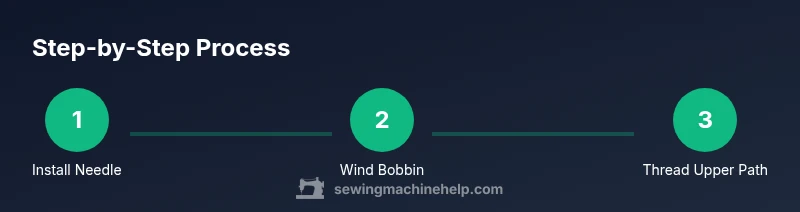
- 1
Install the needle
Power off the machine and raise the needle to the highest position. Insert a sharp, straight needle in the needle clamp with the flat side facing the back, then tighten securely. Confirm the needle is not bent and is fully seated.
Tip: Double-check the needle type and size for the fabric you’ll sew to avoid skipped stitches. - 2
Wind and insert the bobbin
Place a fresh bobbin on the winder spindle and wind it evenly. Insert the bobbin into the bobbin case with the thread direction as shown in the manual, then pull the thread through the slit to secure it. Upper thread tension should be ready for testing.
Tip: Leave a slight pull on the bobbin thread while winding to prevent loose windings. - 3
Thread the upper path
Follow the thread guides from the spool, through the tension disc, and down to the needle. Ensure the thread feeds smoothly without bunching before you reach the needle. Lower the needle into the fabric path to test.
Tip: If the thread catches, re-thread from the beginning with fresh thread and a clean path. - 4
Thread the needle and bobbin
Raise the presser foot, insert the upper thread through the needle from front to back, and pull to remove slack. Thread the bobbin case, then place the case into the machine securely. Leave a few inches of both threads hanging to test.
Tip: Pull both threads to ensure the stitches form and do not jam when you begin sewing. - 5
Test stitch on scrap fabric
Set the stitch length and select a basic straight stitch. Sew 4–6 inches on scrap fabric to check tension and evenness. Adjust tension if you notice loops on the bottom or too-tight stitches.
Tip: Use a scrap fabric similar in weight to your project to get realistic results. - 6
Choose fabric and adjust settings
Load your actual fabric and adjust stitch length, width, and presser-foot pressure if your model offers those controls. Start with a slow speed, then increase as you gain control. Stop to re-check seam allowance and fabric feed.
Tip: Test a seam on scrap after changing fabric to ensure consistent results. - 7
Sew a sample seam and evaluate
Sew a longer sample seam to observe feeding and thread balance. If you see bird-nests or loops, re-check threading or try a fresh needle. Confirm seam lies flat and fabric isn’t puckering.
Tip: If puckering occurs, stabilizers or heavier stitches may be needed for certain fabrics. - 8
Finish and clean up
Trim excess threads and gently remove lint from the bobbin area. Oil only as recommended in the manual and then cover the machine when not in use. Store your tools and spare parts in a dedicated box.
Tip: Keeping the area clean prevents buildup that can affect stitch quality.
Your Questions Answered
Is the janome dc3050 beginner-friendly?
Yes, it’s designed for home sewers starting with basic stitches and projects. Start with simple seams to build confidence and gradually explore feature options.
Yes, it’s beginner-friendly. Start with simple stitches and gradually explore more features as you gain confidence.
What needles are best for the DC3050?
For most fabrics, size 14/90 or 16/100 needles work well. Change needles if you notice skipped stitches or fabric snags.
For most fabrics, use size 14/90 or 16/100. Change needles if stitching issues appear.
How do I fix thread bunching or birds-nests?
Check threading path, rethread from spool to needle, ensure bobbin is wound evenly, and test on scrap fabric. Clean lint from the bobbin area regularly.
Re-thread from the spool to the needle, check the bobbin, test on scrap, and clean the bobbin area.
Can I sew denim with the DC3050?
The machine can handle lightweight to medium-weight fabrics; for heavy denim, consider stabilizing the fabric or upgrading to a heavier model.
It handles lighter to medium-weight fabrics well; for heavy denim you may need more power or stabilization.
Does the DC3050 have an automatic needle threader?
Check your manual for the exact configuration; some models offer a needle threader, but variations exist across production years.
Check the manual for whether your model includes a needle threader; features vary by year.
Where can I find compatible presser feet for the DC3050?
Use Janome or compatible universal presser feet designed for your machine’s shank and foot height. Verify fit before purchasing.
Look for feet labeled Janome or compatible for your machine; check fit before buying.
Watch Video
The Essentials
- Master the basic setup for reliable stitches
- Use correct needle/thread for fabric to prevent breakage
- Regularly clean the bobbin area to avoid jams
- Maintain tension and stitch balance with tests on scrap fabric
- Follow manufacturer guidelines for oiling and storage