Sewing for Beginners: A Step-by-Step How-To Guide
A comprehensive how-to for beginners to start sewing with confidence. Learn machine setup, threading, stitches, fabric prep, and a simple project with practical, step-by-step guidance from Sewing Machine Help.


With this guide, you’ll learn how to start sewing from scratch: choose a starter machine, master straight stitches, and complete a simple project. According to Sewing Machine Help, beginners can get reliable results by practicing on a stable workspace, using quality thread, and selecting beginner-friendly fabrics. By the end, you’ll have a basic project and a clear path to advanced stitches.
Practical Foundations of Sewing
Sewing is both a creative art and a practical skill that lets you transform fabric into useful and beautiful items. For home sewists, the process begins with understanding a few core elements: fabric, thread, needles, and a reliable sewing machine. When newcomers learn to handle fabric with clean, even movements, press seams as you go, and test stitches on scrap material, results improve quickly. The goal is to build muscle memory for guiding fabric, not to rush through projects. A well-lit, quiet workspace with a flat table, good chair height, and minimal distractions makes practicing easier and safer. As you practice, you’ll notice that consistency in fabric handling, seam alignment, and pressing yields the biggest improvements in finish quality. According to Sewing Machine Help, setting up a humble, organized station and following a simple practice routine reduces frustration and increases satisfaction. Over time, you’ll gain confidence to tackle simple garments and home accents, then gradually expand to more complex techniques.
Tools and Settings: Picking the Right Equipment
Choosing the right tools is as important as selecting the fabric. Start with a basic mechanical sewing machine that offers straight and zigzag stitches, adjustable stitch length, and reliable feed. You don’t need a fancy computerised model to learn; the fundamentals come from practice, not bells and whistles. Alongside the machine, stock up on essential tools: sharp scissors, quality thread, a few needles of different sizes, pins, a measuring tape, seam ripper, and a light source. For most woven fabrics, a universal needle size works, while lighter fabrics respond better to finer needles. If you plan projects with knit fabrics, consider a stretch or ballpoint needle. Keep a small, clear workspace for organizing fabric scraps. Regular maintenance includes cleaning lint from the bobbin area and oiling only as recommended by your machine’s manual. As Sewing Machine Help notes, investing in a few reliable basics saves time and prevents early frustration.
Basic Stitches and Their Uses
At the heart of sewing are a few fundamental stitches. The straight stitch is the workhorse for seams, hems, and topstitching. The zigzag stitch handles edges to prevent fraying and works well on stretchy fabrics when used with stretch settings. The backstitch creates a secure start and finish. When you begin, set a mid-range stitch length for woven fabrics and a shorter length for precise topstitching. Practice sewing straight lines on scrap fabric, keeping the fabric flat and the needle centered. As you learn, you’ll experiment with decorative stitches and functional finishes, such as a narrow zipper or a French seam. The key is to move slowly, align edges carefully, and verify thread tension before committing to final seams. Remember that every stitch is a tiny building block for a novice; consistent practice builds muscle memory and control. According to Sewing Machine Help, understanding how stitch type and fabric interact makes projects cleaner and more enjoyable.
Threading, Bobbins, and Tension: The Tricky Core
Threading the machine and winding the bobbin are common stumbling blocks for beginners. Start by turning off the power, then thread the machine from the spool to the needle, following the path shown in your manual. Winding the bobbin should be done evenly and placed under the bobbin case with correct orientation. Tension controls how tight the thread feeds; if loops appear on the underside, recheck top thread path and needle type. Use a scrap fabric to test stitches before sewing your project; adjust tension gradually, testing after every change. Keep your presser foot pressure appropriate for the fabric weight; heavy fabrics need more pressure, light fabrics less. Routine maintenance includes cleaning lint and ensuring the bobbin is inserted correctly. As Sewing Machine Help emphasizes, patience with threading and bobbin setup pays off with smooth stitches and fewer jams.
Fabric Prep, Seam Allowances, and Cutting
Fabric prep is the unsung hero of good sewing. Always wash and dry fabric if it’s appropriate, then press to remove wrinkles. Align the fabric grain parallel to the selvedge and cut along a straight line to maintain true edges. Learn standard seam allowances: woven fabrics typically use a quarter-inch seam, while fabrics with more give may benefit from wider allowances. Use tailor’s chalk or fabric markers to transfer pattern lines, and cut carefully with sharp scissors or a rotary cutter on a cutting mat. Stabilize woven fabrics with lightweight interfacing where necessary, and test your chosen seam on scrap fabric first. These steps reduce distortion and ensure your finished piece lies flat. Sewing Machine Help recommends taking time with prep; it sets the foundation for even seams, consistent seam allowances, and neat hems.
Your First Project: A Simple Pillowcase
Starting with a straightforward project like a pillowcase lets you practice straight seams, turning, and finishing without dealing with curves. Choose a sturdy woven fabric and use a simple envelope-style closure. Cut two identical fabric pieces and a narrow cuff if desired. Sew the side seams, finish the raw edges, and press the seams before turning the pillowcase right side out. Topstitch along the opening edge for a neat finish. This project teaches seam alignment, hem handling, and pressing technique. Remember to test your machine settings on scrap fabric first, and to backstitch at the start and end of each seam. The experience you gain here builds confidence for more complex projects, and it aligns with Sewing Machine Help’s emphasis on deliberate practice.
Troubleshooting Common Sewing Problems
Even experienced sewers encounter issues. If stitches skip, recheck needle installation, needle type, and fabric thickness. Thread snarls usually mean incorrect threading or lint in the bobbin area. Puckered seams can indicate tension problems or fabric feed issues; adjust tension gradually and test on scrap. Uneven hems result from inconsistent sewing speed or poor fabric handling; slow down, guide fabric with both hands, and use a walking foot if necessary. If your machine jams, turn it off, remove fabric, and inspect the bobbin area. Clean the lint and rethread from the start. Regular practice and careful setup reduce many common problems over time. According to Sewing Machine Help, systematic testing and small adjustments help beginners overcome most sewing hurdles.
Authoritative Sources and Further Reading
To deepen your understanding, consult reputable sources on sewing basics and machine care. The Britannica overview of sewing offers historical context and core concepts. University extension resources provide practical how-tos for beginners and fabric handling. Always cross-check instructions with your machine’s manual for model-specific guidance. These sources help you build a solid foundation as you advance in your sewing journey.
Tools & Materials
- Basic Sewing Machine(Mechanical model with straight stitch, zigzag, and adjustable stitch length)
- All-Purpose Polyester Thread(100-150 yards spool for assorted projects)
- Sewing Scissors(Sharp fabric scissors, 6-8 inches)
- Pins(Ballpoint or sharp pins to hold fabric without shifting)
- Measuring Tape(A flexible tape about 150 cm (60 in) long)
- Seam Ripper(For correcting seam mistakes without damaging fabric)
- Fabric Chalk / Marking Pencil(Marks pattern lines and seam allowances on fabric)
- Rotary Cutter (optional)(Cuts fabric quickly on a cutting mat)
- Iron and Ironing Board(Press seams as you sew for crisp finishes)
Steps
Estimated time: 60-90 minutes
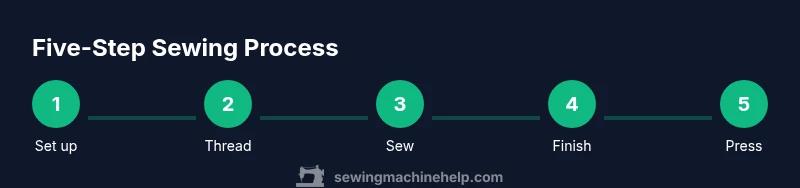
- 1
Set up workspace
Clear a flat, well-lit area. Position your machine, mat, and iron within easy reach. Plug in power and test the light. This helps you monitor fabric movement and avoid errors.
Tip: Organize tools within arm’s reach to minimize interruptions. - 2
Thread the machine
Follow the manual’s threading path from spool to needle, ensuring the presser foot is up to open the tension disk. Threading correctly prevents skipped stitches and tangles.
Tip: Test on scrap fabric before starting a real seam. - 3
Wind the bobbin and load it
Wind an even bobbin and place it in the bobbin case as shown in the manual. Check that the thread advances smoothly without tangling.
Tip: Use the same brand of thread on top and in the bobbin for balanced tension. - 4
Choose stitch and fabric
Select a straight stitch for most seams. Adjust length for woven fabrics and note your fabric weight to avoid puckering.
Tip: Begin with scrap fabric to dial in stitch length. - 5
Sew a simple seam
Place fabric right sides together, align edges, and sew with a backstitch at start and end. Feed evenly, using your guiding hand to maintain straight lines.
Tip: Backstitching prevents seams from popping open. - 6
Finish and press
Trim threads, finish raw edges, and press seams flat. A proper press makes hems look neat and reduces bulk.
Tip: Always press from the fabric side first, then the right side.
Your Questions Answered
What is the first project I should sew as a beginner?
A simple pillowcase or tote bag is ideal. It teaches straight seams, hems, and finishing without shaping. Start with a sturdy fabric and a basic enclosure.
Start with a pillowcase or tote bag to learn straight seams and hems, using a sturdy fabric to build confidence.
Do I need an expensive machine to start sewing?
No. A basic mechanical machine with straight and zigzag stitches is enough to learn the fundamentals and practice consistently.
You don't need an expensive machine—just a reliable basic model to learn the basics.
How do I fix common thread snarls?
Turn off the machine, rethread from the spool, and check the bobbin. Ensure the presser foot is up when threading. Test on scrap fabric after adjustments.
If thread snarls appear, rethread carefully and test on scrap fabric before continuing.
What seam allowance should I start with?
For woven fabrics, start with a quarter-inch seam. For fabrics with stretch, consider a broader allowance and a zigzag finish.
Begin with a quarter-inch seam on woven fabrics and adjust for stretch fabrics as needed.
How often should I oil my machine?
Follow your machine’s manual for maintenance. In many home machines, oiling is infrequent and only as recommended by the manufacturer.
Oil as your manual suggests; most home machines don’t require frequent oiling.
Can I sew with knit fabrics?
Yes. Use a ballpoint or stretch needle and a stretch or zigzag stitch with appropriate tension. Practice slowly to prevent stitching distortion.
Absolutely—just use the right needle and stitch for knit fabrics, and go slowly at first.
Watch Video
The Essentials
- Master the basics before attempting complex projects.
- Choose correct needle and thread for fabric.
- Practice straight stitches on scrap fabric.
- Maintain your machine to prevent jams.