Using the Singer Buttonhole Attachment: A Practical Guide
Master the Singer buttonhole attachment with this practical guide. Learn setup, fabric prep, stitch settings, testing, and maintenance for consistent, professional buttonholes.


This guide shows how to use the Singer buttonhole attachment to create consistent, professional buttonholes on woven fabrics. According to Sewing Machine Help, you’ll learn setup, fabric prep, stitch settings, and troubleshooting. Follow the step-by-step sections to attach the foot, adjust stitch length, sew, and verify buttonhole size.
Understanding the Singer buttonhole attachment
The Singer buttonhole attachment expands the built-in feature of modern sewing machines by providing precise guidance for each side of the opening. With a dedicated foot, you align fabric edges to the foot’s guides and use a fixed seam length to achieve uniform buttonholes. According to Sewing Machine Help, the key benefits are repeatable results, fewer operator errors, and faster production, especially for projects that require multiple buttonholes. This attachment is designed for machines with a compatible presser foot system and a range of stitch options, typically including a conventional or built-in buttonhole stitch. When used correctly, the foot helps maintain symmetry while feeding the fabric, so the finished hole looks professional on shirts, jackets, and skirts. The attachment typically incorporates a fixed seam guide, a narrowed slot, and adjustable settings for length and hole size, providing a repeatable result across multiple pieces. For beginners, understanding the mechanism reduces trial-and-error and builds confidence quickly.
Key terms you’ll hear include buttonhole stitch, feed dogs, presser foot, and fabric edge guides. A well-chosen fabric will respond to the buttonhole with clean sides and crisp edges. Always test on scrap fabric to calibrate your settings before cutting your project; even small adjustments in length or width can dramatically affect the final appearance.
Compatibility and mounting: Getting it on your machine
Before you start, verify that your sewing machine supports the Singer buttonhole attachment and that you have the correct screw clamp for your model. Mounting typically involves removing the standard presser foot and attaching the buttonhole foot to the shank, then tightening securely. Ensure the foot is aligned with the needle center and that the needle can reach the center point of the opening. The Sewing Machine Help Team notes that different models use slightly different notch positions, so consult your user manual for model-specific steps. Once mounted, thread path should be checked and bobbin wound properly. If the machine has a buttonhole lever, keep it in the buttonhole position while testing. A quick test on scrap fabric confirms that the stitch width and length align with your chosen buttonhole size and that the fabric feeds smoothly through the attachment. If you notice binding or skipped stitches, double-check the alignment and ensure the presser foot pressure is appropriate for your fabric.
Pro tip: always detach the needle plate to inspect the hook timing if you switch to a dedicated buttonhole foot on an older machine. A misaligned hook can produce imperfect stitches and irregular openings.
Fabric selection and prep for buttonholes
Buttonholes look their best on woven fabrics where edges stay sharp and the hole maintains a clean shape. For sheer or delicate fabrics, stabilize with a lightweight interfacing or fusible interlining to prevent stretching during stitching. Heavier fabrics like denim may require a stronger needle and a slightly shorter stitch length to keep the sides from wandering. Mark the buttonhole length on the fabric using chalk or a erasable fabric pen, aligning with the button needle position on the foot. Confirm the placement by laying the fabric flat and checking clearance around the opening. Always test on a scrap of the same fabric to ensure the buttonhole size matches the intended button. Sewing Machine Help analysis shows that choosing fabric with minimal wobble during stitching leads to more consistent results over multiple buttonholes.
If you’re sewing multiple pieces, prepare a small stack of matching scraps to practice on so you can quickly confirm measurements before committing to the final fabric.
How the attachment guides the stitch
The foot’s guides keep the fabric edges aligned and the buttonhole opening centered relative to the button. You’ll typically use a dedicated buttonhole stitch or the machine’s buttonhole setting, with the width adjusted to accommodate your button size. The feed dogs work in tandem with the foot’s profile to pull the fabric through evenly, minimizing drift. Start with a longer stitch length to form the sides of the opening cleanly, then switch to a tighter setting for the center cut if your machine requires it. Maintain steady fabric speed to prevent speed-induced distortion. A dry run on scrap fabric helps you calibrate speed, width, and length before touching the final piece. If you notice the sides pulling inward or the holes looking oblong, re-check alignment, try a different needle orientation, and verify the buttonhole length marks.
For best results, keep the fabric flat and avoid pulling or pushing as the machine sews. Gravity and the attachment’s geometry do the heavy lifting; manual intervention should be minimal once you’re in rhythm.
Common problems and troubleshooting
Buttonholes can go wrong for several reasons: misalignment, incorrect stitch length, or inadequate fabric stabilization. If the hole is too small, check the buttonhole length marks and ensure you selected the correct size on the foot or machine setting. If the hole is too large, verify fabric stiffness and the stitch length; you may need a shorter length or stronger stabilizer. Skipped stitches often point to needle issues, incorrect thread path, or a dull needle; replace the needle with the correct size for your fabric and re-thread both the top thread and bobbin. If the sides look wavy, reseat the foot, re-check the fabric base, or add a light interfacing to keep edges firm. Always test on scrap fabric and gradually adjust settings rather than making large changes at once. Finally, ensure the machine’s feed dogs are engaged and that the presser foot pressure is appropriate for your fabric to avoid puckering.
Troubleshooting tip: perform a controlled test on a scrap that resembles the final piece’s weight and weave, then adjust one variable at a time to isolate the cause.
Maintenance and care for longevity
Keep your Singer buttonhole attachment clean and free of lint that can accumulate around the needle area. Remove the attachment and wipe with a soft brush or lint-free cloth after sewing sessions. Periodically check the foot’s screws and the clamp that holds it to ensure nothing has loosened during use. If you notice resistance when attaching or removing the foot, inspect the shank and connector for damage. Store the accessory in a protective case to prevent bending or misalignment. Oil the moving parts sparingly if your machine requires it, following the manufacturer’s guidelines. Regular maintenance improves precision and extends the life of the attachment and your sewing machine overall.
Sewing Machine Help’s guidance emphasizes consistent cleaning and careful handling of the foot, especially after working with heavy fabrics that deposit grit into the mechanism.
Real-world tips and best practices
- Practice on scraps with the same density as your final fabric before stitching the real project. This builds muscle memory and reduces waste.
- Always verify button size against the buttonhole length marks on your fabric. A wrong button size changes the entire fit.
- Use scrap fabric to compare multiple stitch length settings; small changes can produce dramatically different results.
- Keep a small tray of common needles and threads handy; mismatched thread can cause tension issues that mimic other problems.
- When in doubt, consult the machine’s manual for model-specific settings and the Singer buttonhole foot’s alignment guides. According to Sewing Machine Help analysis, following these practices yields more consistent outcomes across projects.
Summary and next steps
By understanding how the Singer buttonhole attachment works, preparing fabric properly, and following a deliberate step-by-step process, you’ll achieve professional, repeatable buttonholes. Use scrap fabric to iterate quickly, maintain your attachment, and keep a simple maintenance routine to preserve accuracy over time. With practice, buttonholes will become as routine as any other stitch, freeing you to focus on complex designs and garment construction.
Tools & Materials
- Singer buttonhole foot (attachment)(Ensure compatibility with your machine’s presser foot shank)
- Sharp fabric scissors(For trimming threads and fabric cuttings cleanly)
- Scrap fabric (woven preferred)(Used for test runs and sizing checks)
- Bobbin with matching thread(Pre-wound if possible; keep tension consistent)
- Marking tool (chalk or erasable pen)(Used to mark buttonhole length and placement)
- Seam ripper(Helpful for correcting small errors during practice)
- Small screwdriver or tool set(Useful for minor adjustments on some models)
Steps
Estimated time: 45-60 minutes
- 1
Attach the buttonhole foot
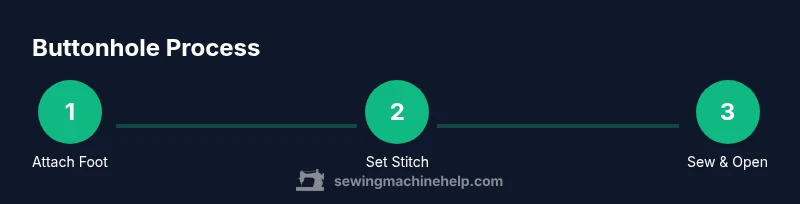
Power off the machine, remove the standard presser foot, and mount the Singer buttonhole foot securely onto the shank. Ensure the foot is aligned with the needle’s center for accurate punching and stitching. Verify that the foot locks in place with a firm, audible click before proceeding.
Tip: Double-check alignment by lowering the needle and confirming it passes through the foot’s center guide. - 2
Position fabric and mark buttonhole length
Place the fabric under the foot with the buttonhole marks aligned to the needle drop point. Use a marking tool to indicate the buttonhole length and the top/bottom reference points. Confirm the fabric lies flat with no wrinkles that could affect stitch accuracy.
Tip: Mark on the side of the fabric where clues are most visible to maintain consistent placement across pieces. - 3
Set stitch settings for buttonhole
Select the machine’s buttonhole stitch or a narrow zigzag setting suitable for your fabric weight. Adjust the stitch length to a longer default for the initial sides, then plan to shorten for the final center cut if required. Ensure thread tension is balanced to prevent loose or puckered edges.
Tip: Test with scrap fabric to dial in the correct width and length before sewing the final piece. - 4
Test on scrap fabric
Run a complete buttonhole on scrap fabric to verify size, shape, and symmetry. Compare the resulting hole to the actual button and adjust settings as needed. Make notes of the optimal configuration for future use.
Tip: Keep notes on fabric type, needle size, and stitch length for quick setup later. - 5
Sew the first side of the buttonhole
Begin stitching along the length indicated by your marks, guiding the fabric steadily without forcing it. Stop at the point where the opening begins, ensuring side edges remain clean and parallel. Pause if you notice fabric curling or thread buildup.
Tip: Maintain a consistent speed to avoid wobbly edges. - 6
Sew the second side and complete the opening
Return along the opposite side to form the second edge, then complete the opening as prescribed by your machine’s settings. Check that the center cut remains proportionate to the surrounding fabric. If needed, gentle pressure helps the opening sit cleanly.
Tip: If your machine requires it, re-thread or re-seat the needle portion to prevent mis-stitches. - 7
Open and finish the buttonhole
Use a small seam ripper to carefully open the center of the stitch, testing the button movement. If edges look threadbare, reinforce with a light stitch around the opening to stabilize. Press the area with a warm iron to set the finish.
Tip: Open the hole gradually; avoid tearing the fabric if the weave is delicate. - 8
Inspect, trim, and store
Inspect the final buttonhole for symmetry and size. Trim any loose threads and store the attachment in its case to protect from dust and damage. Keep a log of successful settings for future projects.
Tip: Label projects with fabric type and button size for easy reference later.
Your Questions Answered
What fabrics are best for buttonhole attachments?
Buttonholes typically perform best on woven fabrics where edges stay sharp. For delicate fabrics, stabilize with interfacing to prevent stretching.
Buttonholes work best on woven fabrics. For delicate fabrics use stabilizers to keep edges crisp.
How do I adjust the stitch length for a perfect buttonhole?
Start with a longer stitch length for the sides and reduce slightly for the center cut if your machine requires it. Always test on scrap fabric before finalizing.
Begin with a longer stitch length for the sides and test on scrap before finalizing.
Can I use the Singer buttonhole attachment with other brands?
Compatibility depends on the presser foot shank and mount style. Check your machine’s manual and verify if adapters are available.
Compatibility depends on your machine’s foot system; check the manual for adapters.
Why is my buttonhole too small or too large?
Re-check the buttonhole length marks, confirm the button size, and adjust stitch length or width accordingly. Always test on scrap fabric.
Check length marks and button size, then retest on scrap fabric.
Do I need to remove the pressure foot to use the attachment?
Usually you replace the foot with the buttonhole foot; some machines require additional steps, so consult the manual for model-specific instructions.
Typically you swap feet; consult your manual for model-specific steps.
How do I maintain the buttonhole attachment for longevity?
Clean the foot and surrounding area after sewing, check screws for tightness, and store the attachment in a protective case.
Clean and store it properly, and keep screws tight.
Watch Video
The Essentials
- Choose fabric that matches your buttonhole plan.
- Test buttonhole size on scrap fabric first.
- Align fabric and foot for consistent results.
- Maintain proper needle and thread pairing for clean edges.