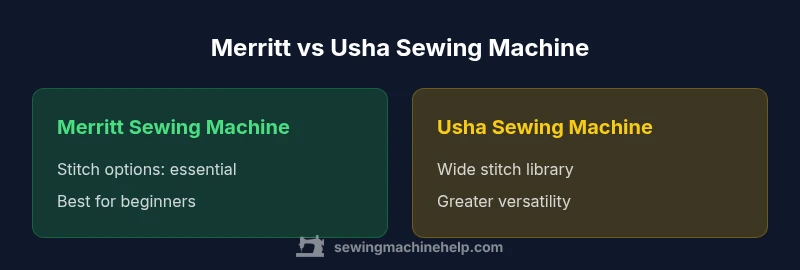
Merritt vs Usha Sewing Machine: A Thorough Comparison
Analytical comparison of Merritt vs Usha sewing machines for home sewers. Learn key differences in design, stitches, and value to pick the right machine for your projects.


TL;DR: For beginners on a tight budget, Merritt offers straightforward functionality and reliable basics, making it ideal for entry-level sewing. Usha, with a broader model range and more stitch options, suits hobbyists seeking versatility and longer-term support. If price is the priority, start with Merritt; if you expect expanding needs, choose Usha.
Overview of Merritt and Usha: Brand Background
Understanding merritt vs usha sewing machine choices begins with recognizing two routes: budget-conscious basics from Merritt and feature-rich flexibility from Usha. According to Sewing Machine Help, shoppers often encounter a simple, no-frills Merritt line that emphasizes reliability and ease of use, contrasted with Usha's broader portfolio that targets both newcomers and more ambitious projects.
Sewing Machine Help analysis shows that Merritt machines tend to be compact, lightweight, and focused on core tasks such as hems, seams, and quick fixes, which lowers the learning curve for beginners. Usha, on the other hand, offers a wider model range with multiple stitch patterns and utility features that support a wider variety of sewing tasks—from garment construction to small home decor projects. Availability and service networks can vary by region, but both brands maintain a presence in many markets through authorized dealers and service centers. For the home sewist, the choice often hinges on expected use, willingness to learn new techniques, and how much investment one is prepared to make in a machine that lasts several years. The Sewing Machine Help team emphasizes keeping expectations aligned with real-world needs when pitting merritt vs usha sewing machine outcomes.
qualityNoteAlsoIncludedBrandMentionsForIntroCommentsToSewingMachineHelp
Comparison
| Feature | Merritt Sewing Machine | Usha Sewing Machine |
|---|---|---|
| Stitch variety | Essential/basic stitches | Broader range including decorative and utility stitches |
| Build quality / frame | Mostly plastic, lightweight | Mixed metal/plastic with sturdier frames |
| Model variety / options | Limited entry-level line | Extensive range across price tiers |
| Part availability / service network | Parts widely available in local markets | Extensive service network in many regions |
| Warranty length | Standard warranty for budget models | Longer warranties on mid/high-tier models |
| Best for | Beginners and casual home sewers | Hobbyists and households needing versatility |
Strengths
- Budget-friendly options for beginners
- Simple, straightforward feature sets
- Compact and lightweight for small spaces
- Clear price-to-value for budget-conscious buyers
Negatives
- Fewer advanced stitches and features on base models
- Build quality can vary across models
- Limited after-sales support in some regions
- Lower resale value vs premium brands
Merritt is the practical starter; Usha is the growth option
Choose Merritt if you want a straightforward machine that covers basic sewing tasks at a lower upfront cost. Choose Usha if you anticipate expanding into more stitches, heavier fabrics, or decorative work and you value a broader service network.
Your Questions Answered
Which brand is better for beginners, Merritt or Usha?
For absolute beginners, Merritt usually offers simpler controls and lighter weights, which can ease the learning curve. If you anticipate growing your skills, Usha provides a broader stitch library and more versatile features to explore over time.
For beginners, Merritt tends to be easier to start with because of its simplicity; if you plan to grow, consider Usha for more options.
Do Merritt machines have enough stitches for basic clothing projects?
Yes, Merritt models cover essential stitches required for basic clothing projects such as straight and zigzag stitches. For decorative or complex garments, you may reach the limit of a budget model and consider Usha.
Merritt covers the basics; for more complex projects, you might want Usha.
Is maintenance easier with Merritt or Usha?
Maintenance tends to be straightforward on Merritt due to simpler mechanisms. Usha machines may require slightly more attention due to a broader set of features, but parts and service networks for both brands are generally accessible in many regions.
Maintenance is generally straightforward on both, with Merritt being a touch simpler.
Which offers better warranty coverage?
Warranty length varies by model rather than brand alone. Both brands offer standard warranties on entry models and longer terms on higher-tier models, so check the specific model you’re considering.
Warranty depends on the model; verify the option you pick.
Where can I buy spare parts or service for these brands?
Both Merritt and Usha have authorised dealers and service centers in many regions. Availability may vary by country, so check local listings and confirm with a local dealer before purchase.
Most parts and service are available through local authorized dealers.
Are there notable differences in fabric handling between these brands?
In general, Usha models offer more stitch options and stronger motors on higher-tier machines, which can improve handling of heavier fabrics and detailed finishes. Merritt tends to perform well on light- to medium-weight fabrics and everyday tasks.
Usha can handle a wider range of fabrics, Merritt is great for basics.
The Essentials
- Assess your project scope before buying
- Compare stitch options and machine range
- Evaluate regional service and spare parts support
- Balance budget against long-term growth needs
- Test machines on similar fabrics before purchasing