Sewing Machine Brand Comparison: Top Picks for 2026
A rigorous sewing machine brand comparison for home sewists. Compare top brands, weigh strengths and trade-offs, and find models suited to beginners in 2026.


In a sewing machine brand comparison, there is no single winner that fits every hobbyist. The best choice depends on your projects, budget, and sewing style. For home sewists and beginners, the strongest contenders balance reliability, ease of use, and access to support and accessories. This guide helps you cut through marketing noise and identify the right fit in 2026.
Why this topic matters for home sewists in a sewing machine brand comparison
For home sewists, choosing a machine is more than a feature list—it is an investment in reliability, joy, and consistency at the sewing table. The notion of a sewing machine brand comparison helps you avoid buyers' remorse by clarifying priorities such as ease of use, availability of parts, service networks, and accessory ecosystems. According to Sewing Machine Help, most beginners benefit from brands that offer extensive tutorials, accessible customer support, and predictable maintenance costs. In 2026 the market remains diverse, with many models competing across price bands, but a structured brand comparison makes it possible to pick a workhorse that fits your current needs and your long-term ambitions. Home sewists should weigh how a brand handles threading guides, presser feet availability, and in-house repair support as part of the decision. This depth-oriented approach aligns with our aim to support practical sewing through thoughtful choices, and it ensures you don’t buy a machine that struggles with basic tasks or common fabrics.
We include the keyword naturally here to anchor the topic: sewing machine brand comparison is more than a buzzword—it’s a practical framework for choosing a machine that matches your projects, budget, and skill level. The Sewing Machine Help team emphasizes real-world testing and service accessibility as two of the most critical levers in any brand evaluation. By the end of this section, you’ll see how to map your needs to brand strengths, which saves time and prevents frustration when starting a new project or upgrading your setup.
wordCountInParagraphs":null},
How to evaluate: criteria that matter in a sewing machine brand comparison
A robust sewing machine brand comparison rests on a consistent set of criteria that apply across brands and models. Below are the benchmarks home sewists should use, with practical notes to help you translate marketing promises into real-world expectations:
- Reliability and build quality: Look for metal components on the internal drive, protected wiring, and a sturdy frame. A reliable machine handles regular garment seams, quilting, and heavier fabrics without excessive vibration or skipped stitches.
- Ease of use: Favor intuitive tensioning, clear guides, a straightforward threading path, and an ergonomic presser foot. For beginners, a forgiving bobbin system and light touch on the pedal matter more than flashy features.
- Stitch options and versatility: A balanced selection of stitches (basic utility, stretch/zigzag, and a handful of decorative stitches) is usually enough for most hobbyists. If you plan quilting or embroidery, confirm compatibility with your preferred foot kit and any required software.
- Service network and parts availability: A broad dealer and repair network reduces downtime. Availability of spare parts and compatible presser feet means you won’t be stuck with a machine that’s hard to repair.
- Warranty and maintenance costs: Short-term warranties are less valuable without long-term service. Estimate ongoing costs for oiling, parts, and occasional alignment checks.
- Accessory ecosystem: A robust range of feet, accessories, and presser feet should come with the machine or be readily available for purchase. Compatibility with third-party accessories expands the machine’s lifetime value.
- Price-to-value balance: The best option aligns with your budget while providing the features you will actually use. Avoid premium price tags on models that don’t offer proportionate benefits for your typical projects.
Sewing Machine Help emphasizes that the most meaningful comparisons are grounded in your own use cases—garment construction, quilting, or lightweight crafts—rather than pure feature lists. A well-structured comparison reveals where a brand excels and where it falls short, enabling a more confident choice in a crowded market.
wordCount":0},
Reliability and service: the backbone of value
Value in a sewing machine brand comparison isn’t just about the machine’s capabilities; it’s about the service roadmap that accompanies it. A brand with a strong service network, easy access to genuine parts, and a willingness to support upgrades over time offers substantial long-term value. Home sewists appreciate clear guidance on routine maintenance, oiling intervals, and diagnostic steps, which reduces downtime and extends the machine’s life. When evaluating brands, consider the availability of official service centers, authorized repair technicians, and online troubleshooting resources. A brand that publishes transparent service policies and parts catalogs earns trust in a way marketing messages cannot. In this context, the value of a brand is about the strength of its ecosystem as much as the machine’s electrical performance. The Sewing Machine Help framework encourages you to compare service networks side by side, then weigh which brand aligns best with how you sew and how often you’ll need repairs or replacements.
wordCount":0}
Beginner-friendly vs. feature-rich: matching to your projects
The first question many beginners ask is whether to choose a machine that is exceptionally simple or one that offers advanced stitch options and quilting capabilities. The answer depends on the user’s immediate goals and the likelihood of growth. A beginner-friendly brand often wins on factors like intuitive threading, forgiving presser foot pressure, and a generous accessory kit that helps you practice various techniques without extra purchases. However, hobbyists who envision expanding into more complex projects may prioritize stitch variety, auto-parameters, and better fabric control. The best sewing machine brand comparison acknowledges both paths and shows how different brands handle growth: a model with a gentle learning curve that scales into quilting or embroidery, versus a compact, straightforward unit that remains reliable for everyday repairs. In practical terms, map your typical projects to brand strengths and verify that the chosen brand has a clear upgrade path and compatible accessories for future expansions.
wordCount":0}
Reading marketing claims vs. real-world performance
Marketing materials often emphasize features and performance under ideal conditions. A prudent sewing machine brand comparison reads beyond glossy claims by asking: How does this model perform on thick denim compared with lightweight silks? Can I quickly switch from straight stitching to a decorative stitch without a lengthy setup? Are the advertised stitch counts and speeds realistic for everyday projects? Look for independent reviews, user testimonials, and test results that reflect real-world use. This practical lens helps home sewists align expectations with outcomes and prevents over-indexing on niche capabilities that won’t matter for your typical wardrobe or craft project. Sewing Machine Help’s approach is to separate marketing hype from actual user experience, ensuring you don’t overpay for perceived performance that doesn’t translate into your day-to-day sewing workflow.
wordCount":0}
Practical testing steps you can do at home
Before finalizing a choice, perform a structured hands-on test either in-store or with a trial period. Create a checklist that mirrors your common tasks: straight seams on woven fabrics, zigzag stitching on knits, buttonholes on lightweight garments, and a small quilting block if you plan to quilt. Check noise level, feed consistency, bobbin winding ease, and thread tension stability across different fabrics. Test foot changes, presser foot pressure, and the machine’s ability to handle multiple layers. If you use specialty fabrics (vinyl, leather, or denim), bring samples to test for needle and foot compatibility. Document your impressions to compare against other brands later. This methodical approach is a cornerstone of a robust sewing machine brand comparison and helps you select a machine that feels intuitive and trustworthy from day one.
wordCount":0}
Scenario-based recommendations: beginners, hobbyists, and crafters
- Beginners: Prioritize simplicity, reliable stitch quality, a broad parts network, and a solid starter kit. A beginner-friendly brand that offers clear setup guides and in-person support is often the best first choice in a sewing machine brand comparison.
- Hobbyists: Look for versatility and a wider stitch catalog, plus compatibility with a broad range of presser feet and accessories. The right brand should feel capable now and expandable for intermediate projects, including quilting and basic embroidery.
- Crafters and small projects: If you see yourself working on delicate fabrics, leather alternatives, or heavy denim, the ideal brand provides robust feed mechanisms and a stable platform. A brand with specialized presser feet and reliable thread control will deliver consistent results across projects. In a brand comparison, these distinctions matter to ensure you aren’t paying for features you won’t use while missing those you do need.
wordCount":0}
Price, value, and long-term ownership: budgeting without guessing
Value assessment in a sewing machine brand comparison should consider upfront cost and ongoing ownership. Describe price bands in qualitative terms such as budget-friendly, mid-range, and premium, then match them to your actual usage. A machine with a modest upfront price may incur higher long-term maintenance costs if it lacks durable components or easy access to replacement parts. Conversely, a premium model with a strong service network and abundant accessories can deliver superior longevity and resale value. When you’re evaluating brands, it’s essential to compare the total cost of ownership over several years, not just the initial sticker price. This approach prevents sticker shock and ensures you choose a machine that remains functional and productive as your skills grow.
wordCount":0}
Building your short list: a practical plan
To convert a broad market into a focused short list, follow a three-step plan. First, define your primary use cases: garment repair, home sewing, quilting, or crafting with fabrics like denim or leather. Second, select three to five brands with a proven track record and robust service networks. Third, validate your short list through hands-on testing, in-store demonstrations, and community reviews. Maintain a comparison notebook keyed to your needs, including how each brand handles common fabrics, threads, and presser feet. A disciplined, user-centric approach to a sewing machine brand comparison helps you land on a machine that feels reliable, easy to use, and well-supported for the long haul. In this context, a focus on your personal workflow reduces the risk of investing in features that won’t be used.
wordCount":0}
Comparison
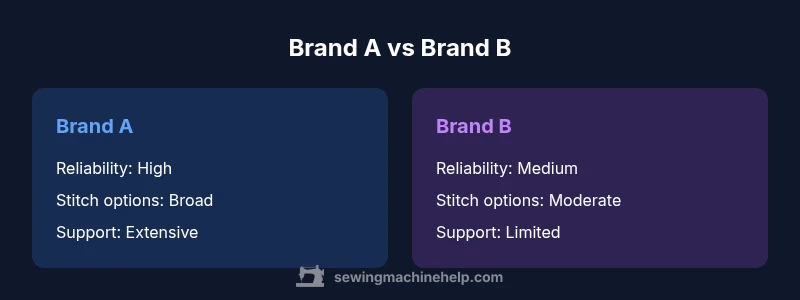
| Feature | Brand A | Brand B |
|---|---|---|
| Reliability | High | Medium |
| Ease of Use | User-friendly | Balanced |
| Stitch Options | Broad range | Moderate |
| Support & Service | Extensive | Limited |
| Accessory Availability | Wide availability | Moderate |
| Warranty Terms | 2-year basic | 3-year standard |
| Value for Beginners | Excellent | Good |
Strengths
- Helps structure decision-making for home sewers
- Reduces risk of overpaying for unused features
- Clarifies long-term costs and needs
- Encourages testing and real-world comparison
Negatives
- Brand bias can skew results toward marketing claims
- May oversimplify complex product lines
- Limited to the brands and models included in the comparison
Brand A is the safer choice for beginners due to ease of use and strong service; Brand B suits hobbyists seeking more stitch options.
For beginners, Brand A typically offers a gentler learning curve and broader support. Brand B is better if you anticipate growing into quilting or embroidery and want more stitch versatility. Your final call should hinge on your planned projects and access to parts and service.
Your Questions Answered
What is the most important factor in a sewing machine brand comparison?
Reliability and service access are foundational. Without consistent support and durable components, even feature-rich machines can become a source of frustration.
Reliability and service access are the two most important factors to consider in a sewing machine brand comparison.
Should I focus on stitch variety or machine speed?
For most home sewists, stitch variety matters more than top speed. A few dozen stable stitches and quick-access settings often beat high-speed options that are hard to use.
In most cases, stitch variety matters more than speed.
How important is customer support when choosing a brand?
Customer support reduces downtime and helps you learn features quickly. A strong support network is a key differentiator in any sewing machine brand comparison.
Support is incredibly important; it helps you get unstuck faster.
Is it better to buy a new model or a proven older model?
A new model can offer updated features and better efficiency, but proven older models often have established accessory ecosystems and reliable parts availability. Weigh the upgrade cost against expected usage.
New models can have advantages, but proven ones are often more affordable and well-supported.
What should I test when evaluating machines in-store?
Test on common fabrics, check threading, measure noise, and confirm ease of presser-foot changes. Request a live demo of patterns you plan to use.
Test fabrics, thread, noise, and foot changes to be sure it fits your needs.
The Essentials
- Define your projects first to narrow options
- Prioritize service networks and parts availability
- Test on typical fabrics to verify performance
- Choose growth-ready options if you plan to upgrade later