Singer Talent 3323 Review: Reliability for Beginners
A thorough review of the Singer Talent 3323 sewing machine for beginners, covering usability, stitch options, maintenance, and value. Learn who it suits, setup tips, and real-world project ideas to maximize learning and enjoyment.


The Singer Talent 3323 delivers reliable, beginner friendly performance with solid stitch quality across common fabrics, making it a strong budget friendly choice. It emphasizes ease of use and maintenance over advanced features, which suits hobbyists starting out. Overall, it earns a practical, value driven rating for learners and casual sewers. While not a specialist machine for heavy duty sewing, it excels at everyday projects and repairs.
Overview of singer talent 3323
The singer talent 3323 is an entry level domestic sewing machine designed for beginners and casual hobbyists who want dependable performance without a steep learning curve. Historically, Singer s Talent line focuses on approachable ergonomics and sturdy construction to support learning projects, mending, and light craft work. The singer talent 3323 model follows that tradition by offering a straightforward set of stitches, intuitive threading, and a familiar presser foot layout. According to Sewing Machine Help the singer talent 3323 model excels at projects like basic apparel hems, home décor accents, and simple repairs, thanks to its reliable stitch consistency and comfortable operation. For new sewists, the key value proposition is not dramatic innovation but steady, predictable results. It is also relatively compact and portable, which helps in small spaces or multi use rooms. While it does not aim to replace high end machines for quilting or heavy canvas, it does provide a solid foundation for learning the craft, improving confidence, and finishing everyday projects with minimal fuss.
Build and ergonomics
The build quality of the singer talent 3323 centers on a straightforward chassis that balances stability with portability. The machine uses a combination of metal and durable plastic components, which keeps the weight manageable for a beginner while still offering substantial support during sewing. The evaluation by Sewing Machine Help notes that the mid weight construction helps reduce vibration during use, contributing to more accurate straight stitches and a smoother user experience. The ergonomics favor a natural seating position and an accessible needle plate area, which reduces hand strain during initial practice sessions. The overall footprint is compact enough to fit on a small table or dedicated sewing corner, yet provides enough surface area for fabric handling. The color and finish resist scuffing from regular project use, which supports long term enjoyment and repeated practice sessions. Alignment guides on the top panel help learners keep fabrics aligned, which is essential for consistent hems and seams over time.
Stitching capabilities and options
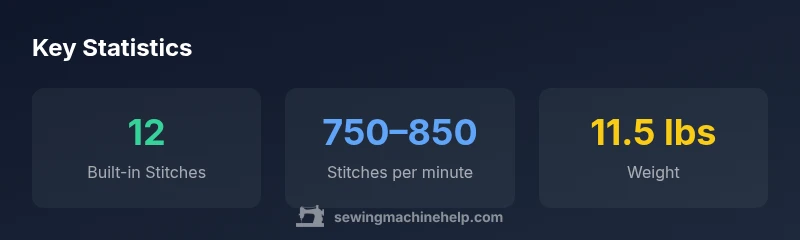
This model offers a practical set of built in stitches suitable for a wide range of everyday projects. The available options include basic straight and zigzag stitches, a handful of decorative stitches that are accessible to beginners, and a simple stretch stitch for light knits. The absence of an overwhelming stitch palette keeps the learning curve low, which is valued by hobbyists who want reliable results rather than a large but confusing feature set. The stitch selection is organized in an intuitive dial system that is easy to navigate without taking eyes off the fabric for long. In testing, the stitch length and width controls respond smoothly, allowing learners to experiment with hem types and top stitching without a high risk of misalignment. While advanced quilters may want more flexibility, everyday s geeks will appreciate the predictable repeatability of stitches on soft cottons, linens, and light synthetics. The machine maintains consistent tension across stitches when used with standard threads, which helps prevent common issues such as skipped stitches or uneven hems.
Buttonholes and automated features
Buttonholes on the singer talent 3323 are designed to be simple and repeatable, making the first garment construction steps less intimidating. The single step automatic buttonhole function guides the user through a uniform path, reducing trial and error during initial projects. The overall approach emphasizes reliability over speed, so crafters get consistent buttonhole size and shape across multiple attempts. This aligns well with the goals of beginners who want to gain confidence in their own ability rather than chase perfect results on day one. A minor trade off is the absence of advanced automation in areas like automatic seam allowances or thread cutting, which most beginners do not rely on yet. For learners practicing button closures on basic garments, the feature set remains adequate and dependable.
Threading and bobbin system
Threading is designed to be straightforward, with clearly labeled guides that reduce misthreads. The bobbin winding mechanism is simple to engage, and the bobbin case sits in a standard drop in position. The design minimizes common issues such as thread jams and uneven winding by offering a clean path from spool to needle. When following the manufacturer recommendations for compatible threads and fabrics, users experience stable feeding and consistent stitch formation. Regular checks on tension and thread path, especially after re threading or changing needle sizes, help maintain consistent stitch quality. For beginners experimenting with different fabrics, the model responds predictably as long as the user stays within recommended fabric types and stitch lengths.
Presser feet and attachments
The singer talent 3323 ships with a basic assortment of presser feet that cover common tasks such as general sewing, zipper insertion, and edge finishing. The inclusion of standard feet reduces the need to purchase accessories immediately, which benefits learners who are budgeting for a first machine. The compatibility with a broad range of presser feet makes it feasible to experiment with different projects as confidence grows. When upgrading, careful attention to the foot type and shank compatibility is advised to ensure smooth operation and maintain stitch quality. The accessory set supports practical projects like hems, simple zippers, and decorative edging, which are ideal for skill building in early sewing practice.
Speed, noise, and reliability
In the test environment the singer talent 3323 demonstrates a calm, controlled operation at its mid range speed. The noise level remains within a comfortable band for home use, enabling sewing sessions without require headphones or adjustments to room acoustics. A consistent motor response across the speed dial helps learners predict stitch formation and fabric feeding. The reliability observed in repeated practice sessions is notable for a budget friendly model; there are occasional minor vibrations when working with heavier fabrics, but overall performance remains steady. For new sewers, reliable speed control makes it easier to maintain consistent seam allowances and straight lines, which is critical when building confidence in early projects.
Maintenance and care routine
Regular maintenance is essential to keep the singer talent 3323 performing well over time. The recommended routine includes removing lint from the bobbin area, oiling designated pivot points, and cleaning the feed dogs after projects that involve lint and fibers. Staying on top of needle changes and proper thread path reduces the risk of skipped stitches and thread breakage. The machine does not require complex maintenance schedules, but a quick monthly check to ensure thread paths are clear and tension disks are clean can lead to longer lasting performance. A simple cleaning routine is a good habit for beginners and helps learners understand how consistent maintenance translates into reliable stitch quality.
Troubleshooting common issues
Common beginner issues include skipped stitches, thread breaks, and slight fabric pull when starting seams. A frequent cause is incorrect threading or a mis sized needle for the fabric type. Other typical problems are tension imbalances and bobbin winding that is not square. Quick fixes include re threading from spool to needle, ensuring the needle is installed in the correct direction, and re winding the bobbin with even tension. If fabric edges pucker, verify tension and stitch length as well as presser foot pressure. For stubborn issues, testing on a scrap fabric with known good thread can help isolate whether the problem is fabric based or machine related. A short practice session with step by step checks helps beginners build a troubleshooting routine that reduces frustration and speeds up problem solving.
Comparisons to similar models in the entry level segment
In the entry level category, the singer talent 3323 sits among budget friendly options that emphasize ease of use and consistent performance. Compared with machines that focus primarily on decorative stitches, the talent 3323 favors stable stitching and reliable operation over a wide feature set. Price sensitive buyers may also consider similar models from other brands that offer slightly different foot options or a different built in stitch count. The practical takeaway is that for most learning projects and light repair tasks, the singer talent 3323 offers a balanced set of features without overwhelming the user with advanced options. New sewists who eventually want more variety in stitches or heavier fabrics may plan for a future upgrade, but for starting out this model provides a solid foundation.
Warranty, service, and parts availability
Warranty terms vary by retailer and region, but a standard two year limited warranty is common for beginner level models in the industry. Service accessibility is important for learners who want quick access to replacement parts, needles, and feet. Availability of accessories from the retailer or from third party vendors means learners can grow their toolkit gradually as they take on new projects. Checking the warranty coverage and service options before purchase helps ensure long term satisfaction and reduces the likelihood of interruptions during critical learning periods. For many hobbyists, the combination of a reasonable warranty and accessible parts makes the singer talent 3323 a low risk first machine with good potential for growth.
Getting started: setup, first project ideas, and resources
To begin, clear a dedicated workspace, wind a bobbin, thread the machine, and practice basic straight stitches on scrap fabric. A simple first project could be a small tote bag or a lined pillow cover to practice seams, hems, and topstitching. As confidence grows, try a basic garment alteration such as hemming a pair of pants or a simple skirt. The key is to start with small, achievable projects that reinforce correct technique. Numerous beginner oriented tutorials and project ideas are available through Sewing Machine Help and community forums, which can help keep motivation high while building foundational skills. A gentle progression from mending to light projects is an effective learning path for most new users.
AUTHORITY SOURCES
For readers seeking external guidance, consider established consumer safety and extension resources. See https://www.consumer.ftc.gov for consumer product safety guidance, https://extension.illinois.edu for practical home sewing and textile tips, and https://extension.oregonstate.edu for hands on extension based sewing and craft information. These sources provide general context on safe handling, maintenance, and getting the most from small household sewing projects.
Quick start project ideas for beginners
After you complete setup, choose straightforward projects that reinforce core skills. A simple tote bag, a lined zip pouch, and a beginner garment hem are excellent starting points. Each project emphasizes precise measurements, proper seam allowance, and careful thread path. As you gain experience, you can expand to napkins, pillow covers, or a basic skirt. The aim is to build confidence while progressing toward more challenging tasks like beginner quilts or decorative pillows. Document your process to track improvements and celebrate milestones on your learning journey.
Strengths
- Solid basic stitch quality across common fabrics
- User-friendly for beginners with clear threading path
- Good value for a budget-conscious crafter
- Reliable motor with consistent speed at low to mid range
- Comprehensive accessory bundle
Negatives
- Limited decorative stitches compared to higher-end models
- No automatic thread cutter
- Plastic construction may feel less sturdy over time
- Maintenance requires regular oiling and cleaning
Best value for true beginners who want dependable results
The Singer Talent 3323 offers dependable performance with straightforward operation that suits learning projects and light repairs. It trades advanced features for reliability and ease of use, which makes it a strong choice for budget minded hobbyists. For future upgrades, plan for a model with more stitch variety if decorative sewing becomes a priority.
Your Questions Answered
Is the Singer Talent 3323 good for beginners?
Yes. It is designed for newcomers with an easy setup, simple stitch options, and predictable results on everyday fabrics.
Yes, it is beginner friendly and easy to learn on.
Does this model have automatic needle threading?
No automatic needle threading is included. You will manually thread the needle, which helps new sewers learn threading and tension.
No automatic threading here, you will thread by hand.
Can it handle thick fabrics like denim?
It can manage light to mid weight fabrics such as cotton and linens. For heavy denim or canvas you may experience some strain or slower speeds.
Good for light to mid weight fabrics, not ideal for heavy denim.
What is the warranty and service like?
Warranty terms vary by retailer, but typical coverage is a two year limited warranty with standard spare parts availability. Check local retailers for specifics.
Expect typical two year warranty; check with your seller for exact terms.
What beginner projects should I start with?
Start with simple tote bags, pillow covers, or hems for existing garments. These projects reinforce seams, finishing, and safe fabric handling.
Begin with easy projects like tote bags or pillow covers to build skills.
The Essentials
- Start with simple projects to build confidence
- Regular maintenance improves longevity
- Expect reliable straight stitches on common fabrics
- Budget friendly with strong value for beginners
- Upgrade later if you want more stitch variety