How to Use the Janome MB-7 Seven Needle Embroidery Machine: A Complete Guide
Comprehensive, step-by-step guidance for using the janome mb 7 seven needle embroidery machine—setup, threading, design import, hooping, stabilizers, troubleshooting, and maintenance for home sewers.


With the janome mb 7 seven needle embroidery machine, you will learn to set up, thread, hoop, import designs, and maintain the unit for consistent results. You’ll need stabilized fabrics, compatible hoops, and an appropriate design file. According to Sewing Machine Help, this model delivers reliable multi-needle embroidery for home projects. This guide uses clear steps and safety reminders to help you start confidently.
Understanding the Janome MB-7 Seven Needle Embroidery Machine
The janome mb 7 seven needle embroidery machine represents a leap in home embroidery capability by providing seven independent color heads. This arrangement lets you stitch complex multi-color designs without frequent color changes, improving workflow and reducing downtime between color blocks. According to Sewing Machine Help, the MB-7 also shows solid stitch consistency when properly hooped and stabilized. When you study the machine’s layout, you’ll notice a dedicated embroidery head array, a color-change mechanism, an adjustable hoop clamp, and a user-friendly interface for selecting stitch patterns. For beginners, a good rule is to plan your project in color blocks first, then match each block to a corresponding needle head. This planning reduces thread waste and keeps your design aligned on the fabric. For advanced users, experimenting with layering metallics and matte threads becomes feasible once tension and stabilizer choices are dialed in. The MB-7’s strength lies in stability, precise alignment, and a broad color capacity that can handle elaborate monograms, appliqué, and logo work on a range of fabrics. As you get accustomed to the machine, start with simple designs to build familiarity before attempting dense, multi-color motifs.
Planning your embroidery workflow
Effective embroidery with the MB-7 begins with thoughtful planning. Start by selecting designs that fit your hoop size and stabilizer option, then map out color order to minimize thread changes. Create a rough layout on grid paper or a digital canvas to visualize placement on the garment or textile. Check fabric type and backing requirements—stable weaves like cotton twill or canvas pair well with tear-away stabilizers for dense fills, while knits may demand cut-away stabilizers and extra stabilizer on the wrong side. Consider digitizing or preparing designs with appropriate color palettes so you can assign each color to a specific needle head. The Sewing Machine Help team emphasizes keeping a consistent workflow: prepare stabilizers, hoop fabric taut but not stretched, and test on scrap material before stitching the final piece. Finally, plan for post-stitch finishing steps such as trimming jump stitches and cleaning lint from the needle bars to preserve longevity.
Setup and threading basics for the MB-7
Setting up the MB-7 starts with power on and a clean workspace. Align the machine head and ensure all seven needles are accessible. Use the correct embroidery needles for your thread type (e.g., size 11–14 for rayon or polyester). Begin with a loose tension check, then adjust per your thread path to prevent looping and bird nesting. Route threads through the color guide and ensure each needle is threaded in the correct order before starting a test stitch. Verify that the bobbin is wound correctly and inserted in the bobbin case with the proper tension. When you begin stitching, watch for any misalignment that could indicate hoop warp or fabric pucker, and stop to correct it before continuing. A thorough pre-stitch check reduces rework and keeps embroidery quality high.
Importing designs, hooping, and fabric selection
Design transfer is a critical step for the MB-7. Save designs in compatible formats (commonly DST/EXP or other compatible files) and transfer via USB or network connection as supported. Choose an appropriate hoop size for your design and secure the hoop to the machine, ensuring fabric is taut without distortion. Select stabilizer types based on fabric weight and stitch density; heavy fabrics often need tear-away or cut-away backing, while lighter fabrics may benefit from programmable stabilizers. When hooping, align the center of the design with the hoop’s center marks and verify vertical and horizontal alignment against the machine’s embroidery field indicators. For beginners, start with simple logos or monograms and practice proper fabric tension to minimize distortions.
Stabilizers, backing, and thread types
Stabilizers are the backbone of clean embroidery. Tear-away stabilizers work well for woven fabrics with stable weaves, while cut-away stabilizers are essential for knits and stabilizing dense fills. Choose weight and backing appropriate to stitch density—higher density designs require firmer backing. Thread choice impacts appearance and durability; rayon provides bright color and sheen, while polyester offers colorfastness and strength. For metallics or specialty threads, use a compatible needle and reduce stitch density to avoid thread breakage. Keep an assortment of stabilizers and thread types in your workstation to quickly adapt to project needs. Regularly inspect thread paths for snags and stray fibers that can degrade the design.
Running a test design and troubleshooting common issues
Always run a test stitch on scrap fabric to verify tension, alignment, and color order before stitching the final piece. If you notice looping, bird nesting, or thread breakage, pause stitching and inspect the threading, needle type, and stabilizer compatibility. Misalignment can indicate hoop slippage; re-hoop the fabric with additional stabilization and recheck alignment against the machine’s guides. Thread breakage might result from dull needles or incorrect needle size, too-tight bobbin tensions, or incompatible threads. Clean lint from the needle plates and feed dogs after testing, and ensure the fabric feeds smoothly without pulling. When problems persist, consult the design file and re-run a small test to isolate whether the issue is mechanical, thread-related, or design-based. Sewing Machine Help recommends maintaining a regular check of needle sharpness and tensions to forestall common embroidery faults.
Maintenance and care to extend longevity
Maintenance keeps the MB-7 performing at peak. Regularly clean lint from the needle bar areas and bobbin housing, and oil only as recommended by the manufacturer. Replace needles after every few hours of stitching or with changes in thread type to prevent skipped stitches. Store threads in clean, dust-free containers and inspect them for fraying before loading. Periodically check belt tension, needle thread paths, and wiring for signs of wear. Keep the workspace free of dust and ensure adequate ventilation around the machine. For long-term reliability, schedule a professional inspection or service at regular intervals and follow manufacturer guidelines for firmware updates and calibration.
Authoritative sources
- https://extension.illinois.edu
- https://extension.umn.edu
- https://www.nifa.usda.gov
Tools & Materials
- Janome MB-7 seven-needle embroidery machine(The core device for multi-color embroidery projects.)
- Embroidery hoops compatible with MB-7(Choose hoop sizes appropriate for your designs (e.g., 4x4, 5x7, 6x10 inches).)
- Stabilizers (tear-away and cut-away)(Select by fabric weight and stitch density.)
- Embroidery threads (rayon and polyester)(Keep a color-matched set; consider metallics with compatible needles.)
- Bobbins(Have spare bobbins wound with matching thread for quick changes.)
- Needles for embroidery (size 11-14 range)(Use needles appropriate for thread type and fabric weight.)
- USB drive or computer with design transfer capability(Ensure designs are in compatible formats for the MB-7.)
- Designs (DST/EXP formats or compatible)(Prepare a few test designs before big projects.)
- Scissors and lint brush(Trim jump stitches and clean lint after each run.)
- Power surge protector(Adds protection in case of power fluctuations.)
Steps
Estimated time: 90-120 minutes
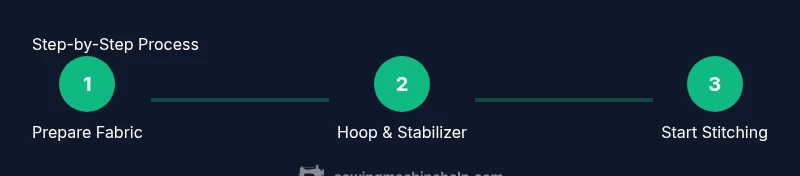
- 1
Power on and prep the workspace
Place the MB-7 on a stable surface, connect to power, and clear the area of obstructions. Verify lights and screen boot properly before proceeding.
Tip: Keep a scrap fabric nearby to test thread paths and tension before starting your project. - 2
Install embroidery needles
Inspect and replace needles as needed. Use embroidery needles sized for your thread weight and fabric to prevent skipped stitches.
Tip: Replace needles after every few hours of stitching or when switching thread types. - 3
Load stabilizer and fabric into hoop
Cut the stabilizer to size, layer it behind the fabric, and secure the assembly in the hoop. Take care to avoid fabric distortion.
Tip: Pre-wet or lightly moisten stiff stabilizers for better fabric support on dense stitches. - 4
Hoop and align the fabric
Mount the hoop and align the center design marks with the machine’s hoop guides. Ensure fabric lies flat and taut without slack.
Tip: Double-check alignment with a quick test stitch on a scrap patch. - 5
Thread all seven heads in color order
Follow the color order from the design, threading each needle head in sequence. Confirm the colors match the design’s palette.
Tip: Use a color stop at the top of the design to keep track of current color. - 6
Transfer the design to the MB-7
Load your design via USB or network, select the correct hoop size, and verify the design area matches the hoop.
Tip: Always run a small test stitch before starting the full design. - 7
Run a test stitch
Stitch a small section on scrap fabric to verify tension and alignment. Adjust needle tensions and stabilizer as needed.
Tip: Record any adjustments for future projects with the same fabric and thread combo. - 8
Embark on the final stitch
Begin stitching the final design and monitor for thread breaks or fabric shifting. Stop if you see issues and correct before continuing.
Tip: Periodically inspect jump stitches and trim as needed for a clean finish.
Your Questions Answered
What is the MB-7 seven-needle embroidery machine best used for?
The MB-7 excels at multi-color embroidery on textiles like apparel, home decor, and accessories, enabling intricate designs without frequent color changes.
The MB-7 is ideal for multi-color embroidery on fabrics, reducing color-change interruptions.
Can I use standard sewing machine needles in the MB-7?
No. Use embroidery needles designed for multi-needle machines to ensure stitch quality and avoid damage to the machine.
Use the correct embroidery needles for multi-needle machines to protect your setup and stitches.
Do I need special stabilizers for thick fabrics?
Yes. Thick fabrics require heavier backing and possibly cut-away stabilizers to prevent fabric distortion and thread breakage.
Thick fabrics need stronger stabilizers to keep stitches neat and consistent.
How do I import designs into the MB-7?
Transfer designs via USB or a compatible network, ensuring they are in a supported format and appropriately sized for your hoop.
Move your design file to the machine using USB or network, then set the hoop size.
Is maintenance required to keep the MB-7 running smoothly?
Yes. Regular cleaning, needle checks, tension verification, and professional service at intervals will keep performance steady.
Regular cleaning and checks, plus periodic servicing, keep the MB-7 performing well.
Watch Video
The Essentials
- Plan your design and stabilizer choice before stitching.
- Hoop fabric tautly to prevent distortion and misalignment.
- Seven needles enable multi-color embroidery with fewer color changes.