How to Stop Sewing Machine from Bottom Tangling: A Practical Guide
Learn practical, step-by-step fixes to stop bottom tangling in sewing machines. Diagnose bobbin and tension issues, correct threading, and prevent future tangling with easy maintenance tips from Sewing Machine Help.


According to Sewing Machine Help, this guide shows how to stop sewing machine from bottom tangling by diagnosing bobbin and tension issues, rethreading correctly, and adjusting needle and feed settings. You’ll follow safe, step-by-step fixes that cover common causes like incorrect bobbin winding, tangled lint, and improper top-thread tension. No fancy tools required—just careful inspection and adjustment.
Common causes of bottom tangling
Bottom tangling happens when the path of the thread and tension are not balanced, especially around the bobbin area. If you’re asking how to stop sewing machine from bottom tangling, start by understanding the typical culprits: incorrect bobbin winding, a misthreaded needle, lint buildup in the bobbin housing, or wrong top-thread tension. In many cases, tangling results from a loop that forms under the needle plate as the bobbin thread catches. Other frequent causes include using old or damaged needles, spool threads feeding incorrectly, or sewing through thick layers without proper needle size. By methodically checking these areas, you can pinpoint the source and restore smooth stitches. Remember, small misalignments can cause big tangling issues, so take time to inspect each component thoroughly. According to Sewing Machine Help, addressing bobbin winding and threading paths early reduces future tangling incidents.
Quick checks before you start
Before you dive into fixes, perform a quick diagnostic pass to set the stage for success. Verify that the machine is threaded correctly in both top and bobbin paths, ensure the spool sits on a spool pin with the thread feeding in the correct direction, and confirm the bobbin is wound evenly and seated properly in the bobbin case. If you recently changed bobbins or thread brands, reset to a known-good combination. Use fresh, compatible thread and ensure the needle size matches the fabric. With these checks, you’re less likely to chase phantom tangles.
Understanding bobbin winding vs top tension
Bobbin winding and top-thread tension work together to create balanced stitches. If the bobbin is over-wound or under-wound, or if the bobbin is not inserted correctly, the bobbin thread can loop beneath the needle plate, producing tangling with every stitch. Likewise, too-tight or too-loose top tension can pull the bobbin thread into knots. The key is symmetry: the bobbin thread should lay flat and unwind smoothly, while the top thread should form a clean, balanced stitch. When these tensions are misaligned, you’ll see loops and snags on the underside. This is a primary area to review when learning how to stop sewing machine from bottom tangling.
How to adjust tension and threading to prevent tangling
Start with the needle and top-thread path. Rethread from the needle, ensuring the thread passes through all guides and the tension disc cleanly. Check the bobbin insertion direction and confirm the bobbin wind is even. If you notice a loop under the plate after a test stitch, loosen the top tension slightly and retest on scrap fabric. In many cases the fix is as simple as aligning the thread path and re-spooling. According to Sewing Machine Help analysis, improper bobbin tension is the leading cause of bottom tangling, so pay close attention to the bobbin case and tension spring. If using a decorative stitch or thick fabric, consider reducing speed and using a compatible needle.
Preventive maintenance routines for reliable stitching
Routine care reduces tangling risk. Clean the bobbin area regularly to remove lint, dust, and thread fragments; avoid pushing lint back into the housing. Change needles frequently, especially after breakage or skipping stitches. Use fresh, compatible bobbins and ensure they are wound evenly. Lubricate the machine as recommended in your manual, but avoid over-oiling near the bobbin area. When you branch into thicker fabrics or multiple layers, test on a scrap piece first and adjust tension slightly as needed. Keep your thread path clear and ensure the fabric feeds smoothly under the presser foot. This proactive approach minimizes future tangling and improves stitch quality.
When to seek professional help
If tangling persists after following these checks and steps, it may indicate a more complex issue like a compromised tension spring or a damaged feed dog assembly. A professional technician can diagnose timing issues, replace worn parts, and re-tune the machine for balanced stitching. The Sewing Machine Help team recommends documenting the steps you’ve taken and the test results to share with the technician for faster service. In the meantime, avoid forcing stitches on difficult fabrics and consider using a simpler stitch to verify basic operation.
Tools & Materials
- Phillips screwdriver(for removing access panels and screws)
- New sewing machine needles(appropriate size for fabric (e.g., 14/90 for woven))
- Bobbin(well-wound and clean)
- Bobbin case (if adjustable)(check for wear or dirt)
- Spool of thread (same brand/type)(ensure consistent tension)
- Lint brush(for bobbin area)
- Tweezers(to pull threads in tight areas)
- Sewing machine oil(as per manual, apply sparingly)
- Scrap fabric and scissors(to test stitches)
Steps
Estimated time: 45-60 minutes
- 1
Check the bobbin winding
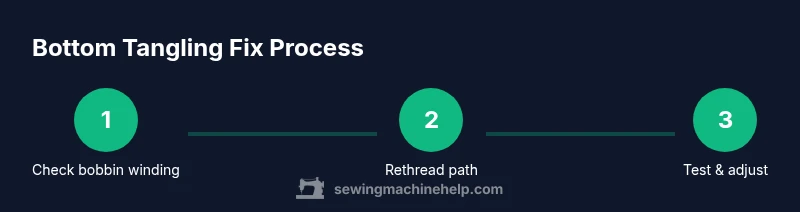
Remove the bobbin and inspect the winding. Ensure there are no fluffy threads or overfill that might cause tight spots. Rewind if necessary, making sure the thread winds evenly and the bobbin spins smoothly in its case.
Tip: Use a consistent bobbin winding speed and avoid letting the bobbin become skewed. - 2
Rethread the machine from start to finish
Remove both top and bobbin threads. Rethread the machine following the guides from the needle to the tension discs, then through the bobbin path in the correct direction. Ensure there are no thread tails caught anywhere.
Tip: Take a slow, deliberate path through every guide to prevent hidden twists. - 3
Inspect and clean the bobbin area
Open the bobbin area and remove lint, dust, and stray threads. Wipe with a dry cloth and reassemble. A clean area reduces the chance of loops forming under the plate.
Tip: Always clear lint before changing bobbins to prevent entanglement. - 4
Test stitch and adjust top tension
Run a few stitches on scrap fabric. If you see loops under the plate, loosen the top tension slightly and re-test. Small adjustments can balance stitch formation.
Tip: Make incremental tension changes and test until the underside stitches lay flat. - 5
Try a different needle and fabric type
Switch to a needle appropriate for the fabric and re-test. A mismatched needle can cause skipped stitches and tangling.
Tip: Avoid forcing a needle through dense fabric; choose a larger needle instead. - 6
Run a final test and re-tension as needed
Do a final pass on a scrap piece, verifying balanced stitches on both sides. If issues persist, consider professional service.
Tip: Document the settings you used for quicker troubleshooting later.
Your Questions Answered
Why does bottom tangling happen even after rethreading?
Common causes include incorrect bobbin winding, bobbin installed improperly, or incorrect top-thread tension. A misthreaded path behind the needle plate often hides the problem until tested with fabric.
Tangling after rethreading usually means the bobbin winding, bobbin installation, or top tension needs rechecking. Look for an improper path behind the needle plate and test again on scrap fabric.
Can using a worn needle cause tangling?
Yes. A bent or dull needle can grab threads and create loops. Replace the needle with a compatible size for your fabric and retest.
A worn needle can definitely cause tangling. Replace it with a fresh, properly sized needle and try again.
Is it safe to oil the bobbin area to fix tangling?
Oiling near the bobbin area is sometimes recommended, but follow your manual. Use sparingly and avoid over-oiling, which can attract lint.
Oil near the bobbin area only if the manual says so, and apply very sparingly. Too much oil can cause lint buildup and more tangling.
How often should I clean the bobbin area to prevent tangling?
Regular maintenance matters. Clean the bobbin area when you notice lint buildup or after long sewing sessions to prevent tangling.
Clean the bobbin area regularly, especially after heavy sewing or long projects, to reduce tangling risks.
What should I do if tangling occurs with decorative stitches?
Decorative stitches can place different stresses on thread paths. Re-check threading, tension, and needle compatibility for the stitch being used, and test on scrap.
Decorative stitches can cause tangling if the path or tension isn't right. Recheck everything and test on scrap fabric.
Watch Video
The Essentials
- Identify bobbin and tension issues early.
- Rethread and test on scrap fabric first.
- Regular maintenance prevents tangling.
- Consult the manual or a pro if persistent.