What Sewing Machine Needle for Stretch Fabric: A Practical Guide
Learn which sewing machine needle works best for stretch fabrics, how to size needles, stitch options, and practical tips to sew knits confidently.


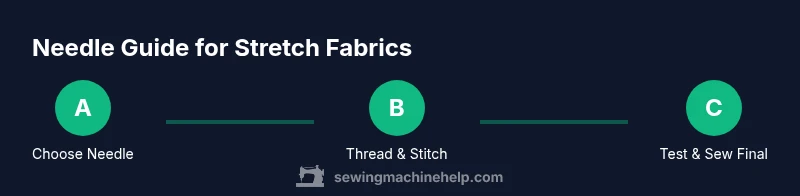
To sew stretch fabrics, use a ballpoint needle (size 70/10 to 90/14) or a specialized stretch needle. Ballpoint needles glide between fibers and reduce snagging, while stretch needles have a thicker blade and rounded tip for elastics. Match needle size to fabric weight, thread a compatible stretch stitch, and test on scraps before sewing the final piece.
Why the right needle matters for stretch fabrics
Understanding what sewing machine needle for stretch fabric works best helps you avoid skipped stitches, fabric snags, and distorted seams when working with knits. For most stretch fabrics, a ballpoint needle is the go-to choice because its rounded tip slides gently between fibers rather than cutting them. A specialized stretch needle can offer a broader blade and a teardrop-shaped eye that helps prevent skipped stitches on elastics and very stretchy textiles. The needle choice influences how the thread sits, how the fabric feeds, and how well the seam recovers after washing. Always consider fabric weight and degree of stretch when selecting the needle. If you're unsure, start with a mid-weight ballpoint (size 70/10 to 80/12) and adjust after testing on a scrap piece. In addition to needle type, you’ll want to choose the right stitch and tension to accommodate the knit’s stretch.
For home sewists, distinguishing between jersey knits, interlocks, and double-knit fabrics matters. Lighter jerseys respond well to a lighter ballpoint needle and a moderate zigzag, while heavier knits like ponte or scuba may benefit from a sturdier ballpoint or stretch needle and a longer stitch length. Remember, the goal is to let the needle glide through the fabric rather than drag, stretch, or warp the edge. A few minutes of testing on scrap fabric that matches your project can prevent a ruined seam and wasted materials.
Types of needles for stretch fabrics
There are several needle options that perform well on stretch fabrics. The most common are ballpoint needles, which have a rounded tip that pushes fibers aside instead of piercing them. For fabrics with higher elasticity or delicate knits, a specialized stretch needle or a twin stretch needle can offer better stability and reduce skipped stitches. Some sewists prefer universal needles for very light knits, but performance varies by fabric; testing remains essential.
- Ballpoint needles: Ideal for most knits (jersey, interlock, lightweight knits). Use sizes 70/10 to 90/14 depending on fabric weight. They minimize snagging by gliding between fibers.
- Stretch needles: Designed specifically for knit fabrics; often have a larger eye and sturdier shaft to prevent skipped stitches under tension. Sizes typically range from 70/10 to 90/14.
- Universal needles: A reasonable fallback for very light knits or mixed fabrics but may cause snags or skipped stitches on some stretch materials.
- Twin needles: Great for topstitching or decorative stitches on knits, especially with a cover or twin-needle setup. Check machine compatibility and use compatible thread.
Choosing the right needle is the first step in achieving clean seams and comfortable elasticity. If in doubt, start with a ballpoint needle and test a few stitch variations on scrap fabric before committing to the final garment.
Ballpoint vs stretch needles: Pros and cons
Ballpoint needles are versatile and forgiving, making them a solid default choice for most stretch fabrics. They excel at preventing fiber snags and producing smooth seams, especially when paired with a standard stretch stitch or a light zigzag. However, for fabrics with high stretch or for very delicate knits, a stretch needle often offers better performance by reducing skipped stitches and minimizing fabric distortion. Stretch needles can also be beneficial when using a high-heat iron, as their rounded tips maintain fabric integrity more reliably.
Pros of ballpoint needles:
- Great general-purpose option for most knits
- Reduces snagging and fiber damage
- Wide range of compatible stitch settings
Cons of ballpoint needles:
- May still skip on very elastic fabrics or tightly woven elastics
- Not always ideal for ultra-lightweight knits or delicate jerseys
Pros of stretch needles:
- Fewer skipped stitches on highly elastic fabrics
- More stable threading and fabric control
- Typically better for serged seams on knits
Cons of stretch needles:
- Not always necessary for light fabrics
- Availability and size range can be more limited depending on brand
How to choose needle size for different knits
Needle size should match fabric weight and stretch level. For lightweight jerseys or rib knits, start with a smaller size such as 70/10 or 75/11. For medium-weight knits like ponte or interlock, use 80/12 or 90/14. For heavy knits (double knits, scuba, thick ponte), consider larger sizes and a corresponding ballpoint or stretch needle to maintain fabric integrity. When working with very loose-weave knits (like certain lace knits), a smaller needle may reduce runs and fabric distortion. Always test with a sample seam on fabric similar to your project to fine-tune the needle choice and stitch configuration.
- Confirm the fabric’s fiber content and stretch direction to guide needle selection.
- If you’re unsure, err on the side of a slightly larger needle to prevent fabric damage, then reduce needle size if the fabric feels strained.
- For delicate fabrics, a finer needle minimizes holes and makes cleaner seams while maintaining elasticity.
Threading, tension, and stitch options for knits
Thread choice matters as much as needle choice. Use polyester or cotton-poly blends designed for stretch; these threads accommodate movement without breaking easily. When stitching knits, a stretch stitch or a wide, shallow zigzag often yields superior results compared to a straight stitch. Adjust stitch length to longer settings (often 2.5–3.5 mm) to allow for knit movement and to reduce gathering.
- Tension: Start with a slightly looser top tension to prevent puckering and maintain stitch balance.
- Pressure foot: A walking foot can help feed fabric evenly for bulky knits, while a standard foot works fine for light jerseys.
- Backstitching: A few stitches at the start and end secure seams without creating bulk.
- Test: Always test on a scraps piece of the actual fabric before sewing your final seams; adjust needle, thread, and stitch accordingly.
Step-by-step tool setup and test run
Before you start, assemble your chosen needles, thread, and a few scraps of your knit fabric. Thread the machine, install the appropriate needle, and select a stretch or zigzag stitch. Do a test run along a short seam on the scrap to check stitch balance, tension, and fabric feed. If the stitches look too tight or cause fabric crawl, adjust the stitch length, tension, or foot pressure. Document the settings that work best for future reference.
Tip: Use a scrap that mimics the real fabric’s weight and stretch to ensure the results translate to your project. If your machine has adjustable presser foot pressure, reduce it slightly for thicker knits to prevent stretching during feeding.
Common mistakes and how to fix
- Skipped stitches: Often caused by using the wrong needle type or a too-small needle for the fabric weight. Solution: switch to a ballpoint or stretch needle of appropriate size and test again.
- Puckering: Usually due to excessive tension or too-long stitch length for the fabric. Solution: loosen top tension, shorten stitch length, and ensure fabric is feeding evenly.
- Fabric grabbing or distorting: Could result from too aggressive needle or wrong stitch type. Solution: switch to a lighter stitch (e.g., a deeper zigzag) and consider a walking foot for better feed.
- Holes at stitch line: Occur with needles that are too sharp for knit fibers. Solution: use a ballpoint or stretch needle, and test on scrap.
Being patient with test swatches and keeping detailed notes helps you replicate successful results in future projects.
Caring for needles and fabric after sewing knits
After finishing a project, remove the needle and inspect it for any bending or burrs. A damaged needle can cause continued stitching issues in future projects. Store needles with a smooth finish to prevent rust and corrosion. For fabrics, cool iron knits with a pressing cloth to avoid heat damage. Clean lint from your machine and thread paths to maintain consistent performance. Regularly replace needles when they show signs of wear or when changing fabric weights.
Conclusion and practical tips
The right sewing machine needle for stretch fabric dramatically impacts stitch quality and garment fit. Ballpoint and stretch needles are your best allies for knits, but always confirm the fabric weight and stretch direction through small tests. By combining appropriate needle type, correct stitch choice, and mindful tension adjustments, you can achieve durable, comfortable seams that hold up to wear and washing. Remember to test, document, and adjust as you gain experience with different knit fabrics.
Tools & Materials
- Sewing machine(Must support zigzag or stretch stitches and adjustable stitch length)
- Ballpoint needle(Size 70/10 to 90/14 depending on fabric weight)
- Stretch needle(Optional but recommended for very stretchy fabrics)
- Universal needle(Fallback for very light knits)
- Thread for stretch fabrics(Polyester or poly-cotton blends; match to fabric)
- Fabric scissors(Sharp, for clean cuts)
- Fabric scraps for test swatches(Match fabric type and weight)
- Pins or fabric clips(Use to hold knit without distortion)
- Seam ripper(For quick fixes during practice)
Steps
Estimated time: 25-60 minutes
- 1
Select the right needle for your knit
Evaluate fabric weight and stretch to choose between ballpoint and stretch needles. Start with a mid-weight ballpoint (70/10 to 80/12) and adjust if the fabric is heavier or more elastic. This step reduces fiber damage and helps your stitches form evenly.
Tip: Always test on scrap fabric to confirm needle choice before sewing the final piece. - 2
Thread the machine and choose a compatible stitch
Thread the machine with a needle appropriate for stretch fabrics and select a stretch stitch or zigzag setting. Avoid a straight stitch for most knits, unless the fabric has very little stretch. Ensure thread path is clean and tension is balanced.
Tip: Test stitch on a scrap to observe how the fabric behaves under pressure. - 3
Set stitch length and tension for knits
Knits usually sew best with a longer stitch length (around 2.5–3.5 mm) and slightly looser top tension. A longer stitch accommodates fabric give and reduces puckering. If fabric drags, adjust tension or use a walking foot.
Tip: Document your effective settings for future projects. - 4
Prepare fabric and test on scrap
Lay a scrap knit under the presser foot and run a short seam to check feed, stitch balance, and edge finish. Adjust needle type, stitch, and tension based on results. Keep fabric relaxed and avoid pulling or stretching while sewing.
Tip: Mark seam lines to guide your test and final seams. - 5
Sew a practice seam
Sew a straight seam or simple edge with your chosen settings, paying attention to edge control and fabric feed. Examine stitch appearance and fabric behavior; look for skipped stitches or puckers.
Tip: Alternatively, use a clip to keep knit edges aligned instead of pins that can distort fabric. - 6
Sew final piece with care
Apply the settings to the final project, maintaining even feed and avoiding over-stretching the fabric. Backstitch lightly to secure the seam and prevent loosening during wear and washing.
Tip: Take your time on curves and corners to prevent fabric distortion. - 7
Finish and press carefully
Finish seams and press with a low-heat setting and a pressing cloth to protect fibers. For bulky knits, a teflon foot helps glide the fabric without snagging. Let seams settle before trimming loose threads.
Tip: Avoid high heat on knits to prevent damage and shine. - 8
Safety and maintenance after sewing
Turn off the machine, remove the needle, and inspect for wear. Replace dull needles promptly and clean lint from the bobbin area. Store needles and fabrics in a dry, safe place.
Tip: Regular maintenance extends needle life and fabric performance.
Your Questions Answered
What needle should I use for stretch fabric?
For most stretch fabrics, a ballpoint needle is ideal, sized from 70/10 to 90/14 depending on fabric weight. A dedicated stretch needle can further reduce skipped stitches on highly elastic knits. Always test on a scrap to confirm your choice.
Use a ballpoint needle for most knits, sized to match fabric weight. Test on scraps to confirm.
Can I use a universal needle for knits?
Universal needles can work for very light knits, but they may cause snagging or skipped stitches on medium to heavy knits. Ballpoint or stretch needles are generally more reliable for stretch fabrics.
Universal needles may work on very light knits, but ballpoint or stretch needles are usually better.
What stitch length should I use for knits?
Knits typically sew best with a longer stitch length, around 2.5–3.5 mm, to allow fabric stretch. Shorter stitches can cause puckering or restricted movement.
Use a longer stitch length, about 2.5 to 3.5 mm, for knits.
Is a twin needle useful for stretch fabrics?
Twin needles are great for decorative topstitching on knits and can produce two parallel lines, but they aren’t necessary for every project. Ensure your machine supports twin needle use and adjust tension accordingly.
Twin needles are handy for decorative stitching on knits if your machine supports them.
Do I need a specialized stretch needle for very stretchy fabrics?
For highly elastic fabrics, a stretch needle often provides the most reliable stitches with minimal skipped stitches. If you don’t have one, test alternatives (ballpoint with a wider zigzag) and adjust tension carefully.
Yes, for very stretchy fabrics a stretch needle is usually the best option.
How should I adjust tension when sewing knits?
Start with slightly looser top tension and a balanced bottom tension. If you notice puckering or loose stitches, adjust gradually and test on scrap to find the right balance.
Looser top tension is often needed for knits; test to balance stitches.
Watch Video
The Essentials
- Test on scrap fabric before starting.
- Choose ballpoint or stretch needles by knit weight.
- Tune stitch length and tension for knit give.
- Use stretch thread and appropriate stitch type.
- Maintain and test settings for repeat projects.