What Sewing Machine Needle for Velvet: A Practical Guide
Discover how to select the right needle for velvet, adjust machine settings, and use proven techniques to prevent snags and puckers while sewing velvet fabrics. This guide covers needle types, sizes, nap direction, and finishing tips for home sewers.


Using the right needle is essential for velvet. This guide helps you choose a needle type and size (60/8–70/10 range), test on scraps, and set your machine for clean stitches without snagging nap. You'll also learn when to switch to a walking foot, how to reduce tension, and how to protect the pile during sewing velvet.
Velvet sewing demands thoughtful needle choice
Velvet is a woven fabric with a raised nap that can snag, crush, or show stitches if not treated carefully. According to Sewing Machine Help, selecting a sharp, clean needle and using gentle feeding minimizes snagging and nap flattening. Start by testing on a scrap velvet with the nap running in the same direction as the final seam. Compare stitches across several scrap samples, noting how the needle interacts with the pile and whether the stitch line remains even. Decide between a microtex sharp needle and a standard universal based on fabric stability and nap density. Fresh needles cut fibers cleanly and reduce lint buildup, which is crucial for velvet where texture matters most. Keep a small tray of needles in different sizes so you can switch quickly if the nap shifts or you notice fuzz on the needle eye. Remember: velvet responds best to deliberate, measured movements rather than aggressive feeding.
Needle types and sizes for velvet
For velvet, a sharp needle is generally preferred to cut through the nap cleanly. Microtex (sharp) needles in sizes 60/8 to 70/10 are common starting points, offering precise penetration without pulling threads. A standard universal needle can also work if the fabric is stable, but you should test on a scrap first to gauge fiber dispersion and seam smoothness. Avoid large ballpoint needles, which can push fibers out of place and leave ridges. If your nap is particularly dense or directional, consider swapping to a finer needle for topstitching or a slightly longer stitch to accommodate the nap. Always install a fresh needle; a dull or burred needle creates snags, skipped stitches, and inconsistent tension that are hard to fix after the seam is completed. If you sew dark velvet on a light machine, you might opt for a contrasting color to help you see the needle clearly when positioning.
Stabilizing velvet and nap direction
Nap direction matters. Align the fabric so the nap runs the same way as your seam to minimize shading and puckering. Use tissue paper or a tear-away stabilizer under the velvet to prevent stitches from sinking and snagging the pile. This extra layer washes away or tears away after finishing, leaving a cleaner edge. Mark the nap direction with chalk or a fabric-safe marker on scraps to ensure you maintain consistency across seams. When trimming seam allowances, avoid cutting through piles; instead, cut along existing nap direction to preserve the surface. Testing on swatches helps you see whether your chosen needle, stitch length, and foot type interact well with the nap in both dense and light velvet types.
Settings and tools to use
Set a short stitch length (around 2.0–2.5 mm) and balanced tension to avoid puckers. A walking foot helps feed velvet evenly, especially on seams or layered fabrics that can shift under the needle. If you don’t have a walking foot, try a non-stick foot and slow your machine to a crawl—velvet can pinch or slip under a standard foot. Consider using a pressing cloth and a low-heat iron for nap-safe pressing after sewing, as long as you keep the iron moving. Use a scrap under the velvet when finishing seams to prevent shine marks or heat transfer. Make sure you recheck thread path and bobbin tension after changing the needle size, since velvet responds quickly to tiny adjustments.
Practical sewing workflow for velvet
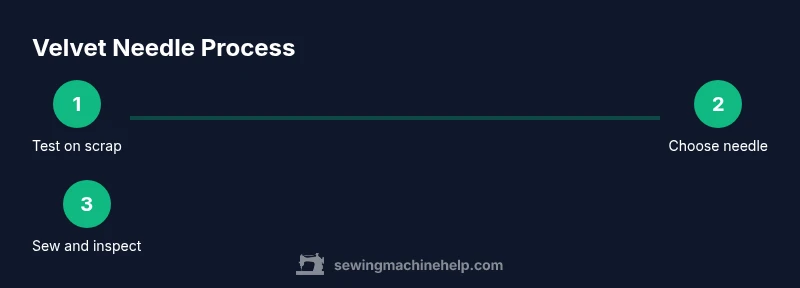
Begin with a scrap piece to dial in tension, stitch length, and needle choice. Place velvet on scrap, align with nap direction, and test a few inches along every seam. If the nap shifts, adjust the fabric orientation and re-test until you see a uniform stitch line. Then sew your project slowly, stopping to remove fabric bulges and ensure the nap stays flat. Use short, steady stitches and avoid pulling or stretching the fabric as you sew; velvet responds poorly to strain. After finishing a seam, backstitch softly and trim threads as you go to prevent lint buildup on the needle eye. Finally, press borders and hems with care, using a cloth and medium heat to keep the nap intact.
Common mistakes and how to fix them
Nap crushed or visible puckers usually indicate fabric being fed unevenly or too much tension. Switch to a sharper needle if your stitches appear fuzzy or snagged. If threads loop or gather at the seam, reduce stitch length and re-test with the same fabric. For stubborn nap issues, stitch with tissue under the fabric to reduce friction or try a longer stitch to reduce needle drag. Never skip testing on a swatch— velvet can hide missteps until you fold or trim. If you notice needle heat or fraying, take a break, re-thread, and ensure your machine oil level is appropriate for the speed you are sewing at.
Finishing and care for velvet projects
After sewing, press with a cloth at low heat, keeping the iron moving and not resting in one place to avoid shining or crushing the nap. Allow velvet to cool before handling to prevent setting crease marks. Store velvet projects flat or roll them carefully to protect nap direction, avoiding crushing or flattening the pile. Regularly inspect needles and replace as needed to maintain quality; a sharp, clean needle will yield crisper edges and fewer snags on future velvet projects.
Tools & Materials
- Sharp sewing machine needle (microtex or universal), sizes 60/8–70/10(New needle; avoid bent or dull needles.)
- Velvet fabric scraps (same nap and color)(For swatches and nap direction testing.)
- Walking foot(Recommended for even feeding on velvet.)
- Tissue paper or tear-away stabilizer(Place under velvet to prevent stitch sinking.)
- Non-stick foot (optional)(Helpful if you don’t have a walking foot.)
- Pressing cloth(Use with low heat to protect nap when pressing.)
- Sharp scissors(Trim threads and snips close to seams.)
- Seam ripper(For quick corrections without damaging nap.)
Steps
Estimated time: 40-60 minutes
- 1
Prepare velvet and test on scraps
Start by cutting a few scrap swatches from the same velvet you’ll use. Test needle type and size on these swatches, paying attention to nap direction and stitch appearance. Record which combination gives clean, even stitches without snags.
Tip: Always test multiple needle types on the nap before committing to your final piece. - 2
Thread needle and confirm settings
Install a fresh needle in the 60/8–70/10 range, thread with the correct path, and balance tension for velvet. If your machine permits, lower the presser foot pressure slightly to reduce fabric drag.
Tip: A mis-threaded needle or mismatched tension is a common velvet culprit. - 3
Position fabric with nap alignment
Place velvet so the nap runs in the same direction as the seam. If needed, use tissue stabilizer underneath to prevent pile from lifting or sliding. Mark the nap direction to keep consistency across seams.
Tip: Never sew across folds when the nap is loose; align samples first. - 4
Choose appropriate foot and stitch length
Attach a walking foot if possible; set a short stitch length around 2.0–2.5 mm. Avoid long stitches that can pull nap; keep feeds steady and hands light on the fabric.
Tip: Test again after changing the foot to confirm improved feeding. - 5
Sew seams with care
Sew slowly, backstitching gently at the start and finish. Pause to reposition if the nap shifts. Avoid tugging on velvet; let the machine feed the fabric.
Tip: Consistent speed reduces puckering and nap distortion. - 6
Finish and inspect
Trim threads, press gently with a cloth and brief press on the seam line, then inspect for snags or nap flattening. If needed, rework the edge on a scrap before final assembly.
Tip: A quick post-sew test on a scrap saves time on the main piece.
Your Questions Answered
What sewing machine needle should I use for velvet?
Use a sharp needle such as microtex in sizes 60/8–70/10, or a universal needle tested on scraps. Avoid large ballpoint needles which can damage the nap.
Use a sharp needle in the 60/8 to 70/10 range. Test on scraps first.
Is a walking foot necessary for velvet?
A walking foot helps velvet feed evenly, reducing nap distortion. If you don’t have one, use a non-stick foot and sew slowly while testing.
A walking foot is highly recommended for velvet, but you can work around it with care.
Can I use a denim needle for velvet?
Denim needles are generally not ideal for velvet. Stick with microtex/sharp or universal needles and verify with fabric scraps.
A denim needle isn’t ideal; test a sharp needle on scraps first.
How do I prevent nap showing along the seams?
Align the nap direction with the seam, test on scraps, use short stitches, and stabilize with tissue under the fabric if needed.
Make sure the nap runs the same direction as the seam and test first.
Can I press velvet after sewing?
Yes, but use a pressing cloth and low heat, keeping the iron in constant motion to avoid shiny spots or nap flattening.
Yes—use a cloth and low heat to press velvet gently.
Watch Video
The Essentials
- Choose a sharp needle in 60/8–70/10 size range
- Test on velvet scraps before final sewing
- Use walking foot or non-stick foot to feed nap evenly
- Keep stitch length short and tension balanced
- Press velvet with a cloth to protect nap