Sewing Buttonholes: A Complete Step-by-Step Guide
A practical, beginner-friendly guide to sewing buttonholes with a sewing machine, covering fabric prep, machine settings, step-by-step methods, and troubleshooting for home sewists.


You’ll learn to sew precise, durable buttonholes on woven and stretch fabrics. This guide covers fabric preparation, machine setup, thread and stitch selection, and a safe cutting method. By the end you’ll produce clean buttonholes that hold up to regular use, with tips for common fabrics and finishes. We’ll also explain how to test fit and adjust settings for different button sizes.
Understanding Buttonholes
Sewing buttonholes is a core technique for garments, accessories, and repairs. A well-made buttonhole creates a controlled opening in fabric that allows a button to pass through while keeping the surrounding material strong. The goal is uniform length, neat ends, and a tidy, secure finish that holds up to regular wear. For home sewists, mastering buttonholes means greater confidence when finishing projects, from everyday shirts to handmade bags. This section covers the fundamental concepts of buttonhole geometry and planning, including how button size relates to opening length and how fabric choice affects stability. With Sewing Machine Help guidance, you’ll learn to anticipate issues before stitching begins and to tailor settings to your fabric.
Buttonhole Styles and When to Use Them
There isn’t a single buttonhole type; the best choice depends on fabric, usage, and design. The most common option is a standard rectangular machine buttonhole for woven fabrics, which offers reliability and a clean look. For heavier fabrics, reinforced or bound buttonholes provide extra durability. Knits and stretchy fabrics may benefit from stabilizers or different stitch sequences to prevent distortion. Decorative or bound buttonholes can serve as a design element, especially on coats or outerwear. Beginners should start with a basic machine buttonhole to develop consistency before venturing into bound or keyhole styles. This understanding helps you pick the right style for your project and ensure a professional finish that stands up to daily use.
Tools and Settings for Buttonholes
Your success hinges on the right tools and precise machine settings. A dedicated buttonhole foot guides the stitching evenly and helps you maintain consistent width. Use sharp scissors and a seam ripper for clean openings. Prepare fabric markers and a ruler for accurate placement and length. Most machines offer adjustable stitch length and width; set the length to match your button diameter and the width to fit within the guide of the buttonhole foot. Stabilizers or interfacing are important for woven fabrics to prevent stretching; for knits, a light stabilizer can help maintain shape. Make sure your thread is appropriate for the fabric and that the bobbin tension is balanced for uniform stitches.
Preparing Fabric for Buttonholes
Preparation reduces distortion and ensures consistent results. Stabilize the buttonhole area with interfacing on woven fabrics, and test the setup on scrap fabric before working on the actual piece. Mark the buttonhole center, length, and endpoints clearly with a fabric-safe marker. Align the fabric under the foot, keeping it flat and taut without pulling. Clear any wrinkles and baste layers if needed to prevent shifting during stitching. If your fabric has nap or directional pattern, take care to place the buttonhole along the grain and at the intended height to maintain symmetry when worn.
Step-by-Step Reference: Sewing a Standard Buttonhole
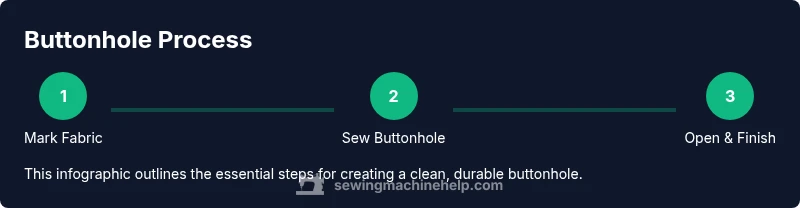
A standard machine buttonhole consists of four sides and an opening. This section provides a concise reference to the essential actions you’ll perform. Start by selecting the correct buttonhole style on your machine and attaching the buttonhole foot. Set an appropriate stitch length and width, then sew around the rectangle. Finish by cutting the opening with small, sharp scissors from the center outward. Finally, test the fit with the actual button and adjust if needed to ensure a clean, secure opening.
Troubleshooting Common Buttonhole Issues
Common problems include mis-sized openings, uneven sides, and fabric distortion. If the opening is too small, double-check the button size and adjust the pattern length or buttonhole setting accordingly; test on scrap first. If the edges fray or the fabric puckers, ensure the fabric is stabilized and that the feed dogs are pulling smoothly. For stretchy fabrics, stabilize with interfacing or a stabilizer and consider using a different stitch sequence to reduce stretch during stitching. If your machine hesitates or the ends aren’t clean, re-thread, inspect the foot, and test on a scrap.
Finishing Techniques: Cutting, Pressing, and Reinforcing
After sewing, the key finishing steps are cutting the opening and reinforcing the ends. Use small, sharp scissors to cut the opening from the center outward, keeping the cut straight and perpendicular to the fabric. Press the buttonhole gently with a low-heat iron, keeping the iron away from the button area to avoid loosening threads. Reinforce the ends with a couple of tiny backstitches or a short finish stitch to prevent fraying and maintain shape. If the fabric is delicate, you may apply a touch of fray prevention liquid to protect the edges and preserve the buttonhole’s integrity over time.
Variations: Zippered and Keyhole Buttonholes
Some projects require variations such as zipper-style buttonholes, which incorporate a zipper foot and longer opening, or keyhole buttonholes at the top of a garment to accommodate ornamental closures. Zippered buttonholes are typically used in outerwear where a longer opening is desirable for a belt or decorative element. Keyhole buttonholes have a rounded end that reduces stress where a button sits. For beginners, stick to standard straight buttonholes until you’re confident with the machine’s rhythm. When attempting variations, test on fabric scraps first and adjust the machine’s settings to maintain clean, even stitching.
Maintenance and Care After Buttonhole Work
After finishing buttonholes, clean the bobbin area and remove any loose threads to keep your machine performing smoothly. Check the feed dogs for fabric residue and re-thread if you notice skipped stitches. Store your buttonhole foot and related tools clean and dry to prevent rust or corrosion. Regular maintenance, including oiling per your machine’s manual and using quality thread, helps maintain stitch consistency for future buttonholes.
Tools & Materials
- Sewing machine with buttonhole foot(Ensure it supports the buttonhole style you need)
- Buttonhole foot(Guides stitching width and supports even seams)
- Fabric scissors(Sharp blades for clean openings after cutting)
- Fabric marker or chalk(Mark center, length, and endpoints clearly)
- Ruler or measuring tape(For accurate spacing and buttonhole length)
- Pins or clips(Hold layers securely during marking and stitching)
- Interfacing or stabilizer(Useful for woven fabrics to prevent stretch)
- Seam ripper(For quick fixes if a buttonhole goes wrong)
Steps
Estimated time: 1 hour 20 minutes
- 1
Prepare fabric and mark position
Mark the center and position for your buttonhole on the fabric. Use a ruler to ensure even spacing and symmetry. Align the pattern piece if you're sewing a garment; test on scrap fabric to confirm accuracy.
Tip: Double-check symmetry by marking both ends and testing on scrap fabric. - 2
Choose the correct buttonhole style and size
Select the appropriate buttonhole length and style based on the button you intend to use and the fabric type. When in doubt, start with a slightly longer length on scrap fabric and trim if needed.
Tip: Test on scrap to confirm the opening accommodates the button. - 3
Attach buttonhole foot and set machine
Attach the buttonhole foot and choose the correct stitch sequence. Set the stitch length to a comfortable pace and adjust width to fit the guide on the foot. Sew a quick practice buttonhole on scrap fabric.
Tip: If unsure, sew on scrap first to verify alignment and density. - 4
Sew the buttonhole
Position the fabric under the foot and start sewing. The machine will stitch around the rectangle, forming the sides and the ends. Maintain steady pressure with the fabric and avoid pushing it through the machine.
Tip: Keep a consistent speed to prevent wobbly sides. - 5
Open the buttonhole
Use small, sharp scissors or a dedicated buttonhole cutter to carefully remove the opening from the center outward. Take small cuts to avoid tearing the fabric and keep the opening square.
Tip: Cut from the center outward; avoid cutting at an angle. - 6
Finish and test
Test the button by inserting the intended button. If it doesn’t fit, adjust the opening length or seam allowance and re-test on scrap. Press the finished buttonhole lightly with a low heat iron to set the stitches.
Tip: Always test with the actual button before finalizing.
Your Questions Answered
What fabrics are best for buttonholes?
Stable, woven fabrics with minimal stretch work best for buttonholes. Knits can be tricky; use stabilizers and test on scrap.
Stable woven fabrics work best; knits may require stabilization.
How do I adjust stitch length for a buttonhole?
Set the machine's buttonhole length to match your button diameter and test on scrap before final stitching.
Test on scrap to confirm the length matches your button.
Can I sew buttonholes without a buttonhole foot?
Yes, but accuracy is harder; use a zipper or walking foot to help guide the fabric.
Yes, but it’s trickier without the foot.
Why is my buttonhole not centered?
Re-mark the fabric center, align the buttonhole foot, and retest on scrap.
Mark again and test on scrap before finishing.
How can I reinforce a high-stress buttonhole?
Backstitch at the ends or add a reinforcing stitch across the opening.
Backstitch to reinforce the ends.
How do I prevent fraying after cutting the buttonhole?
Finish the edges with a narrow satin stitch, zigzag, or fray-prevention product.
Finish edges to prevent fraying.
Watch Video
The Essentials
- Mark accurately and test fit before cutting
- Use the correct buttonhole foot and machine settings
- Finish edges and press for durability
- Test with the actual button to confirm fit