Sewing Machine Puzzle Troubleshooting: Quick Fixes and Step-by-Step Guide
A practical troubleshooting guide for home sewists facing a sewing machine puzzle. Learn safe quick checks, diagnostic flow, and step-by-step fixes to restore smooth stitching and prevent future jams.


A sewing machine puzzle today usually stems from a simple, fixable snag—like a thread jam, needle stuck, or incorrect tension. Start with easy checks: unplug the machine, clean lint, and rethread the upper thread. If the issue persists, consult the diagnostic flow below for a safe, structured path to the right fix.
Why a sewing machine puzzle happens
According to Sewing Machine Help, a common sewing machine puzzle starts with lint buildup and misthreading. The team found that tiny fibers can bind the feed dogs and loop the thread path into knots, creating inconsistent stitches or unexpected bird nesting on fabric. A seemingly minor snag can resemble a major failure, but most puzzles resolve with patient inspection and careful retreading. In many homes, a puzzle develops when fabric feeds unevenly, the needle hits the fabric at the wrong angle, or the bobbin winds too tightly. By understanding these root causes, you can tailor a fast fix rather than guessing. Keep in mind that home sewists often confuse a puzzle with a simple skip stitch, which is usually solvable by rethreading and adjusting tension. Sewing Machine Help Team encourages a calm, methodical approach, because rushing can push lint further into the mechanism and require expensive repair later.
Quick checks you can perform safely
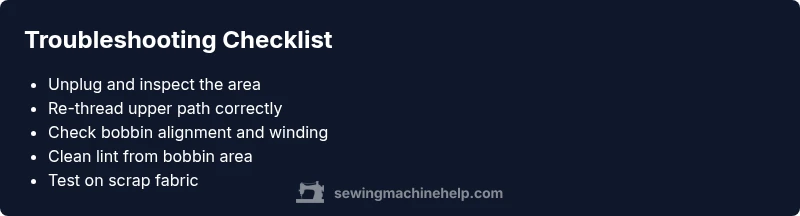
Before diving into deeper diagnostics, perform a few safe checks that address the vast majority of sewing machine puzzle issues. First, unplug the machine and remove any accessories from the work area. Check that the needle is installed correctly and not bent, and verify that the thread path from spool to needle is clear. Rewind the bobbin and reinsert it correctly, following the direction arrows in your manual. Clean the bobbin area with a small brush to remove lint, but avoid blowing air directly into the housing. Finally, test with a scrap fabric and a simple straight stitch to observe if the puzzle persists. If the issue remains after these steps, move to the diagnostic flow for a structured path to the right fix.
Diagnostic flow overview
The diagnostic flow helps you translate symptoms into likely causes and proven fixes. Start with the easiest explanations: thread jams, misthreading, or a bent needle. If stitches are looping or bird nesting, your tension balance between the needle and bobbin is often off. If the machine stops mid stitch or makes grinding sounds, inspect the belt and gears only if you are comfortable; otherwise stop and seek professional help. Use a scrap piece of fabric to test after each change. Document what you changed and the result so you can retrace steps if needed. This methodical approach reduces guesswork and limits risk while preserving your sewing machine puzzle progress.
Step-by-step: Fix the most common causes
To address the most common sew machine puzzle causes, follow a structured sequence. Start with the simplest adjustments and progress to safer maintenance tasks. This approach minimizes fabric waste while maximizing your chances of a first-time fix. Remember to pause if you encounter resistance or unusual noises, and never force parts beyond their travel limits.
Tips & warnings
Safety first: always unplug before any maintenance. Use a small, soft brush to remove lint; avoid compressed air near delicate components. When in doubt, consult your manual or seek professional help for timing or motor concerns. Avoid using harsh cleaners on the needle plate or bobbin housing, as residual chemicals can affect stitch quality. Always test on scrap fabric to confirm the fix before resuming a real project.
Prevention: keep your sewing machine puzzle away with routine care
Regular maintenance dramatically lowers the risk of future sewing machine puzzle scenarios. Schedule a light cleaning after every few projects, rethread periodically to verify the path remains clear, and replace needles as they dull or break. Use quality thread and appropriate needle size for the fabric you are sewing to minimize tension irregularities. A small, consistent care routine pays off in fewer jams and smoother stitches over time.
Steps
Estimated time: 20-40 minutes
- 1
Power down and prep
Unplug the machine, remove the needle if possible, and clear the workspace. This prevents any accidental movement while you work. Having a clean, well-lit area helps you spot hidden lint and misthreaded paths.
Tip: Take photos of each step so you can compare later. - 2
Re-thread the upper path
Follow the manual’s threading route from spool to needle. Ensure the presser foot is raised to open the path, and verify the thread sits properly in guides and tensions. A small snag here can cause large stitch issues.
Tip: Use the correct spool orientation and avoid cross-threading. - 3
Check the needle
Remove and inspect the needle for burrs or a bent shaft. Replace with a fresh needle of the appropriate type and size for your fabric. A damaged needle is a common cause of jams and skipped stitches.
Tip: Always insert the flat side of the needle away from you. - 4
Inspect the bobbin path
Open the bobbin case and pull the thread to ensure it unwinds smoothly. Rewind the bobbin if necessary and return it to its housing correctly. A wrongly seated bobbin is a frequent source of bird nesting.
Tip: Turn the hand wheel toward you while testing to feel for any unusual resistance. - 5
Clean and test
Remove lint around the feed dogs and bobbin area with a soft brush. After cleaning, re-seat all parts and re-test on scrap fabric using a straight stitch. Observe for changes in tension and stitch formation.
Tip: Do not use compressed air if the machine manual warns against it. - 6
Adjust tension if needed
If stitches alternate between loose and tight, adjust the upper and bobbin tensions in small 1/4 turn increments. Test on fabric scrap after each tweak until the stitch looks balanced.
Tip: Make tiny adjustments and document each change.
Diagnosis: Sewing machine puzzle symptoms include inconsistent stitches, thread nests, skipped stitches, or machine stopping mid-stitch.
Possible Causes
- highThread jam or lint buildup in bobbin area
- highIncorrect upper or bobbin threading path
- highBent or damaged needle
- mediumBobbin inserted incorrectly or wound too tight
- mediumWrong tension setting or contaminated tension discs
- lowWorn gears or timing issue
Fixes
- easyRemove lint from bobbin area and rethread upper thread
- easyReplace needle and verify correct needle type/size for fabric
- easyRewind and reinsert bobbin with correct tension and alignment
- easyClean debris from tension discs and reseat thread path
- hardIf timing or gearbox wear is suspected, seek professional service
Your Questions Answered
What is the most common cause of a sewing machine puzzle?
The most common cause is a thread jam or misthreading, often coupled with a bent needle or incorrect tension. Re-threading and cleaning the bobbin area resolves many puzzles quickly.
Most sewing machine puzzles are caused by thread jams or misthreading, often with a bent needle. Re-thread and clean the bobbin area to fix it.
Can I fix a sewing machine puzzle myself at home?
Yes, many puzzles can be fixed at home with basic maintenance: re-threading, needle replacement, and lint removal. If the problem persists after these steps, seek professional help especially for timing issues.
Yes, you can fix many puzzles at home by re-threading, replacing the needle, and removing lint. If it continues, consider professional help for timing problems.
When should I call a professional for a sewing machine puzzle?
Call a professional if the machine still misbehaves after basic fixes, or if you notice unusual noises, belt wear, or timing concerns. A trained technician can diagnose timing or gear issues safely.
If basic fixes don’t solve it or you hear unusual noises, contact a professional. Timing or gear problems require expert care.
How often should I perform maintenance to prevent puzzles?
Schedule light maintenance after every few projects: clean lint, re-thread, and replace needles as needed. A yearly full service is recommended for owners with heavy use.
Do light maintenance every few projects and plan a yearly service if you sew a lot.
Is tension adjustment safe for beginners?
Yes, small, incremental tension adjustments are safe. Test on scrap fabric after each tweak and keep notes to avoid over-tightening or loosening.
Tension tweaks are fine in small amounts. Test on scrap fabric after each tweak.
Watch Video
The Essentials
- Identify the most common causes first
- Re-thread and re-check needle/bobbin positions
- Test on scrap fabric after each change
- Keep a brief log of fixes tried