How to Make Scrunchies with a Sewing Machine
Learn to make scrunchies with a sewing machine with a step-by-step approach. From fabric choice to elastic threading, this beginner-friendly guide covers practical tips, common mistakes, and creative variations.


You can make stylish scrunchies with a sewing machine by cutting a fabric strip, joining the ends, turning it right side out, and threading elastic through the tube. With a basic sewing machine, you’ll finish a batch in under an hour. This guide covers fabric prep, stitching, turning, and finishing for durable results.
Getting started: learning the basics of making scrunchies with a sewing machine
If you’re wondering how to approach this project, the key is to treat it as a simple fabric tube with a comfortable elastic fit. According to Sewing Machine Help, scrunchies are a great first project for beginners because they introduce you to basic fabric handling, straight stitching, and turning operations without complicated seams. The technique scales well for gifts or a small fabric stash clear-out. As you practice, you’ll notice common patterns: accurate cutting, a clean finishing seam, and gentle pressing to reduce bulk. This guide will walk you through each stage so you can confidently complete your first batch and then experiment with fabrics, widths, and embellishments.
Crafting a scrunchie is approachable for home sewers of all levels. The process emphasizes precision over complexity, making it a satisfying project that builds foundational sewing skills while yielding a practical accessory. The Sewing Machine Help team notes that the project remains beginner-friendly when you keep the stitch length consistent and avoid over-stretching fabric while feeding it through the machine.
What you’ll learn in this guide
- Fabric selection and cutting techniques
- Tube construction and turning methods
- Elastic threading and finishing stitches
- Finishing touches and care tips to extend life
- Common troubleshooting steps for tricky fabric or elastic
This section sets expectations and highlights why scrunchies are a smart, repeatable project for practice and creativity.
Tools & Materials
- Fabric (two rectangles)(Suggested: 9in x 4in or 23cm x 10cm per scrunchie; adjust width for larger/smaller scrunchies)
- Elastic(1/4 inch to 3/8 inch wide; length about 9 inches per scrunchie)
- Thread(Matching color to fabric)
- Sewing machine(Standard machine with a straight stitch)
- Scissors(For fabric and thread)
- Pins or clips(For holding pieces during sewing)
- Pins or needles for elastic (safety pin or bodkin)(Guides elastic through fabric tube)
- Iron and ironing board(Press seams flat to reduce bulk)
- Measuring ruler or yardstick(Accurate cuts and seam allowances)
- Optional embellishments (bias tape, ribbons, patches)(For decorative variation)
Steps
Estimated time: 60-90 minutes
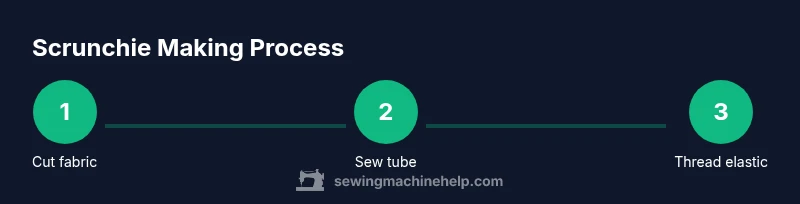
- 1
Cut fabric and elastic
Cut two fabric rectangles about 9 inches by 4 inches for a standard scrunchie. Cut elastic to about 9 inches, allowing a small stretch. If you plan multiple scrunchies, batch-cut several pieces to speed up the process.
Tip: Use fabric with some give (like lightweight cotton). Pad the edges with wear-resistant scissors to avoid fraying. - 2
Sew fabric into a tube
With right sides together, stitch the long edges of the fabric rectangle with a 1/4 inch seam, forming a tube. Leave one short edge open to turn the tube right side out later.
Tip: Backstitch a few times at the start and end to secure the seam and prevent unraveling. - 3
Turn and press the tube
Turn the tube right side out using a point turner or a blunt pin. Press flat so the seam lies cleanly along the center back. This step reduces bulk and makes later steps smoother.
Tip: If you don’t have a turner, thread a thin object through the tube and gently push the fabric; avoid snagging the seam. - 4
Thread elastic through the tube
Attach a safety pin or bodkin to the elastic and thread it through the fabric tube all the way around. Leave a small opening at one end to join the elastic ends.
Tip: Avoid twisting the elastic; rotate the tube as you feed it to keep even tension. - 5
Join elastic ends and close the tube
Overlap elastic ends by about 1/2 inch and stitch securely with a zigzag or multiple passes. Close the small opening with a tight, neat stitch. Trim threads.
Tip: Test the elastic with a gentle tug to ensure it’s secure but still comfortable. - 6
Finish and press
Tuck in any raw edges and give the scrunchie a final press. Optionally topstitch around the outer edge for a polished look and extra durability.
Tip: A light touch of starch or stiffener along the outer edge can help the scrunchie maintain shape.
Your Questions Answered
What fabric is best for scrunchies?
Light to medium-weight fabrics like cotton, cotton blends, or satin work well. They’re easy to cut, sew, and wear without adding bulk. Avoid heavy materials that resist turning and bulk at the seam.
Cotton and satin work great for scrunchies. They’re easy to handle and comfortable to wear.
What elastic size should I use?
Most scrunchies use 1/4 inch to 3/8 inch wide elastic. The length should be slightly shorter than the fabric tube circumference so it gathers nicely without being too tight.
Use 1/4 to 3/8 inch elastic; make sure it’s a comfortable fit when worn.
Can I use knit fabrics for scrunchies?
Knit fabrics can work, but they may create more stretch and less structure. If you use knits, consider a firmer stabilizer or a slightly tighter seam to keep shape.
Knit fabrics can be used with a bit more care to maintain shape.
Do I need a serger for scrunchies?
A serger is not required. A regular sewing machine with a straight stitch is enough. If you have one, a narrow overcast stitch can help prevent fraying.
A regular sewing machine is plenty for scrunchies.
How can I prevent fraying on fabric edges?
Finish raw edges with a zigzag stitch or overlock if you have the capability. Trimming threads and pressing after each seam also helps.
Finish edges with a zigzag or overlock stitch and press well.
How long does it take to make one scrunchie?
With basic prep, most beginners can complete one scrunchie in 15-20 minutes after the first few batches. Time increases with embellishments or larger sizes.
About 15-20 minutes per scrunchie once you’re practiced.
Watch Video
The Essentials
- Cut precise fabric pieces for consistent size
- Maintain consistent seam allowance for tube accuracy
- Use elastic and threading that match fabric for comfort
- Finish with pressing and optional topstitching for durability