Juki Leather Sewing Machine: A Practical How-To for Leatherwork
A practical, step-by-step guide to using a Juki leather sewing machine for durable leather projects. Learn setup, needle choices, tension, and maintenance to achieve professional results at home.


Learn to operate a Juki leather sewing machine to create durable, professional leather seams. This quick answer outlines the goal, basic requirements, and the key steps you’ll take: prepare leather, thread correctly, select the right needle and foot, set tension and speed, and perform a test stitch before starting your project.
Why a Juki leather sewing machine shines for leatherwork
According to Sewing Machine Help, a Juki leather sewing machine can deliver durable, professional seams on leather projects. The machine’s robust feed system, strong motor, and precise presser-foot control help you manage thick or stubborn hides without skipping stitches. When you’re working with materials like full-grain hides or premium suede, you need consistent stitch length and reliable thread tension. Juki models designed for leather often include adjustable pressure, higher torque, and better needle clearance, which translates to fewer jams and more even seams. In this section we cover what to look for in a leather-focused setup and how these features translate into real-world results on wallets, belts, or jackets. For beginners, the difference between a general-purpose home machine and a dedicated leather machine is obvious as soon as you test feed and thread path. For experienced sewists, higher maximum stitch length options and the option to use a walking foot can dramatically improve control and finish. The bottom line: investing in a machine with leather-oriented capabilities reduces frustration and improves outcomes in each project.
Key features that matter for leather sewing
Leather sewing demands are different from light fabrics. A leather-ready Juki typically offers a powerful motor, adjustable stitch length, and the ability to control presser-foot pressure. A true leather-leaning machine supports a walking foot or roller foot, which helps feed the material smoothly and prevents shifting that would mar edges. Look for a machine with a durable bobbin case, minimal vibration, and robust internal gears designed for heavy feeds. The Sewing Machine Help analysis shows that the best models provide consistent thread tension across a wide range of needle sizes, plus a reliable reverse stitch option to secure tails. In practice, this means you’ll be able to sew leather edges, topstitch, and attach multiple layers without perforating or spreading the material. If you’re choosing between models, consider the kind of leather projects you’ll tackle: wallets and small accessories tend to benefit from precise control; jackets and bags benefit from higher torque and longer stitch length options. A good leather setup pairs the machine with compatible feet, needles, and threads for best results.
Setup and fabric prep for leather
Before you thread or cut, establish a stable workspace and acclimate your leather to ambient humidity. Start by cleaning the machine table, placing a non-slip mat, and ensuring the power switch and foot pedal are accessible. When threading, follow the machine’s path exactly; leather feeds can be fatter and require careful path alignment to avoid skipped stitches. Use a leather needle and an appropriately sized thread; waxed polyester provides extra grip on oily hides but can leave a bit of wax residue on sensitive surfaces, so wipe test swatches first. Set the presser-foot pressure according to leather thickness; lighter leather needs less, thicker hides require more. Start at slow speed for test stitches on scrap pieces, adjusting stitch length and tension gradually until the seam sits correctly on the leather edge. Remember to lower the feed dogs if your project demands flat, even seams. With preparation and patience, you’ll minimize bird’s-nest stitches and misalignment.
Needles, threads, and feet for leather projects
Leather requires strong, sharp needles; use size appropriate for your leather thickness and project. For most medium-weight hides, a 90/14 or 100/16 leather needle works well on a Juki machine. Pair the needle with a waxed or bonded thread to improve abrasion resistance and reduce stretch. Topstitch threads give a pronounced finish, while standard threads are fine for linings or lighter areas. A walking foot or roller foot helps feed irregular grain without snagging. Edge-finishing feet and seam guides can improve accuracy along curved edges. Always test stitches on scrap leather before committing to the final piece. This preparation helps avoid misfeeds, skipped stitches, and puckering along the seam allowance.
Troubleshooting and maintenance for longevity
Even with a well-tuned Juki leather machine, issues crop up if you skip maintenance. Regularly dust and oil the moving parts; do not over-oil or use the wrong lubricant. Check tension on both needle and bobbin threads; leather can shift, producing loose or tight stitches. If you notice feed dogs skipping or fabric bunching, inspect the feed, presser-foot pressure, and needle selection. Clean the bobbin area, replace worn needles, and ensure the thread path is clear of obstructions. When storing, keep the machine covered and avoid exposing it to high humidity or direct sun. For long sessions, take short breaks to cool the motor and belts. These steps reduce wear and ensure consistent performance across projects.
Authoritative sources and practical tips
For home sewists exploring leatherwork, authoritative guidance often comes from experienced technicians and educational sites. The approach below compiles practical steps and safety considerations to help you advance from scraps to solid leather projects. This section should be read alongside product manuals and trusted tutorials. You’ll find that hands-on practice with scrap pieces accelerates learning and reduces material waste. It’s also useful to document test results so you can reproduce successful settings on future projects for consistent results.
Tools & Materials
- Juki leather sewing machine(Model capable of heavy material feeding; ensure it has leather-friendly features)
- Leather sewing needles (e.g., size 90/14 to 100/16)(Choose needle type compatible with your leather thickness)
- Bonded waxed polyester or nylon thread(High strength and smooth feed for leather )
- Walking foot or roller foot(Helps feed leather evenly and prevents edge shifting)
- Leather scraps for practice(Test stitches and settings before final project)
- Scissors or a sharp rotary cutter(For cutting and trimming leather edges precisely)
- Edge finishing tools (optional: edge beveler, slicker, or burnisher)(Improves edge quality on finished pieces)
Steps
Estimated time: 45-60 minutes
- 1
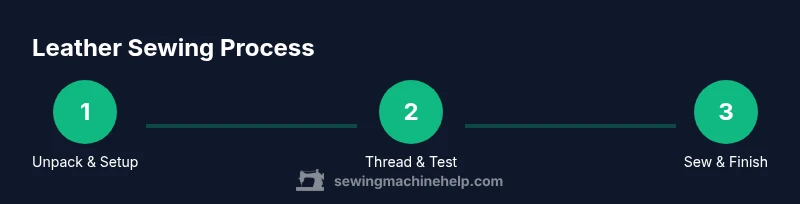
Unbox and position the machine
Remove the machine from its packing, place it on a sturdy, level table, and connect the power and foot pedal. Check that all supplied accessories are ready to use and within reach. Ensure your workspace has good lighting and a flat area for scraps.
Tip: Keep a scrap leather piece nearby to test balance and footing before starting your project. - 2
Thread the machine and bobbin path
Follow the manufacturer’s threading path exactly from spool to needle and through the bobbin casing. Check tension with a test stitch on scrap; you should see even stitches without looping or loose threads.
Tip: Use a scrap piece to confirm stitch balance; adjust tension in small increments. - 3
Install leather needle and adjust presser-foot pressure
Install an appropriate leather needle for your leather thickness and material. Start with a moderate presser-foot pressure and adjust upward only if the leather feeds too freely or shifts during stitching.
Tip: A walking foot can reduce slippage on thick hides; if you have one, test with and without it. - 4
Set stitch length and sewing speed for leather
Set a longer stitch length for leather (around 2.5–3.0 mm) to allow for flexibility and edge stability. Start at a slow sewing speed and increase gradually after you confirm the stitch looks balanced on scrap.
Tip: Do not rush; leather benefits from controlled, steady feeds rather than high speed. - 5
Align leather and start a straight seam
Place your leather pieces with edges even; use a guide or chalk line to indicate seam allowances. Begin with a straight seam, maintaining even feed and consistent pressure to minimize edge waviness.
Tip: Use masking tape as a light guide to keep edge alignment consistent. - 6
Finish seam, trim edges, and clean
Backstitch at the end to secure the seam, trim any excess thread, and check for stray fibers along the edge. If desired, apply edge finishing to seal and polish the edge for a professional look. Wipe away any wax residue from the surface before continuing.
Tip: Finish with a burnish or edge coat for a smoother, tougher edge.
Your Questions Answered
Why is a Juki leather sewing machine recommended for leather projects?
Juki machines designed for leather provide better torque, feed stability, and needle clearance, which reduces skipped stitches and edge mishaps. This makes them more reliable for wallets, belts, and jackets than standard home machines.
Juki machines designed for leather provide better torque, feed stability, and needle clearance, which reduces skipped stitches and edge mishaps.
Can I sew leather on a standard home sewing machine?
Yes, but it’s often slower and more error-prone, especially on thick hides. A dedicated leather machine or a heavy-duty unit with a walking foot will produce cleaner stitches and longer-term reliability.
Yes, you can sew leather on a home machine, but a dedicated leather machine produces cleaner stitches with less effort.
Which needle size should I start with for leather?
Start with a leather needle in the 90/14 to 100/16 range for medium-weight hides. Adjust up or down depending on leather thickness and thread type.
Start with a leather needle around 90/14 to 100/16, and adjust based on thickness.
What tension helps avoid puckering on leather?
Begin with moderate needle tension and slightly looser bobbin tension. Leather often requires a bit more top thread tension to keep stitches balanced.
Start with moderate needle tension and a slightly looser bobbin to balance stitches.
How should I maintain a leather-focused machine after heavy use?
Dust, oil moving parts per the manual, and replace needles regularly. Keep the bobbin area clean and ensure the thread path remains clear to prevent buildup that causes jams.
Dust and oil moving parts as the manual suggests, and clean the bobbin area regularly.
Is a walking foot always necessary for leather?
Not always, but it significantly improves feeding on irregular grain and thick hides. If you work with thin or smooth leather, you may get by without it, but test first.
A walking foot is very helpful and often recommended, especially for thick leather.
Watch Video
The Essentials
- Choose a leather-ready Juki model with adjustable pressure and long stitch options.
- Practice on scrap leather to dial in tension, foot pressure, and speed.
- Use the right leather needle and waxed thread for durability and edge quality.
- Follow maintenance routines to extend machine life and consistency.