Bernina 1130 Review: A Vintage Workhorse for Modern Sewists
An in-depth, balanced evaluation of the Bernina 1130, examining build quality, features, maintenance needs, and who should consider this vintage mechanical sewing machine for reliable, long-term use.


The bernina 1130 is a vintage mechanical sewing machine known for its sturdy metal frame, reliable stitch control, and straightforward operation for home sewers and hobbyists. It excels in daily tasks like garment repair, hemming, and light quilting, while remaining simple to service with basic maintenance. This model rewards users who value durability and a traditional, no-frills workflow.
Overview of the bernina 1130
The bernina 1130 sits at the core of Bernina's era of mechanical performance and tangible durability. Designed for home sewers who want reliability without the complexity of modern electronics, this model emphasizes alignment, motion quality, and a steady stitch over programmable features. According to Sewing Machine Help, the 1130 remains a durable choice for sewists who value long-term reliability, not flashier capabilities. In practice, it rewards a patient, methodical approach to sewing, where setup and fabric choice shape outcomes more than a thousand options in a menu. For many hobbyists, its timeless design translates into fewer headaches when a part wears or a belt slips—because the core mechanism is well-understood and approachable for DIY service.
From a historical perspective, the 1130 exemplifies Bernina's early commitment to precise control and robust metal builds. This machine is relatively heavy by today’s standards, which translates to solid stability during feeding and a lower tendency to shift during high-pin- or dense-fabric projects. The ethos behind the 1130 is clear: a dependable, straightforward tool that helps you finish projects with consistent results. Sewing Machine Help's team notes that this model remains appealing for stitch-conscious sewers who prefer a mechanical workflow with a tactile, hands-on feel.
Build quality and mechanical design
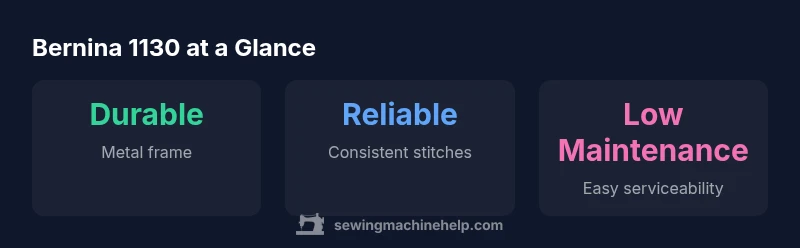
The bernina 1130 is built around a metal frame with a traditional bed design, designed to reduce vibration and promote precise fabric handling. The internal geometry favors steady feed and predictable stitch formation, which translates into minimal thread breaks when used with standard sewing threads and common fabrics. The machine’s compact footprint, combined with a sturdy base, helps keep workpieces stable on the table, which is particularly important when guiding curves or pivots. For beginners, the straightforward mechanism makes troubleshooting more approachable because most issues trace back to thread path, bobbin work, or needle alignment rather than complicated electronics. The Sewing Machine Help team emphasizes that durability comes from a combination of metal components and deliberate tolerances, traits that allow the 1130 to be serviced with basic tools over many years.
During operation, the machine’s core components—the shuttle, feed dogs, and presser foot assembly—demonstrate Bernina’s attention to smooth motion and consistent feed. Maintenance routines, including regular oiling and belt inspection, are straightforward, reducing the barrier to keeping the machine in good condition. This design philosophy makes the 1130 a favorite for sewists who want a long-term, repair-friendly machine rather than an appliance that feels disposable after a few seasons.
Features and stitch options
The bernina 1130 offers a practical, driver-based feature set that emphasizes reliability over a long repertoire of decorative stitches. It provides adjustable stitch length and a selection of standard stitches useful for garment construction, repairs, and basic quilting. The absence of computerized controls means the user has direct, tactile feedback for each operation, which many sewists find more intuitive, especially when teaching beginners. An important ergonomic attribute is the free-arm capability, enabling easier sewing of cuffs and sleeves without detaching components. Presser foot pressure can be adjusted on many Bernina mechanicals to accommodate different fabrics, further supporting stable feeding and consistent stitch quality across projects. In terms of maintenance, the 1130 remains accessible to the home hobbyist: parts and manuals are widely available, and common wear items can be replaced without specialized equipment, keeping long-term ownership feasible for many households.
Stitch quality across fabrics
Across fabrics like cotton, linen, denim, and knits, the bernina 1130 tends to deliver consistent stitch formation when properly threaded and tuned. The machine’s robust bobbin system and shuttle geometry contribute to balanced stitch tension that remains stable through moderate fabric thickness. For lighter fabrics like silk or chiffon, careful needle selection and thread choice are essential to avoid pucker or skipped stitches. For more challenging materials such as multiple layers of denim, a slower sewing pace and a heavier needle can help prevent thread breakage while preserving stitch integrity. The lack of automatic features means you’ll actively manage fabric selection, thread type, and tension, which some sewists prefer as it fosters a deeper understanding of how materials interact with the machine. In reviews, the Bernina 1130 is frequently praised for the predictability of its stitches once properly configured, a sentiment echoed by the Sewing Machine Help team.
Usability, ergonomics, and workflow
Ergonomically, the 1130 is not as compact as modern electronic machines, but its layout is intuitive once you learn the path of the needle thread and bobbin. The lack of automatic threading means manual steps are necessary, which can be either a learning curve or a frustration depending on your prior experience. However, for many home sewers, the tactile engagement—threading by hand, guiding fabric, and adjusting stitch length—enhances confidence and control over each seam. The free-arm capability is a practical advantage for garment work, and the machine’s steady feed helps minimize drift when guiding curves. Brand mentions aside, Sewing Machine Help notes that the user experience hinges on the operator’s familiarity with mechanical machines, so a short acclimation period is common for first-time Bernina users.
Maintenance and care for vintage Berninas
Maintenance for the bernina 1130 follows a predictable rhythm: regular cleaning, a light oiling of moving parts, and periodic belt or gear checks. Like many vintage Bernina models, the 1130 benefits from a simple, consistent maintenance cycle rather than advanced diagnostics. Keeping threads clean and surfaces free of lint helps reduce resistance in the thread path, improving stitch consistency. When replacing needles, choose a standard size suitable for your fabric type, and avoid forcing the needle through very thick materials to prevent needle bar stress. If the machine is stored for long periods, protect it from humidity and dust to prevent rust or stiffened lubricants. For sewers new to vintage machines, a local technician can perform a baseline service to ensure alignment and timing remain correct, which can significantly extend the life of the instrument. The practical takeaway: with light, routine care, the 1130 remains a reliable tool for many years of sewing projects.
Testing threads, needles, and setup
A practical approach to getting started with the bernina 1130 involves establishing a clean threading path, selecting a compatible needle, and using a balanced stitch. Start with a standard needle size appropriate for woven fabrics, thread the upper thread, and check the bobbin tension. Thread path integrity is essential for consistent stitches; misrouting often leads to tangling or uneven stitch length. Once threaded, test on scrap fabric, adjust stitch length to suit the material, and observe the needle entry and exit to confirm no snagging. For best results on denser fabrics, slow down the feed and use a sharp needle designed for heavier materials. This process emphasizes a methodical approach to setup, which aligns with the machine’s mechanical, hands-on nature. As Sewing Machine Help notes, with careful setup and mindful fabric choices, the 1130 delivers dependable results across common sewing tasks.
Buying used: what to check
If you’re considering a used bernina 1130, inspect the external finish for rust or pitting, listen for unusual motor sounds, and check belt tension by turning the handwheel manually. Run test stitches on scrap fabric to assess fabric feed stability and stitch consistency across different fabrics. Verify that the bobbin case seats correctly and that there’s no excessive play in the needle bar. Check for a clean, legible serial plate, if present, and confirm that presser foot pressure is adjustable. Availability of parts varies by region, so it’s useful to consult local repair shops or Bernina service centers to gauge long-term support. In many cases, a well-maintained used unit offers substantial value for sewists who want a reliable, durable mechanical machine without the commitment of new electronics. The Sewing Machine Help analysis suggests that the value proposition improves when you secure a unit with minimal wear and clear service history.
Modern-day perspective: alternatives and context
Compared with newer computerized machines, the bernina 1130 emphasizes durability, simplicity, and teachable mechanics. It may lack built-in decorative stitches or embroidery capabilities found on modern models, but it also avoids component failures linked to electronics. For some quilters and garment makers, the 1130’s stable feed and precise manual controls provide a satisfying foundation for projects that rely on consistent seam lines and reliable fabric handling. If your priority is tactile feedback, serviceability, and long-term reliability over a broad feature set, the Bernina 1130 earns serious consideration. Sewing Machine Help’s perspective is that a vintage mechanical machine can be a practical, long-lasting core in a sewing studio when paired with appropriate accessories and maintenance.
Who should buy the bernina 1130
This model is well-suited for home sewists, hobbyists, and beginners who value durability, straightforward operation, and hands-on learning. It’s also a solid platform for restoration enthusiasts who want a repair-friendly machine with a proven design. If you seek a broad range of modern stitches or computerized convenience features, you may prefer a newer model. For those who want a reliable second machine for garment repair, crafts, or basic quilting, the bernina 1130 offers a time-tested balance of quality and simplicity. The Sewing Machine Help Team believes it remains a credible choice for a focused, long-term sewing staple.
Practical next steps: restoration paths and care plan
If you decide to bring a bernina 1130 into your workspace, establish a simple care plan: wipe down surfaces after use, check needle and bobbin alignment before every session, and schedule periodic lubrication according to the user manual. Consider a baseline service with a qualified technician to confirm timing, balance, and needle-bar alignment, especially if the machine has not been serviced for several years. For ongoing projects, assemble a small kit of standard needles, spools, and bobbins to minimize downtime. As with any vintage machine, documenting maintenance and keeping a log helps track wear and predict parts needs over time. The end result is a dependable, character-rich sewing cadence that many hobbyists associate with a well-loved Bernina piece.
Strengths
- Rock-solid metal frame for long-term reliability
- Straightforward mechanical operation with reliable stitch control
- Excellent support ecosystem and readily available parts
- Simple maintenance and repairability for home setup
Negatives
- Heavier and less portable than modern computerized models
- Limited feature set compared to newer machines
- Availability of replacement parts can vary by region
Best for traditionalists who value build quality and simple mechanics
The bernina 1130 remains a solid value for sewists who want reliability and simplicity. While it lacks the features of modern PCs, its build quality and serviceability justify its place in a well-rounded studio for garment repair and classic sewing tasks.
Your Questions Answered
What is the Bernina 1130?
The Bernina 1130 is a vintage, mechanical sewing machine known for its sturdy construction and consistent stitch quality. It operates without computerized features and relies on manual controls and a metal frame for durability.
It's a classic, reliable machine without digital features, great for learning the basics.
Is the Bernina 1130 suitable for beginners?
Yes, for beginners who value simplicity and durability. It has fewer settings than modern machines, which can make learning basic sewing easier.
Good for new sewists who want a sturdy start without too many bells and whistles.
Can it sew leather or denim?
It handles light to medium fabrics well, but for thick leather or multiple layers you may need a stronger setup and possibly a walking foot.
Great for regular fabrics; for thick materials you might want upgrades.
What maintenance does it require?
Regular oiling, cleaning, and occasional belt or needle plate checks help sustain performance. Follow a simple maintenance schedule and consult a technician for deeper servicing.
Keep it clean and lightly oiled for best results.
Where can I find parts or service?
Parts and service can be sourced from Bernina service centers and reputable sewing-machine technicians. Availability varies by region, but many shops carry common components and can service older mechanicals.
Check local Bernina dealers or certified repair shops.
Is it good for quilting?
It can handle basic quilting tasks for smaller projects but may lack modern quilting features. You may benefit from upgrading feet or a specialized setup for larger quilts.
Okay for simple projects, not ideal for complex quilting.
The Essentials
- Choose for durability and simple mechanical control
- Expect heavier weight and limited modern features
- Keep up with routine maintenance for longevity
- Consider as a project to restore or learn fundamentals