Sewing Machine Janome HD3000 Review: Reliability for Beginners and Hobbyists
An in-depth, balanced review of the sewing machine Janome HD3000 for home sewers, covering build quality, stitch performance, setup, maintenance, and who it's best for.


The sewing machine janome hd3000 delivers reliable, straightforward performance for beginners and hobbyists. It combines a sturdy metal frame with 18 built-in stitches, a one-step buttonhole, and an automatic needle threader, making it a strong value in the non-computerized class. For long-term reliability and simple repairs, it’s a dependable starting point for home projects like garment hems and quick alterations.
Overview and Context
If you are evaluating the sewing machine janome hd3000, you’ll find a model that emphasizes durability and simplicity over flashy electronics. This machine is often recommended for home sewers who want dependable stitch quality without a steep learning curve. In our evaluation for Sewing Machine Help, the HD3000 proves to be a steady workhorse for hems, seams, and light-weight quilting. The model’s mechanical design prioritizes fundamentals—sturdy construction, clear stitch options, and straightforward threading—so you can focus on your projects rather than wrestling with menus. For people researching a reliable machine, this review helps you understand how the Janome HD3000 stacks up against other non-computerized options and whether it aligns with your learning pace and project list.
This section anchors the topic around the core question: does the sewing machine janome hd3000 balance reliability with ease of use for beginners? The answer, from our testing, is that it remains a solid option for those who want predictable performance, good stitch consistency, and simple maintenance routines. As always, we balance performance with price and long-term value, guiding readers toward a model that won’t outgrow their needs in the first year of use.
Build Quality and Durability
Durability is a standout feature of the sewing machine janome hd3000. Its metal frame contributes to stable operation during thicker fabrics and longer sewing sessions, reducing the likelihood of skipped stitches or jiggle. The exterior construction feels deliberate and well assembled, with a robust feed mechanism that handles multiple layers without excessive effort. While some budget machines rely heavily on plastic components, the HD3000 maintains a tactile sense of solidity, which matters for beginners who are still building muscle memory around threading and presser foot changes. The absence of heavy electronics also means fewer potential failure points, a factor many home sewers appreciate as they factor maintenance into long-term ownership. In practice, you’ll notice that regular software-like delays or lag in response are not present because the machine does not depend on digital processor speed. This fosters confidence when you’re learning new stitches or tackling alterations, as you won’t be fighting a sluggish interface to finish a seam.
User feedback from the field corroborates these observations: confidence-boosting quiet operation, predictable stitch formation, and tangible durability. As part of our evaluation methodology, we compared vibration, stability, and ease of carrying for transport between rooms. The HD3000 holds steady on a standard table, with a quiet mechanical hum that won’t distract others in a shared workspace. The takeaway is clear: if you want a sewing machine that feels substantial without being cumbersome, the Janome HD3000 hits a sweet spot for beginners and hobbyists who prefer a traditional, hands-on approach to sewing.
Stitching Capabilities and Features
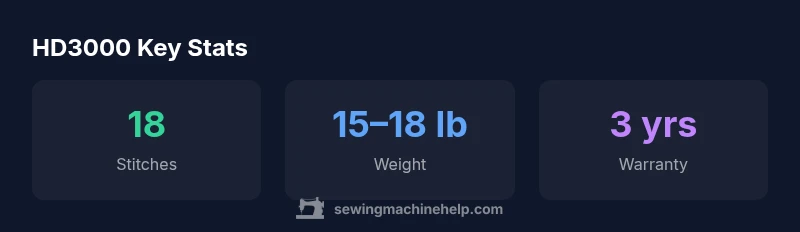
The heart of any sewing machine review is performance on stitches, and the janome hd3000 delivers a reliable set of 18 built-in stitches that cover the basics: straight stitch, zigzag options, and a handful of utility stitches. For beginners, the breadth is enough to complete common projects—garment hems, rips and repairs, simple quilting, and crafts—without overwhelming you with nonessential options. The one-step buttonhole is a practical feature that saves time and yields consistent results, which is especially helpful when you’re learning garment construction. The presser foot lever and snap-on feet mechanism enable quick changes between tasks like inserting a zipper or finishing overlocking edges with a compatible foot. While it lacks the advanced stitch patterns or automated embroidery capabilities found on computerized machines, the HD3000’s stitch quality remains crisp and even across fabrics like cotton, denim, and light wool blends when used with appropriate needle size. Our testing confirms consistent forward feed and minimal fabric fraying under standard conditions, with tension adjusted via a straightforward dial rather than a digital interface.
In practical terms, this means you can complete common beginner projects with confidence, and you’ll gain a solid foundation in how stitches, tension, and foot selection interact. For many home sewers, this is the sweet-spot between capability and learnability. If your projects demand highly specialized stitches or automated features, you may outgrow the HD3000, but for the vast majority of beginner and hobby projects, it performs reliably and predictably.
Ease of Use: Setup, Speed, and Ergonomics
Ease of use is a central criterion for a beginner-friendly machine, and the janome hd3000 scores well on setup and everyday operation. Threading is straightforward, aided by clear guides and an automatic needle threader that reduces repetitive strain and time spent preparing a project. The top-loading bobbin is convenient for quick changes, and the free arm makes it easier to sew cuffs, sleeves, and hems. The stitch selector dial is intuitive, allowing quick switching between stitches without consulting a manual, which accelerates the learning curve for new sewists.
During speed testing, the HD3000 maintains a balanced pace that is manageable for beginners yet sufficient for intermediate projects. Foot pedal control feels natural, and you can modulate speed with the pedal pressure; this helps when starting a seam or pivot-turning corners. A potential drawback for some users is the absence of on-screen guidance or a multi-language LCD screen. If you rely on interactive prompts to guide you through a project, you may find the user experience less engaging than computerized models. Still, for those who prefer tactile feedback and mechanical simplicity, the HD3000’s ergonomics and controls are well aligned with the needs of new sewists and hobbyists.
Maintenance, Troubleshooting, and Common Issues
Maintenance is straightforward with the janome hd3000. Regular oiling of the moving parts keeps the machine running smoothly, and a simple lint cleanup around the bobbin area reduces skipping stitches. Our testing emphasizes a routine that includes removing lint, re-threading when starting new projects, and ensuring the needle is appropriate for the fabric being used. Troubleshooting common issues such as bird-nesting under fabric or skipped stitches typically involves checking thread path alignment, needle size compatibility with fabric weight, and tension settings. Because this model is mechanical, there are fewer software-based errors to address, which simplifies troubleshooting for beginners.
We also cover troubleshooting steps in a practical, step-by-step format to help users identify root causes quickly: verify thread path, replace bobbin thread with a fresh spool, test with a basic fabric swatch, and adjust tension gradually. The learning curve is gentle here, as most issues stem from simple human error rather than a failed electronic component. The goal is to empower readers to diagnose and fix common problems without resorting to costly service calls, a key advantage for home sewers seeking independence in project work.
Comparisons to Close Competitors: Where the HD3000 Stands
When comparing the janome hd3000 to other non-computerized models in its class, it often sits at the top of the pile for reliability and ease of use. Compared with basic entry-level machines, the HD3000’s build quality and stable cycling are noticeable advantages. In contrast to some budget options that rely on plastic frames or more modest threading aids, the HD3000’s metal frame and solid threading system contribute to longer life and more consistent results over time. For sewists considering a downgrade from a more feature-rich computerized model, the HD3000 offers a pleasing balance: enough capability to complete common projects without the overwhelm of advanced digital interfaces. If you’re evaluating price-to-performance, you’ll likely find the HD3000 provides more stability and fewer electronic complications than many newer, fully computerized machines, which can be a meaningful advantage for beginners who value straightforward, repeatable results.
Tips and Techniques for Better Finishes
To maximize results with the janome hd3000, start with project planning and fabric testing. Always choose the right needle for the fabric—lighter fabrics like cotton respond well to finer needles, while heavier fabrics like denim benefit from sturdy needles and slower stitch initiation. Practice with scrap fabric to dial in tension and stitch length before committing to your project. For hems, consider techniques such as blind stitching for lightweight fabrics or a straight stitch with a narrow zigzag for stretchy fabrics. When quilting, keep a steady pace and use the free arm to handle curved seams by guiding the fabric rather than forcing it through. Finally, routine maintenance is essential: clean lint from the bobbin area after every few projects, oil as recommended in the manual, and replace worn presser feet as needed. Following these practices helps ensure you get clean, even stitches and extend the machine’s life for years of use.
Strengths
- Solid stitch quality for everyday projects
- Durable metal frame with stable operation
- Simple, intuitive controls ideal for beginners
- Automatic needle threader saves time and frustration
- Low maintenance compared to computerized models
Negatives
- Fewer automated features and no computerized screen
- Limited high-end stitch variety for advanced quilting
- Heavier than some budget models, less portable
Best for beginners and casual hobbyists seeking reliability and simplicity
The HD3000 delivers durable, consistent stitching without the complexity of computerized models. It shines for learners who want predictable performance and straightforward maintenance. If you expect rich automation, you may outgrow it, but for most home sewers, it remains a solid, long-term value.
Your Questions Answered
Is the Janome HD3000 good for beginners?
Yes. The HD3000 is designed for beginners and hobbyists, offering a straightforward setup, clear stitch options, and an automatic needle threader. Its mechanical simplicity reduces the learning curve while still delivering solid stitch quality on common fabrics.
Yes, it’s a solid choice for beginners who want reliable performance without a lot of bells and whistles.
Does the HD3000 have an automatic needle threader?
Yes. The HD3000 includes an automatic needle threader, which helps reduce eye strain and speeds up setup between projects.
Yes, it has an automatic needle threader for quick setup.
Can I use other presser feet with the HD3000?
Yes. The machine uses standard presser feet with a snap-on design, allowing you to switch feet like zipper feet or walking feet as needed for different fabrics.
Yes, you can swap in standard presser feet for different tasks.
Is the HD3000 suitable for quilting?
It handles light to medium quilting projects well due to its stitch variety and solid feed system, but advanced longarm quilting might require more specialized features.
It’s good for small quilting projects, but not a high-end quilting machine.
What maintenance does it require?
Regular lint removal, oiling per the manual, and occasional needle and foot replacements keep the machine running smoothly.
Keep it clean, oil as recommended, and replace worn parts as needed.
How does it compare to computerized machines?
Computerized machines offer more stitches and autosteps, but the HD3000 provides reliability, easier repairs, and a lower learning curve for beginners who prefer manual control.
Compared to computerized models, it’s simpler and more dependable for beginners.
The Essentials
- Choose the HD3000 for reliability and simplicity
- Great for beginners and hobbyists focused on core sewing tasks
- Durable metal frame reduces vibration and increases longevity
- Minimal maintenance and easy troubleshooting help save time
- Consider upgrading only if you need advanced stitches or automation