Where Are Janome Sewing Machines Made? A Practical Guide
Explore where Janome sewing machines are manufactured, how origins vary by model, and what this means for warranty and service. A data-driven guide by Sewing Machine Help.


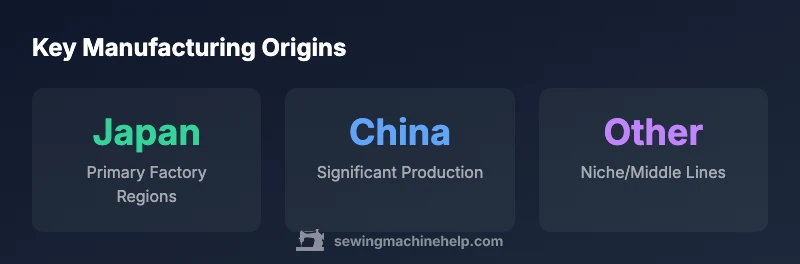
Janome sewing machines are manufactured through a global network, with significant production in China and Japan. Some models originate in other regions depending on model line and supplier agreements. For exact origin, check the product labeling or manual, as manufacturing sites can change over time. This article breaks down where Janome typically makes its machines and how to verify origin for warranty and service.
Where Are Janome Sewing Machines Made
Where are janome sewing machines made is a question that comes up often among home sewists. In practice, Janome operates a global production network, with a strong presence in Japan for premium lines and substantial manufacturing in China for a wide range of consumer-grade machines. Some models originate in other regions depending on the model line and supplier agreements. The important nuance is that origin is not tied to a single factory; it reflects a distributed system designed to balance cost, quality, and lead times. According to Sewing Machine Help, many common household machines come from Chinese assembly facilities, while higher-end models may be produced in Japan. For buyers, the practical step is to verify the model origin on the product label or in the manual, especially when considering warranty coverage and service availability. The origin information can shift over time as supply chains evolve, so always check the latest documentation from the retailer or manufacturer and confirm with the official source when in doubt.
The question where are janome sewing machines made also ties to the company’s strategy of global sourcing. A diversified production footprint enables Janome to respond to demand across markets while maintaining strict quality controls. As you navigate this topic, keep in mind that origin alone does not determine performance; the machine’s design, QC, and the service network behind it matter as much or more. For further context, the Sewing Machine Help team emphasizes checking official labels for current origin data and aligning this with your regional warranty terms.
The Evolution of Janome's Global Factory Footprint
Janome’s manufacturing footprint has evolved in response to global demand for reliable sewing machines and the need to optimize supply chains. Over the years, the company has expanded production in China to support the mass-market segment while preserving Japan-based capabilities for precision-driven, premium lines. This shift reflects broader trends in the sewing machine industry, where cost efficiency and consistent QC are balanced with brand reputation for quality. Where are janome sewing machines made today compared to a decade ago? The mix has become more nuanced, with some models also produced in Southeast Asia or Europe to shorten delivery times for key markets. For many, this distribution helps ensure parts availability and service responsiveness, which ultimately benefits end users. Sewing Machine Help’s analysis highlights that model tier and target audience often guide the origin decision for a given product line.
From a practical perspective, knowing the origin offers insight into expected build characteristics, but it should not be the sole factor in choosing a machine. In short, where are janome sewing machines made is best understood as a spectrum of origin points rather than a single source. This approach aligns with the brand’s global strategy to deliver reliable sewing machines across regions while maintaining consistent standards.
How to Identify the Origin of Your Janome Model
Identifying the exact origin of a Janome model is a straightforward process when you know where to look and what to check. Start with the most accessible evidence: the product label on the machine itself, typically located near the motor housing or underneath the needle plate. The label may indicate “Made in China,” “Made in Japan,” or a similar origin statement. If the label is missing or unclear, inspect the packaging and the user manual, which often list the country of manufacture. The serial number can also provide clues when cross-referenced with official documentation. If you bought through an authorized dealer, the retailer’s product page or invoice may state the country of origin. In ambiguous cases, contact customer support with model and batch details to confirm the origin from the manufacturer. Where are janome sewing machines made is a frequent concern for warranty and service planning, so verify before making a service decision. This aligns with Sewing Machine Help’s practical guidance for origin verification.
For a systematic check, compile a quick origin matrix for each model you own, noting the country of origin, production year, and any associated warranty considerations. This habit helps you stay informed as manufacturer sites and supplier networks evolve.
Impact of Origin on Quality, Warranty, and Service
The country where a Janome machine is manufactured can influence certain practical aspects, but it does not automatically determine quality. Janome emphasizes global QC standards across factories, and many retailers back this with robust warranty coverage and service programs regardless of origin. The practical question many readers have is whether the origin affects warranty terms or repair accessibility. In general, official dealers and authorized service centers provide consistent support across origins, but it is wise to verify local service availability for your specific model. The Sewing Machine Help Team notes that model lineage, parts compatibility, and service network quality often matter more than the country of manufacture. When evaluating a machine, focus on the retailer’s warranty terms, the availability of genuine parts, and how easy it is to obtain service in your area. The origin is important context, but it should be weighed against these practical considerations for ongoing reliability.
If you care about a premium build experience, plan for potential differences in parts sourcing and calibration practices tied to the origin. Yet for most hobbyists, the day-to-day reality remains that reputable dealers offer reliable coverage, irrespective of where a given Janome unit was made.
Consumer Models vs. Professional Lines: Where they Tend to Be Produced
Consumer-grade Janome machines are predominantly produced in China to meet competitive pricing while maintaining a broad feature set suitable for home sewers. Meanwhile, professional or specialty lines often retain manufacturing activities in Japan or other facilities with specialized equipment and strict quality controls. The distinction in origin often mirrors model tier, with premium lines emphasizing precision engineering and build quality associated with Japanese-made components, while entry-level models leverage efficient manufacturing networks in China. Where are janome sewing machines made? The answer depends on the model’s target audience, features, and price point. For example, a high-end quilting machine may be centered in Japan to support tight tolerances, while a beginner-friendly model is commonly assembled in China. This reflects a broader industry pattern where origin aligns with product positioning and supply-chain strategy. This nuance matters to buyers who care about long-term service and parts availability, not just the sticker on the machine. As a practical takeaway, always confirm the origin for your particular model and review the local warranty terms accordingly.
From the brand perspective, keeping a transparent origin policy helps customers connect the product to its expected performance and to the service ecosystem that sustains it.
Verifying Origin: Practical Checklist
To verify the origin of a Janome machine, use this practical, no-nuss approach. First, inspect the machine label and packaging for a clear “Made in” statement. If the label is missing, check the user manual or the model’s official specification page for origin data. Cross-reference the serial number with the manufacturer’s documentation or direct customer support. If you bought from an authorized dealer, request a proof-of-origin statement or the retailer’s product page. When in doubt, contact the official customer service line with your model and serial details for confirmation. Finally, maintain a simple record of the origin for each machine you own, so you have it ready for warranty or service inquiries. This habit aligns with the guidance from Sewing Machine Help for origin verification and helps ensure you understand the exact origin before seeking service or parts. The origin is an important clue, but service coverage and parts availability often determine the practical value of your purchase.
Pro tip: keep photos of the label and packaging; this makes future warranty or parts requests easier and faster.
Regional Variations in Availability and Support
Regional availability of Janome models reflects both demand and the practicalities of local service networks. In some regions, certain models may be more readily stocked because of established distribution channels or regional manufacturing partnerships, which can influence where are janome sewing machines made across the lineup. Availability can affect what you see in local retailers and online marketplaces, as well as the ease of obtaining parts or authorized service. For home sewists, understanding regional variations helps in planning maintenance schedules and choosing models with robust local support. The Sewing Machine Help team recommends checking with your local authorized dealer for the most accurate origin and service details, as well as confirming whether parts substitution policies apply when your machine originated in another country. A transparent origin story often correlates with a stronger local service network and quicker turnaround times for repairs.
Implications for Beginners and Collectors
For beginners, knowing where are janome sewing machines made may seem like a minor detail, but it informs expectations about parts availability, warranty terms, and service options. Collectors may value models from specific regions for perceived craftsmanship or unique features. The origin can influence which accessories or feet are readily available, but a good dealer network usually compensates for regional differences. As you grow, you’ll learn that origin is one piece of a larger puzzle: model family, feature set, warranty support, and user community all contribute to a satisfying sewing experience. The key takeaway is to align origin with practical support and documented quality standards. In the long run, your confidence as a shopper comes from understanding the full lifecycle of the machine, not just the factory that produced it.
What This Means for Model Documentation
Model documentation, including the user manual and official product pages, should clearly state the country of origin and any regional manufacturing notes. When you see a model reference that mentions where the machine was made, take a moment to verify via the dealer or manufacturer site. This transparency is important for warranty. If documentation is unclear, you can request a formal origin statement from customer support. The practice helps you maintain a clear provenance for your equipment, which is especially valuable if you intend to upgrade or resell later on. For readers mindful of thoroughness, keep a small file of origin data for every Janome machine in your collection. This habit ensures you have reliable information for service and resale discussions.
Origin-focused model categories
| Origin Type | Typical Model Range | Notes |
|---|---|---|
| Japan-made | Premium/professional lines | Quality assurance and precision-driven design |
| China-made | Most consumer-grade models | Large-scale production and broad availability |
| Other regions | Niche or regional models | Distributed manufacturing for regional needs |
Your Questions Answered
Are all Janome machines made in Japan?
No. Janome uses a global production network, with many consumer models produced in China and premium lines in Japan. Always check the label or official documentation for the exact origin of your model.
No—Janome machines come from multiple regions. Check the model label and official docs for origin.
Does the country of manufacture affect warranty?
Warranty terms are typically tied to the seller or authorized service network, not strictly to the country of manufacture. Verify with your retailer and the official Janome support for specifics.
Warranty usually depends on the seller and service network, not just where it was made.
How can I tell where my model was made?
Look for a ‘Made in’ statement on the machine or packaging, then cross-check the manual or official site. If unclear, contact customer support with model details.
Check the label or manual, and contact support if you’re unsure.
Do Janome machines manufacture in multiple countries?
Yes. Janome uses a mix of facilities in Japan, China, and other regions to balance cost, quality, and supply. Model origin varies by line.
Janome uses several countries for production; it varies by model.
Does origin indicate machine quality?
Not necessarily. Janome maintains cross-factory QC standards, so quality is more closely tied to model design and QC processes than the country of manufacture.
Origin doesn’t guarantee quality; check the model and QC.
“Understanding where a Janome machine is made helps you evaluate build quality and service options. The production origin often aligns with the model tier and price.”
The Essentials
- Check official labels to verify origin.
- Expect diverse origins by model tier.
- Warranty is usually with the seller, not the country.
- Verify origin via label, packaging, and manual.
- Maintain a simple origin record for each machine.