For Sale Sewing Machine Table: A Practical Buyer’s Guide
A practical buyer’s guide for selecting a for sale sewing machine table, covering compatibility, features, price ranges, ergonomics, and care, based on Sewing Machine Help Analysis, 2026.


Overview: For a sale sewing machine table, prioritize stability, size, and compatibility with your machine. A solid table should maintain level height, provide a roomy work surface, and offer solid mounting options. According to Sewing Machine Help, the best tables balance price, durability, and ease of assembly, letting you switch between projects quickly and reduce vibration for cleaner stitches.
Why a dedicated sewing machine table matters
When you sit at a sewing machine, the work surface is more than a place to rest fabric. A dedicated sewing machine table provides a stable, vibration-dampened platform that aligns your needle with the machine bed. For many home sewers, the bed height, tabletop depth, and edge finish influence control and accuracy. A purpose-built table also helps keep serging, embroidery, and general repair work organized, with drawers or shelves for bobbins, needles, and patterns. According to Sewing Machine Help, choosing a table designed for sewing can reduce wrist strain and improve posture by keeping your hips at a comfortable, neutral angle while you sew. The table's weight, frame construction, and available mounting options all play a role in the table's long-term durability and how well it supports a busy hobby room.
If you plan to use the table with a freestanding sewing machine or an integrated cabinet, verify the frame's compatibility with your model. Standard machines typically mount to a frame with a flat mounting surface and secure clamps or screws. Some tables include predrilled holes for multiple brands, while others rely on universal mounting plates. You should also evaluate the table's leveling feet and wheel options, as uneven floors can compromise stitch quality. Overall, investing in a dedicated table tends to pay off through smoother operation, less movement during stitching, and a tidier workspace.
How to evaluate for sale sewing machine tables
Evaluate tables offered for sale by focusing on three core compatibility factors: machine size, mounting method, and user height. First, confirm your machine's bed width and throat depth fit the table's opening or frame insert. If you own a larger or specialty machine, check that the table's cutouts or support brackets accommodate it without obstructing control levers or thread paths. Second, review mounting options: some tables provide universal clamps, others require a dedicated mounting plate or a through-drawer system. Consider whether you want a stationary table or a portable option with locking casters. Third, ensure the height is adjustable within a practical range to keep your shoulders relaxed. A table that is too low or too high forces you to hunch or reach. It’s also helpful to assess noise and vibration—tables with solid wood frames or metal components and wearing dampers perform better during heavy stitching. Finally, look for integrated storage that keeps essentials within reach, such as extra bobbins, lint brushes, and seam rippers. If you are buying from a marketplace, ask about assembly, warranty, and return policy before committing.
Key features to compare
- Height adjustability: Look for 1-2 inch increments to tune for your height and seating.
- Surface area: A larger work surface reduces frequent repositioning of fabric; consider at least 18x24 inches for general sewing, larger for quilting.
- Material and build: Solid wood or powder-coated metal frames offer longevity; avoid low-quality MDF that can swell with humidity.
- Storage and organization: Drawers, shelves, or hooks help keep scissors, bobbins, and patterns within reach.
- Mounting compatibility: Tables with universal mounting plates or multiple cutouts support a wider range of machines.
- Mobility and stability: Locking casters or stabilizing feet prevent wobble during precision work.
Budget ranges and value considerations
Budget-conscious buyers often find basic tables under $100, while mid-range options run around $100-$250, and premium models with heavy construction, integrated storage, and deluxe features exceed $250. When comparing value, assess durability, warranty length, and return policies. A slightly higher upfront cost can pay off in smoother operation, less vibration, and longer service life, especially for frequent crafters. Always weigh the cost against expected use, space constraints, and future projects like quilting or embroidery that may require additional surface area.
Setup, compatibility, and ergonomics
Ergonomics are critical for long sewing sessions. Position the table so your shoulders stay relaxed and elbows rest at a comfortable angle. Align the machine bed height with your seating, ensuring your wrists sit neutral when guiding fabric. If you use a sewing cabinet, check whether the table can slide into or sit beside the cabinet without gaps that would collect fabric lint. For those who mix different projects, a modular table with adjustable height and removable inserts can adapt to both standard stitching and larger tasks like garment making. Don’t forget to consider dust protection, cable management, and lighting—adequate task lighting reduces eye strain and improves stitch accuracy.
Before purchasing, measure your sewing space and bring your machine’s model information to verify fit, along with any accessories that may need a dedicated drawer or slot.
How to verify quality before buying
Before you buy, perform a simple quality check. Inspect joints for wobble by applying gentle side-to-side pressure, then have a friend lightly press on the table’s surface to test rigidity. Check mounting hardware and ensure that any clamps or plates are secure and compatible with your machine. If possible, request a live demonstration or a return policy that allows try-before-you-commit. Examine the finish for scratches or warping and confirm that leveling feet work on uneven floors. Finally, read the warranty details—longer coverage often correlates with higher-quality construction and customer support.
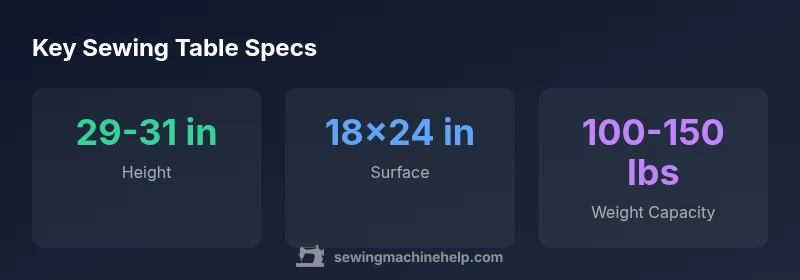
Key specs for common sewing machine tables
| Name | Value | Unit |
|---|---|---|
| Typical height | 29-31 | inches |
| Surface area | 18x24 | inches |
| Weight capacity | 100-150 | lbs |
Your Questions Answered
What is a sewing machine table and why buy one?
A sewing machine table provides a stable, height-adjustable workspace designed to accommodate most sewing machines. It reduces vibration, improves posture, and keeps tools within reach, which enhances accuracy and comfort during longer sewing sessions.
A sewing machine table gives you a stable workspace, helps you sew more comfortably, and reduces vibration. It also keeps your tools handy for faster project flow.
What features should I look for in a table for sale?
Look for height adjustability, adequate surface area, sturdy frame materials, integrated storage, and versatile mounting options. Also consider wheel mobility for portability and ensure compatibility with your specific machine model.
Key features to check are adjustable height, a big enough work surface, a strong frame, and good storage. Make sure it fits your machine.
Are folding tables adequate for sewing?
Folding tables can work for light projects if they offer adequate height and stability, but most serious sewers prefer dedicated sewing tables with better rigidity and integrated organization.
Folding tables can work for light work, but for serious sewing you’ll want a sturdy, purpose-built table.
How do I measure for compatibility with my machine?
Measure bed width, throat depth, and overall footprint. Verify mounting holes or cutouts align with your machine and any cabinet integration. Check that the table doesn’t obstruct accessory levers.
Measure your machine’s width and depth, then check the table’s mounting and footprint to ensure a good fit.
What price range is reasonable for a mid-range table?
Mid-range tables typically offer stronger frames, better materials, and more storage than budget options. Expect a price range that reflects durability and features, with value coming from stability and longevity.
Mid-range tables usually balance durability and features, giving you more stability and storage.
Should I consider a rolling cart style sewing machine table?
Rolling carts offer portability but may trade stability for mobility. If you need frequent repositioning, ensure locking wheels and a rigid frame to prevent wobble.
Rolling carts help you move things around, but check for stability and locking wheels.
“A well-chosen sewing machine table directly affects stitch quality and comfort during long sessions. A stable, ergonomically suitable workspace reduces fatigue and improves project throughput.”
The Essentials
- Check machine compatibility before buying.
- Prioritize stability, height range, and surface area.
- Consider mounting options and mobility features.
- Balance budget with build quality and warranty.
- Test rigidity and understand return policy before purchase.