Handheld Sewing Machine vs Regular
An objective, in-depth comparison of handheld sewing machines versus regular machines for home sewists. Explore portability, power, stitch options, use cases, maintenance, pricing, and how to choose the right tool for your projects.


Handheld sewing machines shine in portability and quick fixes, while regular machines excel in power, stitch variety, and long-term value. For travel or on-the-spot repairs, a handheld device is ideal; for heavy fabrics and larger projects, a standard machine is the better choice. This guide breaks down when to choose handheld sewing machine vs regular, what to expect in performance, and how to balance price and durability based on your projects.
What qualifies as handheld vs regular
At its core, handheld sewing machine vs regular machines differ in three practical dimensions: portability, power, and versatility. Handheld models are compact, often battery-powered, and designed for on-the-spot fixes. Regular machines are table-mounted, heavier, and built for longer sessions with a wider range of stitches. According to Sewing Machine Help, understanding these roles helps home sewists decide which tool to keep close at hand. The term handheld sewing machine vs regular will appear frequently as you weigh use cases, maintenance needs, and value over time. For a beginner, starting with a handheld model can be a gentle introduction to seams, while a regular machine provides a growth path to more challenging projects.
This section lays the groundwork for comparing two very different tools in the same family. The handheld sewing machine vs regular debate is less about “which is better” and more about “which is best for your workflow.” The Sewing Machine Help team notes that most households benefit from owning both kinds of machines at different times, depending on the task and space constraints. The aim is to balance convenience with capability, not to force a one-size-fits-all choice.
Key Differences at a Glance
While the quick answer gives you the gist, understanding the nuanced differences helps you apply the logic to real life. The handheld vs regular comparison hinges on six criteria: portability, power and speed, stitch options, fabric handling, maintenance needs, and price/value. Handheld devices win on portability and simple repairs; regular machines win on power, stitch variety, durability, and long sessions. Consumers should map these criteria to their most common tasks: minor repairs on the go vs. sewing quilts or garments at a dedicated workstation. For most home sewists, the right decision balances how often you’ll move the machine, the kinds of fabrics you tackle, and your willingness to invest in a more capable device.
Portability and Convenience
Portability is the defining advantage of handheld sewing machines. They are designed to be small, light, and easy to store in a pantry, drawer, or travel kit. Battery power or compact USB-charging options are common, making them ideal for quick fixes, loose hems, and repairs when you’re away from your sewing room. However, this portability often comes with trade-offs in speed, continuous operation time, and the ability to handle thick fabrics for long seams. A regular machine, by contrast, sits on a sturdy table and requires a fixed workspace, which reduces mobility but improves stability, precision, and long-run comfort during extended projects. When evaluating real-world use, think about how frequently you’ll need to move the device and whether portability outweighs sustained performance.
Build Quality and Durability
Durability and build quality often scale with size and price. Regular sewing machines use larger motors, metal frames, and broader component support, which generally translates to longer service life and resilience under heavy use. Handheld devices lean toward lightweight plastics or compact metal housings and smaller motors, optimized for portability rather than endurance under high-volume sewing. While a well-made handheld can last for many repairs, it may require more frequent maintenance and part replacement if pressed into heavy-duty workloads. The choice hinges on how aggressively you plan to use the tool and how much you value a robust, long-lasting instrument over compact convenience.
Performance and Stitch Quality
Performance is where you’ll notice the most pronounced gap. Regular machines deliver higher torque, faster stitch rates, and more consistent results across a broad spectrum of fabrics. They offer a wider stitch library, including decorative stitches, denim needles, and precise buttonholes. Handheld models typically provide basic straight or zigzag stitches with limited options, appropriate for mending, hemming, or delicate fabrics. Expect shorter seams with handhelds, occasional skipped stitches on dense textiles, and a learning curve as you optimize tension settings. For many casual tasks, handhelds are perfectly adequate, but for fashion projects or upholstery, a regular machine is the smarter investment.
Use Cases and Scenarios
Different projects demand different tools. Handheld machines excel in on-the-go repairs, travel sewing, and quick hems without dragging out a full workstation. They are excellent for patching a ripped seam in a hurry, adjusting a small area on a garment, or performing repairs during a camping trip. Regular sewing machines shine in home garment construction, quilting, upholstery, and any project that benefits from consistent speed, wide stitch variety, and longer operation. If you’re a beginner, a handheld can be a friendly introduction to stitch control, but you’ll eventually encounter limits that make a regular machine appealing as your projects grow in scope and complexity. A well-rounded setup often uses both tools in tandem as your needs evolve.
Maintenance, Accessories, and Longevity
Maintenance routines differ by device type. Handheld machines are typically easier to service but may require more frequent part replacements, especially batteries or chargers and small consumables. Regular machines require periodic oiling, needle care, and cleaning to keep gears and belts in optimal condition, plus regular blade/needle alignment for consistent results. Accessories matter: handhelds benefit from spare needles and portable cases; regular machines benefit from a broader accessory ecosystem, including presser feet, guides, and larger bobbins. Longevity depends on consistent maintenance, correct usage, and avoiding overloading the motor. Adhering to the manufacturer’s guidelines and using good quality threads and fabrics will improve both types’ lifespans.
Pricing and Value: Understanding Costs Over Time
Price is a practical consideration that often dictates the choice between handheld sewing machine vs regular. Handheld devices usually come in the lower price bracket, offering a quick, budget-friendly entry point for casual repairs or hobby projects. Regular machines command a broader range, from affordable entry-level models to feature-rich, high-end options. When evaluating value, consider not just upfront cost but potential long-term expenses: maintenance needs, replacement parts, and the ability to complete a wider set of projects without upgrading again soon. For many households, the best approach is to invest in a capable regular machine for most projects and reserve a handheld for travel, quick fixes, or on-site alterations. Hardware selection should balance initial cost with anticipated usage and durability.
How to Choose for Your Needs: A Decision Framework
To decide between handheld sewing machine vs regular, start with a simple decision framework:
- List your most frequent tasks (e.g., hems, repairs, quilting).
- Assess your workspace and whether you need mobility or a stable sewing surface.
- Estimate weekly sewing time; if you routinely sew for hours, a regular machine is likely the better fit.
- Consider fabric types you work with; heavy fabrics favor a regular machine’s torque and needle options.
- Budget upfront and for ongoing maintenance. If budget is tight but you want portability, a handheld can bridge the gap until you’re ready for a full-size machine.
- Plan to expand gradually; many hobbyists start with handhelds for small tasks and transition to regular machines as skills grow.
- Read reviews from trusted sources and, if possible, test both devices in-store to feel differences in control, vibration, and noise. By following this framework, you can map your needs to either handheld sewing machine vs regular and avoid buyer’s remorse after purchase.
Common Mistakes and Limitations
A frequent misstep is assuming a handheld can cover all regular-machine tasks. Underestimating speed, stitch variety, and fabric handling can lead to frustration. Another mistake is underinvesting in a solid regular machine for weeks of long projects, only to outgrow the handheld’s capabilities. Finally, neglecting maintenance—especially tension and needle choice—will degrade results on either type. Understanding these limitations helps you set realistic expectations and choose a tool that matches your typical workload.
Practical Tips for Beginners
- Start with a simple, beginner-friendly regular machine to gain confidence in stitch control before branching to more advanced devices.
- Practice on scrap fabric to understand tension and stitch length settings.
- Learn basic maintenance routines and keep a small toolkit (bobbin, spare needles, thread snips) handy.
- When buying, prioritize a machine with a generous warranty and accessible customer support for troubleshooting.
- Keep a dedicated kit for portable repairs and a separate workstation setup for longer sewing sessions. These tips help beginners build a solid foundation, whether they start with a handheld or a regular machine, and progress confidently as skills grow.
Authority sources
Comparison
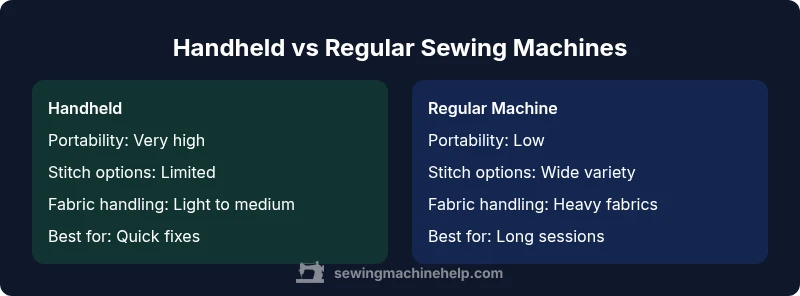
| Feature | Handheld sewing machine | Regular sewing machine |
|---|---|---|
| Portability | Very portable; fits in a bag | Requires a dedicated space; less portable |
| Power/Speed | Lower torque; moderate speed | Higher torque; fast, consistent speed |
| Stitch options | Limited stitches (basic) | Wide stitch library incl. decorative stitches |
| Fabric handling | Light to medium fabrics | Heavy fabrics and large projects possible |
| Maintenance | Simple maintenance; parts compact | More extensive maintenance; broader accessory ecosystem |
| Price range | Lower upfront cost | Broader price range; higher-end options available |
| Best for | Travel, quick on-site repairs | Home projects, quilting, upholstery |
Strengths
- High portability enables quick fixes anywhere
- Low upfront cost and minimal setup time
- Simple operation makes it approachable for beginners
- Lightweight design reduces workspace clutter
- Good for travel and on-site alterations
Negatives
- Limited power and speed for heavy fabrics
- Fewer stitch options and less control
- Smaller throat space can restrict quilting and bulky seams
- Durability may be lower with frequent heavy use
A regular sewing machine is the better long-term investment for serious sewing, but a handheld model is invaluable for on-the-go fixes and light tasks.
Choose handheld for portability and quick repairs. Choose a regular machine for versatility, power, and durable performance across a wider range of projects.
Your Questions Answered
What is a handheld sewing machine best used for?
Handheld sewing machines are ideal for quick hems, minor repairs, and on-the-spot adjustments when you don’t want to pull out a full-size unit. They excel in portability and speed for small tasks but are limited for heavy fabrics and long seams.
Great for quick fixes on the go; not ideal for heavy projects.
Can a handheld sewing machine replace a regular machine?
For most home sewing tasks, a handheld cannot fully replace a regular machine due to limited stitches, torque, and fabric-handling capacity. It’s best viewed as a complementary tool for portability and quick repairs.
Not a full replacement for most projects.
Are handheld sewing machines easy for beginners?
Handhelds can be approachable for beginners because they’re simple to operate, but their limitations mean you may eventually want a regular machine to grow skills. Start with basic projects to learn tension and stitch basics.
They’re often approachable, but you may outgrow them.
What maintenance do handheld machines require?
Keep the bobbin area clean, replace consumables as needed, and follow the manufacturer's guidelines for charging or battery care. Regular cleaning helps maintain consistent performance.
Clean and follow the manual for best results.
Should I buy a handheld if I have a regular machine?
Yes for portability and quick fixes, especially if you travel often or need a lightweight option. If your projects are frequent and varied, a regular machine adds versatility and efficiency.
Portable for travel; regular machine for versatility.
The Essentials
- Start with a portable handheld for travel or quick fixes
- Invest in a regular machine if your projects include heavy fabrics or long sessions
- Balance upfront cost with long-term value and maintenance needs
- Test both options if possible to feel differences in control and noise