New Home Sewing Machine Old: A Practical Side-by-Side Comparison
Compare a new home sewing machine old option with an older model. This objective guide for home sewists covers features, maintenance, and value to help you decide between modern machines and trusted classics.


When weighing new home sewing machine old options against an older model, the best choice depends on your sewing volume, budget, and need for current safety features. A new model typically delivers modern features, energy efficiency, stronger support, and easier maintenance. An older machine can still perform basic tasks with proper servicing, but parts, warranty, and safety standards may lag behind. This analysis from Sewing Machine Help helps you decide with clarity.
Defining the Landscape: new home sewing machine old
In modern sewing rooms, shoppers frequently ask about the difference between a new home sewing machine old option and an older model. The phrase signals a core decision: should you invest in a current-generation machine with the latest safety features, energy efficiency, and user-friendly interfaces, or select a well-maintained older model that can still deliver reliable stitches for many projects? According to Sewing Machine Help, the decision is rarely about one feature alone. It’s about how you sew, how often you sew, and what kind of maintenance you’re willing to perform. A new home sewing machine old setup tends to win on consistency and support, while an older machine can win on budget and tactile familiarity. This block defines the terms and sets the stage for a practical, data-backed comparison. You’ll see how price, features, and longevity interact to influence long-term value for home sewists.
Key Differentiators at a Glance
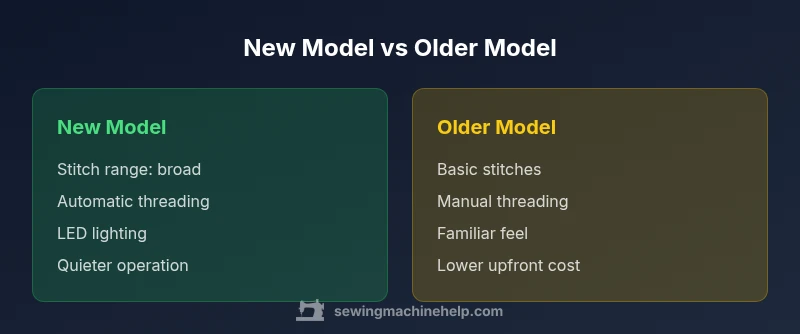
The core decision factors when comparing new home sewing machine old versus an older model include upfront cost, feature breadth, reliability, and maintenance demand. Modern machines tend to offer more stitches, automatic features (such as needle threading and speed control), improved energy efficiency, and quieter operation. Older machines often excel in durability, simplicity, and lower sticker prices, while requiring more frequent servicing and possibly limited parts availability. For the home sewist, weighing these differentiators against personal projects—garment construction, quilting, or crafts—helps determine which path delivers better long-term value.
Performance and Stitch Quality
Stitch quality is often the most tangible difference between a new home sewing machine old and an older model. New machines usually feature precise tension control, improved feed dogs, and optimized bobbin systems that resist thread snarls across a wider fabric range. They also tend to maintain consistent stitch length and balanced presser foot pressure at higher speeds. Older machines can still perform admirably on lightweight fabrics and simple seams, but stitch consistency can waver on heavy knits or multiple layers. If you frequently quilt or work with delicate fabrics, the performance gap becomes more noticeable. The key is to test both options on your typical projects and compare results side by side.
Ease of Use for Beginners
For beginners, a new home sewing machine old model often feels more approachable thanks to guided threading paths, visible stitch indicators, and pre-programmed stitches. Automatic needle threading, start/stop buttons, and adjustable speed limits reduce frustration and learning curves. Older models, while sometimes praised for their straightforward manual controls, may require more manual setup, including precise tension adjustments and manual needle threading. If you’re teaching a newcomer or want a low-friction experience, prioritize a machine with intuitive controls and clear error indicators.
Maintenance and Longevity
Maintenance is a crucial, ongoing factor. New machines typically come with clearer maintenance schedules, accessible parts, and up-to-date service networks. Brands frequently maintain broad parts catalogs and technician training for current lines. Older machines may still operate well if well maintained, but parts availability can dwindle as models age, driving repair costs higher over time. Regular cleaning, oiling (where applicable), and timely servicing extend life, yet you should assess long-term parts availability for an older model before relying on it as a primary workhorse.
Long-Term Value: Upfront Cost vs. Lifetime Cost
A central consideration is total cost of ownership. A new model often carries a higher upfront price but returns value through energy savings, warranty coverage, quieter operation, and lower maintenance intensity. An older machine typically costs less initially, yet may incur higher repair bills and more frequent tune-ups. The decision hinges on projected usage: heavy daily sewing favors a newer machine, while light, occasional projects may be economical with an older unit if it remains reliable and well-maintained.
Practical Scenarios: When a New Model Makes Sense
If your projects include frequent garment construction, quilting, or thick-layer fabrics, a new home sewing machine old may justify itself through speed, stability, and advanced presser-foot options. If you run a small home business or rely on consistent, long sessions, newer machines can offer extended warranties and better support. For hobbyists focusing on simple mending, crafts, or basic alterations, an older model can still deliver solid results with proper upkeep. In all cases, verify dealer support, warranty terms, and the availability of replacement parts.
Salvage and Upgrades: Can You Modernize an Old Machine?
Upgrading an old sewing machine is sometimes feasible but not always practical. Replacing a motor, updating a tension system, or adding a modern presser-foot system may be possible for some legacy brands, yet hit-or-miss for others. Compatibility with needle types, bobbins, and threading paths can complicate upgrades. If you anticipate frequent use on diverse fabrics, a modern machine often provides a cleaner, more reliable upgrade path rather than attempting a patchwork modernization of a very old model.
Buying Guide: What to Look For in a New Home Sewing Machine Old
When shopping, focus on core capabilities that translate into real-world results: reliable motor power for your typical fabrics, a wide stitch range with quality feed system, adjustable presser-foot pressure, robust tension controls, and a strong, transferable warranty. Check service availability in your area, confirm parts compatibility for common maintenance tasks, and try to factor in noise level, weight, and portability. For the label new home sewing machine old, ensure the model supports current foot attachments and has clear threading diagrams, as these elements dramatically affect day-to-day usability.
Comparison
| Feature | New Model | Older Model |
|---|---|---|
| Price Range | $250-1000 | $100-600 |
| Stability & Motor Power | Strong, energy-efficient motors | Adequate, may require more maintenance |
| Technology & Features | Automatic threading, LED lighting, many stitch patterns | Basic stitches, manual controls |
| Parts Availability | Wide current availability | Replacement parts may become scarce as models age |
| Warranty & Support | Standard warranty; solid customer support | Limited or shorter warranty; help depends on age |
| Best For | Quilting, garments, frequent use with modern features | Budget projects, repairs, light sewing |
Strengths
- New models deliver improved energy efficiency and quieter operation
- Modern machines include built-in stitches and automatic features that simplify tasks
- Wider parts availability and better consumer support for current lines
- Better user interfaces reduce learning time for beginners
Negatives
- Higher upfront cost relative to older machines
- Older models can still fulfill basic tasks with proper maintenance
- Parts availability may wane for very old specifications
New models win for durability and future-proof features; older models win on upfront cost and simplicity
Choose a new model if you value warranty coverage, efficiency, and diverse capabilities. An older machine may suit tight budgets and simpler projects, provided it remains well-maintained and parts are available.
Your Questions Answered
Is it worth buying a new home sewing machine when I already own an older model?
If you sew frequently or need advanced features, a new model can offer efficiency and reliability. For light, occasional use, an older machine can still satisfy most basic needs with proper maintenance.
If you sew a lot, a new model can save time and effort. If you sew rarely, an older machine may be enough, especially if it’s well maintained.
What features should I look for in a new home sewing machine old?
Seek a strong motor, a wide stitch range, automatic needle threader, adjustable speed control, good warranty, and reliable thread tension. Ensure compatibility with common presser feet and easy access to service.
Look for a strong motor, lots of stitches, automatic threading, and a good warranty. Make sure it’s easy to service.
Can an older sewing machine still handle modern fabrics?
Yes for lightweight fabrics and simple seams, but thicker fabrics or high-speed quilting may challenge an older unit. Test on your typical materials and consider parts availability for ongoing maintenance.
Older machines can handle light fabrics, but heavy work may be tough. Test with your usual fabrics.
How important is warranty when choosing between new and old?
Warranty reduces risk, especially for newer models. Older machines may have limited to no warranty, which shifts maintenance costs to the user.
Warranty matters for peace of mind, especially with newer machines.
Is maintenance easier on a new sewing machine than an older one?
New machines typically offer clearer maintenance guidance and readily available parts. Older machines may require more frequent tune-ups and can have limited service options.
Newer machines are usually easier to maintain with newer parts available.
What about resale value when choosing between new and old?
New machines generally hold value longer and attract buyers seeking current features. A well-maintained older machine can still fetch good resale prices, especially for brand-recognized models.
New models tend to resale better, but a cared-for old machine can still be valuable.
The Essentials
- Define your projects before choosing
- Consider total ownership costs, not just price
- Check warranty and parts availability
- Test threading and foot pedal feel in-store or via a reliable trial
- Balance features with your budget and comfort level