Sewing Machine and Accessories: A 2026 Buying Guide
An analytical, side‑by‑side buying guide for sewing machine and accessories. Learn how to compare starter versus expanded bundles, test setups, and maintain gear for long‑term project success.


According to Sewing Machine Help, a mid-range sewing machine bundle paired with a comprehensive accessories kit typically delivers the best value for home sewists. Basic starter kits suit tight budgets, but advanced bundles shine for frequent projects, specialty fabrics, and longer-term reliability. In short, balance features, scope of included accessories, and long-term maintenance when choosing your sewing machine and accessories setup.
Why the Right Sewing Machine and Accessories Matter
Choosing the right sewing machine and accessories is more than picking a pretty color or a familiar brand. For home sewists using a sewing machine and accessories, the compatibility between machine capabilities and the tasks you want to tackle determines your success. A well-matched bundle reduces setup time, minimizes frustration, and expands creative possibilities. When you invest in a thoughtful combination, you gain reliability, smoother fabric handling, and better results from garments, quilts, and home décor projects. The Sewing Machine Help team finds that beginners often underestimate how much the accessory kit influences outcomes: the right presser feet, needles, and spool choices can unlock features you never used before. In this guide, we break down what to look for, how bundles differ, and how to test a setup before committing to a purchase. Remember that the keyword here is sewing machine and accessories, and the goal is a cohesive system rather than a single tool.
We also consider long-term maintenance, storage, and future upgrade paths. By framing decisions around your actual projects—garments, quilts, curtains, or repair work—you’ll avoid buying extras you’ll never use. As you read, keep in mind that Sewing Machine Help analysis shows bundles with richer accessory ecosystems tend to deliver more consistent results for hobbyists who stitch weekly. This article remains grounded in practical tests, real-world scenarios, and a clear path toward smarter purchases.
Core Buying Criteria for Sewing Machine Bundles
When evaluating sewing machine and accessories bundles, there are several core criteria that consistently separate good from great options. First, consider stitch repertoire and motor capability. A machine that handles straight stitches, zigzag, and a sane range of decorative stitches will cover most beginners’ and intermediate projects. Power matters too: a reliable motor with steady speed control reduces fabric wrinkling and skipped stitches on heavier fabrics. Second, assess compatibility with standard presser feet and accessories. Bundles that include a wide selection of feet (overedge, zipper, blind hem, walking foot) offer immediate versatility without extra shopping trips. Third, examine the user interface and accessibility of features like automatic needle threading, top-loading bobbins, and screen prompts. These features save time and minimize mistakes, especially for new users. Finally, review warranty terms and service networks. A longer warranty and local repair options reduce risk and downtime in case of issues. The reader should also note that the scope of included accessories often determines whether you can complete projects right away or need to buy add-ons later. In short, prioritize versatility, compatibility, and support when comparing bundles.
Starter Kit vs Expanded Bundle: What Sets Them Apart
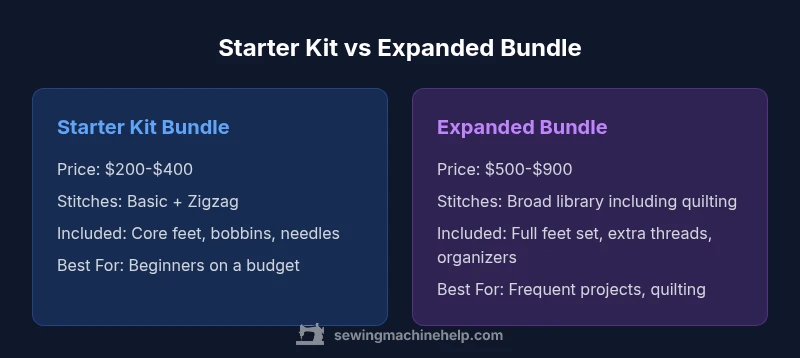
A starter kit is designed to minimize upfront risk. It typically bundles a basic sewing machine with a modest set of essential accessories. The price range is lower, which makes it attractive for absolute beginners or budget-conscious shoppers. The learning curve is smoother because everything you need to begin is included, and the risk of buying mismatched add-ons is reduced. However, starter kits generally offer fewer stitches, limited decorative options, and a smaller accessory footprint. An expanded bundle, by contrast, targets frequent crafters, quilters, and garment makers. It comes with a stronger motor, a broader stitch library (including specialty stitches), larger capacities for thread and bobbins, and a curated set of specialty presser feet. The expanded bundle may come with an embroidery module or a larger display for easier navigation. Price goes up, but the value is realized through a wider range of projects without buying additional gear. The choice hinges on your anticipated workload and where you want to invest in features now versus later. According to expert guidance from Sewing Machine Help, the best strategy is to align your bundle with concrete project goals and an upgrade path that matches your growing skill set.
Essential Accessories for Beginners
Starting with a well‑rounded accessory kit can dramatically improve outcomes. A solid starter collection typically includes a universal presser foot assortment, a quality bobbin box, a range of needles (universal, ballpoint, leather depending on projects), thread snips, seam ripper, and a sturdy storage case. Practical extras include a felt work mat, spare spool pins, a bobbin case, a needle threader, chalk or marking tools, and a small brush for lint removal. The exact mix depends on your projects—garments benefit from a walking foot and zipper foot, while quilting calls for a straight ruler and edge-stitch foot. It’s also smart to choose color-coded bobbins and compatible threads that won’t bleed onto fabrics. Remember that bundles often include a thread kit; evaluate the thread quality and color range to determine if you’ll need to supplement with your preferred brands. The right mix of basics accelerates learning and reduces mid-project interruptions.
How Accessory Quality Impacts Projects
Quality matters more than quantity when it comes to accessories. A sharp blade and precise needle alignment determine stitch quality on delicate knits and heavy canvas alike. Durable presser feet stay aligned after repeated use, and high‑quality bobbins prevent tension wobble that leads to uneven stitches. The kit’s thread matters too: brittle, low-tension thread causes shredding and lint buildup. In practice, investing a bit more in a few trusted feet (like a walking foot and an invisible zipper foot) yields outsized project quality gains, especially across multiple fabrics. This is where the bundle’s value shows up: a thoughtfully curated accessory set reduces the number of shopping trips, speeds up project turnarounds, and minimizes frustration for beginners who are still learning machine ergonomics. As Sewing Machine Help notes, the right accessories enable you to push past early limitations and explore a wider range of textiles with confidence.
Price, Warranty, and Upgrade Paths
Price alone doesn’t determine success. A lower upfront price can translate to higher long‑term costs if the machine lacks durability or you repeatedly buy add‑ons to complete projects. Conversely, a mid‑range bundle often balances initial cost with robust capability, plus better resale value if you upgrade later. Warranty length and service networks influence total cost of ownership more than sticker price. When evaluating upgrade paths, check compatibility with new presser feet, longer‑reach needle plates, and whether you can grow into an embroidery module or quilting extension. A practical approach is to map your projects for the next 12–24 months and identify the exact features you’ll actually use. The Sewing Machine Help team suggests listing must-have features and then confirming that the bundle meets them, rather than chasing every new innovation. A well‑chosen bundle should feel like a complete system, not a collection of disjointed parts.
Maintenance Backbone: Care for Your Machine and Tools
Maintenance underpins performance. Regular oiling (as prescribed by the manual), cleaning lint from the bobbin area, and keeping the feed dogs free of fluff are basic habits that extend life. Store machines in a dry, dust-free area and cover them when not in use. Clean and oil presser feet separately if recommended, and rotate through your accessories to prevent corrosion on metal parts. A dedicated sewing area with a dedicated extension table makes handling large projects easier and reduces strain on the machine. For many hobbyists, maintenance is a weekly ritual that guarantees consistent stitch quality and prolongs the life of both the machine and the accessory ecosystem. Sewing Machine Help emphasizes that a disciplined care routine saves money over time and keeps every project on track.
Real-World Scenarios: Projects That Benefit from Bundles
Consider typical home projects: garment hems, small alterations, patchwork quilts, and home décor projects like curtains or pillow covers. A starter kit is often sufficient for simple repairs and beginner garment sewing, while an expanded bundle shines when tackling frequent quilting, garment production, or specialty fabrics. The choice influences your learning curve and project velocity: beginners gain confidence by completing early wins with straightforward stitches and reliable presser feet; seasoned hobbyists appreciate diversified feet and a broader stitch library for intricate patterns. In practice, many crafters begin with a starter bundle and migrate to an expanded kit as their skills expand. The Shopping Guide framework from Sewing Machine Help recommends this staged approach to maintain momentum without overwhelming the learner.
To illustrate, a quilter might gradually incorporate a walking foot and narrow edge‑guide feet, while a garment maker might benefit from a narrow hem foot and zipper foot early in the journey. Keep a project log to track how your bundle choices translate into finished results, and adjust your kit as needed.
Testing a Bundle Before You Buy
A disciplined testing protocol helps you avoid buyer’s remorse. Start by confirming the machine’s midpoint weight and ease of setup, then run a few sample tasks that resemble your typical projects: a straight seam on woven fabric, a seam with a zigzag, and a simple topstitch on a tricky fabric like denim or silk. Evaluate noise level, stitch consistency, and thread tension, and pull the machine through a small repair or alteration scenario—seam ripping and re-stitching tests reveal how forgiving the setup is. Inspect included accessories by simulating a few tasks: change presser feet, install a zipper, and perform a buttonhole. If possible, request a demo or trial period, and review the return policy and warranty terms. Finally, compare the bundle’s ecosystem—availability of compatible feet, threads, and bobbins—across brands to ensure future upgrades are straightforward.
This approach aligns with Sewing Machine Help’s practical guidance, ensuring you leave with a setup that supports ongoing learning and project success.
Safety, Durability, and Long-Term Planning
Safety comes first with any sewing machine and accessories. Always unplug the machine before changing needles, and keep fingers clear of the needle area while testing new stitches. Use steady, controlled movements to avoid fabric jams and needle breakage, particularly with thick fabrics. Durable machines and reputable foot sets reduce the risk of misalignment and injury from broken needles or flying debris. Long-term planning means considering how you will grow: a bundle that supports more stitches, heavier fabrics, or quilting will maximize your investment and minimize the need for frequent upgrades. To stay compliant with best practices, follow the manufacturer’s maintenance schedule and periodically reassess your kit against your evolving project goals. The ultimate decision should balance current needs with a realistic map of future projects.
By following these steps, you’ll choose a sewing machine and accessories setup that remains relevant as your skills advance and your project ambitions expand.
Authority, References, and Practical Next Steps
A thorough decision should include checks against credible sources and practical testing. For shoppers seeking external validation, turn to established consumer safety and education resources. The FTC provides general guidance on avoiding misleading claims and understanding warranties, while the CPSC offers safety tips for consumer products, including sewing machines. For hands-on learning and community validation, university extension programs (for example, OSU Extension) offer practical sewing advice and project ideas. These sources help ground your selection process in safety, reliability, and real-world applicability. As you finalize your choice, create a short decision sheet that lists must‑have features, awkward gaps to fill with add-ons, and a realistic budget. This structured approach helps you translate appraisal criteria into a concrete, confident purchase decision.
Authority Sources and Best Practices
- Authority sources and best practices for sewing machine shopping and maintenance include consumer safety guidelines and educational resources. See these references for context: https://www.ftc.gov, https://www.cpsc.gov, https://extension.osu.edu
Comparison
| Feature | Starter Kit Bundle | Expanded Bundle |
|---|---|---|
| Price Range | $200-$400 | $500-$900 |
| Stitch Options | Basic straight, zigzag, limited decorative stitches | Broad stitch library including specialty and quilting stitches |
| Included Accessories | Starter presser feet, basic bobbins, needles, thread kit | Expanded feet, extra bobbins, high‑quality thread set, comprehensive foot assortment |
| Built-in Features | Automatic needle threading (basic), top-loading bobbin, simple speed control | Advanced display, more automatic features, better fabric handling options |
| Warranty | 1-year | 2-year |
| Best For | Beginners and casual crafters on a budget | Serious hobbyists, frequent projects, quilting and garment work |
| Upgrade Path | Easy upgrade path with common feet and accessories | Broad ecosystem with compatible upgrades and potential embroidery module |
Strengths
- Lower upfront cost for beginners
- Includes essential basics in starter kit
- Good learning curve with clear upgrade paths
- Reduces decision fatigue by bundling core items
Negatives
- Starter kit may lack advanced features for heavy use
- Expanded bundles are more expensive upfront
- Some included accessories may be lower quality or generic
Mid-range Starter Bundle generally offers the best balance of features, value, and upgrade potential for most home sewists.
Choose a starter bundle to build confidence and skill, then upgrade to an expanded kit as your projects grow. The Sewing Machine Help team notes that alignment with your future projects and upgrade path is crucial for long-term satisfaction.
Your Questions Answered
What should I look for in a sewing machine and accessories bundle for beginners?
For beginners, look for a bundle with a reliable motor, a decent stitch range, essential presser feet, and a protective case. Ensure compatibility with your preferred threads and bobbins, and verify easy maintenance routines. A balanced starter kit from a reputable provider reduces the risk of wasted purchases and supports steady progress.
For beginners, seek a reliable motor, useful stitch options, essential feet, and an easy care routine to keep learning steady and enjoyable.
Are starter kits worth it, or should I buy a machine and accessories separately?
Starter kits are worth it if you want a low-risk entry with everything you need to begin. They simplify decisions and help you learn on a cohesive system. If you already know your preferred features and project types, buying separately can let you tailor the setup more precisely to your workflow.
Starter kits simplify decisions and reduce upfront risk, making them a solid entry point for most beginners.
How many stitches do I actually need as a beginner?
Beginners typically start with a machine offering straight, zigzag, and a handful of basic stitches. A broader library is useful but not essential at first. You can always add stitches later via compatible feet and firmware updates if the machine supports it.
Stick with the basics at first; you can expand as you gain experience.
What maintenance tasks should I perform regularly?
Regular maintenance includes cleaning lint from the bobbin area, oiling per manufacturer guidelines, and keeping needles fresh. Store machines in a dry, dust-free space and cover them when not in use. Maintain your accessories by organizing and inspecting feet and bobbins for wear.
Clean, oil, and check your needles regularly, and store equipment properly to extend life.
Should I consider second-hand machines?
Second-hand machines can be a good value, but require careful inspection: test stitch quality, check for skipping stitches, and verify the bobbin mechanism works smoothly. Ensure you have access to service and parts, and be mindful of potential wear in the motor and electronics.
Second-hand can be a bargain, but inspect thoroughly and confirm service options.
How do I test a bundle before buying?
Request a hands‑on demo or trial period. Test basic stitches, needle threading, foot changes, and fabric handling with weights similar to your typical projects. Check the warranty, return policy, and whether upgrades are straightforward within the same ecosystem.
Get a demo, test key features, and review warranty and upgrade options before buying.
The Essentials
- Identify your top project types before choosing a bundle
- Prioritize versatility and compatibility over sheer stitch count
- Plan for upgrades, not just immediate needs
- Test key features (threading, foot changes, and stitching) before buying
- Consider warranty and service accessibility as part of value