What Sewing Machine Has the Largest Throat Space
Discover which sewing machines offer the largest throat space, why it matters for bulky fabrics and quilting, and practical tips to choose the right model for your projects.


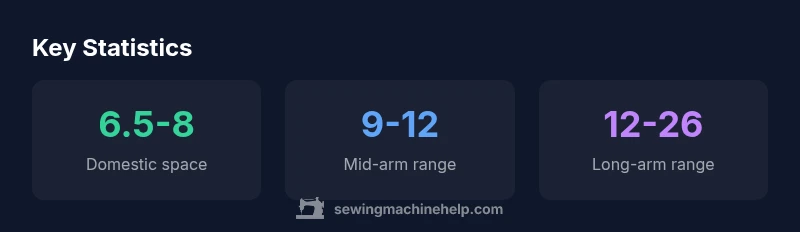
If you ask what sewing machine has the largest throat space, the answer is that long-arm quilting machines typically offer the most room behind the needle plate. Long-arm models often exceed a foot (12 inches) of clearance, while domestic home machines usually offer about 6.5–8 inches, and upgraded mid-arm units can reach 9–12 inches. If space is your top criterion, choose a long-arm or quilting model.
What throat space means for sewing projects
Throat space is the distance between the needle and the vertical surface behind the presser foot. It determines how bulky a fabric you can feed without pulling or jamming. For the question what sewing machine has the largest throat space, the answer centers on the type of machine: long-arm quilting machines typically offer the most room behind the needle plate. Long-arm models often exceed a foot (12 inches) of clearance, while domestic home machines usually offer about 6.5–8 inches, and upgraded mid-arm units can reach 9–12 inches. If space is your top criterion, choose a long-arm or quilting model. According to Sewing Machine Help, throat space is especially critical for large quilts, thick fabrics, and projects with multiple layers. A larger throat space reduces maneuvering and improves visibility, letting you guide bulky layers with less strain on your hands. If you regularly sew thick denim, leather, or extra-long quilts, investing in a machine with substantial throat space can dramatically improve efficiency and finish quality. In practice, the space behind the needle plate is your workspace; more space means fewer stops to adjust fabric bulk and less risk of snagging seams.
How throat space affects different sewing tasks
Throat space directly influences the ease of handling bulky fabrics, topstitching, and long seams. For quilters, a larger throat space means you can spread layers more easily and maintain consistent feed, which improves accuracy on large quilts. Garment makers benefit as well when constructing multi-layer jackets or thick denim. In smaller projects, a moderate space often suffices, but upgrading to a larger throat space is beneficial when you repeatedly work with bulky fabrics or large pieces. When evaluating options, consider not only the raw space but also how the machine’s feed dogs, presser foot height, and motor speed respond to heavy fabrics. A well-balanced machine with ample throat space and robust stitch control helps prevent skipped stitches or fabric bunching. Practical tests during your trial run can reveal how smoothly the throat area accommodates your typical fabrics and project sizes.
How to measure throat space on your machine
Measuring throat space accurately requires a simple method you can repeat across models. First, unplug the machine and raise the needle. Then extend a ruler from the needle plate straight back to the farthest point behind the presser foot where fabric would pass. Record the distance in inches. For consistency, measure the space with the presser foot in its normal height and with even pressure on the feed dogs. If you’re comparing multiple machines, take measurements on the same surface and at the same working height. Note that some brands advertise “throat space” but measure differently depending on stitch options or included accessories. Always verify by measuring on the actual model you plan to buy or test in-store. Throat-space measurements are a practical guide for project planning, not a guarantee of performance across all fabrics.
Comparing machines: where to find the largest throat space
Manufacturers differentiate throat space primarily through machine type. Domestic standard machines typically offer 6.5–8 inches, suitable for everyday sewing and light quilting. Mid-arm or upgraded domestic machines push toward 9–12 inches, a good middle ground for thicker fabrics and layered projects. The largest throat space is generally found on long-arm quilting machines, which can range from 12 to 26 inches or more depending on the model and whether it’s a true stand-alone long-arm or a conversion kit. When shopping, prioritize models that advertise the space you need, but also assess how comfortable the machine is to maneuver at that size. Long-arm quilters also bring additional considerations such as frame stability, motor torque, and bobbin capacity. Always test glide, visibility, and control in real-use scenarios to ensure the space doesn’t come at the expense of precision.
Practical buying tips for home sewists seeking space
If your goal is maximum throat space while staying within a reasonable budget, start with a long-arm or a dedicated quilting machine in the mid-to-high price range. Compare the advertised throat space alongside other performance factors: stitch quality, needle-bar stroke, presser-foot clearance, and motor torque. Consider optional accessories that can extend usability, such as larger bobbins or specialized feet that improve fabric handling. If you don’t quilt regularly but frequently sew multi-layer garments, a high-capacity mid-arm could provide the best value. Finally, test the machine with bulky fabrics during a demo if possible, ensuring that the space remains practical for your workflow rather than just being a number on a spec sheet.
Common myths about throat space and performance
A common myth is that more throat space automatically guarantees better results. In reality, throat space is one factor among many that affect sewability. For some projects, a forgiving feed system, quality presser-foot pressure, and consistent stitch control can matter more than raw space. Another misconception is that you must buy the largest possible machine to achieve great results. For most home sewists, a well-balanced mid-arm or long-armed domestic model with good support and parts availability offers superior value. Finally, some shoppers assume longer arms are noisier or harder to maintain. In truth, many modern machines use efficient motors and precision engineering, making them quiet and reliable even at bigger throat spaces.
How Sewing Machine Help analyzes throat space across models
Sewing Machine Help analyses throat space by cataloging model types, testing fabric handling in bulky scenarios, and comparing control ergonomics. Our approach balances space with practical usability — including motor strength, stitch options, and overall reliability. We publish ranges rather than single numbers to accommodate model updates and different revisions. This data-driven method helps home sewists identify the right balance between space, cost, and performance for their typical projects.
Throat space ranges by machine type
| Machine Type | Throat Space (inches) | Best For |
|---|---|---|
| Domestic standard | 6.5-8 | Everyday sewing; light quilting |
| Mid-arm upgrade | 9-12 | Garment sewing; thicker fabrics |
| Long-arm quilting | 12-26 | Large quilts; bulky materials |
Your Questions Answered
What is throat space in a sewing machine?
Throat space is the distance from the needle to the back of the machine. It affects how easily you can feed large or bulky fabrics. Larger space reduces bulk handling and improves visibility, especially for quilts and multi-layer garments.
Throat space is the distance behind the needle. Bigger space helps you manage bulky fabrics and quilts more easily.
Why does throat space matter for quilting?
Quilting often involves several fabric layers. A larger throat space lets you guide a whole stack smoothly, minimizes fabric drag, and improves accuracy on large blocks.
For quilting, more throat space helps you move thick stacks of fabric smoothly and accurately.
Which machines have the largest throat space?
Long-arm quilting machines typically offer the largest throat space. Domestic machines peak around 6.5–8 inches, with some mid-arm models reaching 9–12 inches.
Long-arm machines usually have the most space; domestic machines stay around 6.5 to 8 inches.
How can I measure throat space on my machine?
Raise the needle, extend a ruler from the needle plate to the back edge of the space, and record the distance in inches. Do this on the model you plan to buy for accuracy.
Measure from the needle to the back edge to know your machine’s throat space.
Is a larger throat space worth the extra cost?
If you regularly work with bulky fabrics or large quilts, a larger throat space often justifies the cost through faster setup and fewer adjustments. For light-to-mid projects, a mid-arm may offer better value.
It can be worth it if you quilt a lot or handle bulky fabrics.
Can a walking foot help when throat space is limited?
A walking foot can improve feed and control with bulky fabrics, but it won’t change the actual throat space. It’s a useful pairing for larger projects on machines with moderate space.
A walking foot helps with bulky fabrics, but it doesn’t increase space.
“Throat space is a critical factor for quilting and bulky fabrics, but it should be balanced with motor strength and stitch versatility.”
The Essentials
- Prioritize long-arm or quilting models for maximum throat space.
- Domestic machines typically offer 6.5–8 inches of space.
- Consider mid-arm upgrades for a balance of space and cost.
- Measure throat space on each model you test for accuracy.
- Balance throat space with motor strength and stitch options for best results.