Singer vs Brother Sewing Machines: Which Is Best for You
A thorough, vendor-neutral buying guide comparing Singer and Brother sewing machines for home sewists. Learn about stitch options, ease of use, maintenance, and value to decide which brand fits your projects and budget.


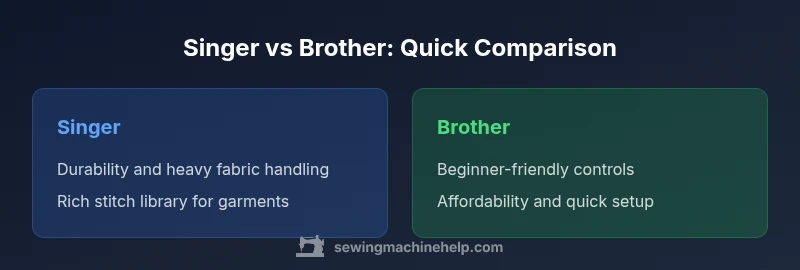
Choosing between Singer and Brother isn't about one brand ruling all tasks. The Sewing Machine Help analysis shows both offer solid value, but each excels in different areas: Singer for durability and advanced stitching, Brother for beginner-friendly features and affordable entry models. Your best pick depends on your typical projects, learning curve, and budget.
Brand position and market presence
When evaluating whether Singer or Brother is the better choice for a home sewing setup, it's essential to start from how each brand positions itself. According to Sewing Machine Help, Singer emphasizes durability and performance across a wide range of fabrics, from lightweight materials to denim, with a robust stitch library and a long-standing repair network. The Sewing Machine Help team found that Brother focuses on accessibility, ease of use, and modern electronic features designed for beginners and hobbyists. Both brands boast loyal followings and extensive service footprints, making parts and guidance readily available in most regions. For the question, which sewing machine is best singer or brother, the best answer hinges on your intended projects, learning curve, and budget. If you plan heavy garment construction or quilting, you may appreciate Singer's traditional strengths. If you're just starting out or want guided setup and affordable entry models, Brother often delivers quicker wins. In short, there is no universal winner; there is a best fit for your workflow, space, and expectations.
Core strengths of Singer
Singer has a long heritage of building machines capable of handling diverse fabrics and stitch contexts. The brand is known for sturdy, dependable machines that excel at heavy fabrics such as canvas and denim, and for offering a wide range of stitch options, including decorative stitches favored by quilters and garment makers. For home sewists seeking a durable workhorse with strong presser-foot stability and a history of practical engineering, Singer remains a top consideration. The trade-off can be a steeper initial learning curve on some models, and newer features may appear more gradually in their lineup. Still, if your goals include long-term reliability, a robust stitch library, and a machine you can rely on for complex projects, Singer often delivers.
Core strengths of Brother
Brother is widely recognized for beginner-friendly interfaces, intuitive controls, and value-oriented models that create fast wins for new sewists. The brand emphasizes ease of setup, clear manuals, and modern features such as automatic needle threading, quick-change feet, and computer-assisted stitch selection on mid-range machines. This makes Brother a popular choice for hobbyists who want to start sewing with minimal friction and continue growing into more features gradually. Additionally, Brother's broad dealer network and parts availability contribute to convenient maintenance and service, which lowers the total cost of ownership for many households.
Which user profiles each brand suits
For absolute beginners who want to learn without frustration, Brother typically offers the gentler onboarding experience, better on-boarding guides, and affordable entry models. If you prioritize durability for frequent, heavy-duty sewing or plan to tackle quilting and garment construction with precise control, Singer often proves the more capable workhorse. For hobbyists who value a balanced blend of features, price, and community support, either brand can be a solid fit depending on the specific model and the features you actually need. When in doubt, start with your most common projects and evaluate features that matter most—stitch variety, foot compatibility, and the ease of performing routine maintenance.
Feature-by-feature: Stitch options, presser feet, and adaptability
Both brands offer wide accessory ecosystems, but the emphasis differs. Singer generally provides a broader set of decorative stitches and a long-standing pedigree for garment construction, making it appealing for sewists who enjoy embellishment and traditional techniques. Brother emphasizes modern electronics, ease of use, and convenient automatic features that shorten setup time for quick projects. In terms of presser feet, both brands support standard feet and a growing catalog of specialty feet. Check compatibility with your chosen model and ensure access to essential feet like walking feet, invisible zipper feet, and buttonhole feet. For adaptability, assess whether you’ll need quilting features or heavy-duty straight-stitch performance and whether your preferred brand offers the right combination of power, speed, and noise level for your workspace.
Maintenance, parts availability, and service
Maintenance and service reach are vital for long-term satisfaction. Both Singer and Brother maintain broad repair networks and dealer support, but regional differences can affect parts availability and turnaround times. The Sewing Machine Help team recommends verifying your local service center proximity, the ease of obtaining common replacement parts (bobbin cases, belts, feed dogs), and the responsiveness of after-sales support. In practice, it’s wise to confirm that your chosen model has readily available bobbins and feet, and that the retailer offers a solid return policy should issues arise during the warranty period. Regular cleaning and oiling (where applicable) extend machine life and preserve stitching quality for years to come.
Performance on common sewing tasks
For straight stitching and fabric feeding, both brands perform reliably. Brother models with built-in speed control and user-friendly threading systems can accelerate practice runs for beginners. Singer machines often deliver consistent stitches across heavy fabrics and longer projects, given their robust frame construction and meticulous feed mechanism. When evaluating performance, consider your typical projects: basic garment hems, home décor, quilting, or leatherwork. In each case, a model with strong feed stability, a balanced presser foot pressure, and a comfortable throat space for larger projects will produce the best results. Always test on a scrap piece of fabric similar to your usual material before committing to a purchase.
Reliability and warranty considerations
Reliability is shaped by machine build, parts availability, and how well the machine is maintained. Singer tends to emphasize durability and a more traditional mechanical approach in many models, while Brother leans toward user-friendly electronics and easier maintenance. Warranty terms vary by model and region, but most entry-level machines include a standard one- to two-year warranty with options to extend. The Sewing Machine Help team advises registering your machine, keeping receipts, and using authorized service centers to preserve warranty eligibility. Monitoring for unusual noises, skipped stitches, or inconsistent tension early can prevent small issues from becoming expensive repairs later.
Price ranges and long-term value
Price is a practical consideration. Entry-level Brother models often come at lower upfront prices, offering quick wins for beginners and hobbyists who want to start sewing without a large initial investment. Singer introduces more durable, feature-rich options that can command higher upfront costs but may deliver longer-term value for committed projects and heavier fabrics. The key is to balance immediate affordability with the likelihood of outgrowing your machine. When possible, compare total cost of ownership, including parts, maintenance, and service, rather than focusing solely on sticker price. Remember that both brands provide a wide spectrum of models, so you can find an option that matches your current budget while leaving room for future upgrades.
Accessories and compatibility: expansion and upgrades
Sewing with a brand you trust is only part of the equation; compatibility with accessories matters. Check whether your chosen Singer or Brother model accepts standard presser feet, bobbins, needles, and extension tables. Look for a machine that supports easy upgrades—additional stitches, embroidery modules, or quilting feet—as your skills grow. Some models offer adapters or optional add-ons that expand capabilities without needing a new machine. Be mindful of the thread spool systems, bobbin winding arrangements, and the availability of compatible accessories in your region. A little foresight here can prevent frustration when you want to take on more ambitious projects.
How to choose between Singer and Brother for your projects
Start by listing your most frequent tasks: garment sewing, quilting, home décor, leatherwork, or craft embellishment. Then assess each brand's strengths: Singer for heavy fabrics and durable construction; Brother for beginner-friendly features and fast setup. Create a short feature matrix based on your needs—stitch variety, ease of threading, foot availability, speed control, noise, and size. Finally, consider your workspace and budget. If you can test a model in-store or borrow from a local maker space, do so; hands-on experience remains the best guide to preference and comfort.
Practical buying checklist
- Define your top three projects (garments, quilting, décor).
- Determine your preferred features (automatic threading, programmable stitches, heavy-duty core).
- Check dealer network and warranty terms in your region.
- Compare at least two models per brand within your budget.
- Test basic tasks on fabric similar to your usual material.
- Verify compatibility with essential accessories (feet, bobbins, needles).
- Read reviewer notes on reliability and service history.
Common misconceptions to avoid
A common misconception is that higher price automatically equals better value for every sewing task. In reality, the best machine depends on your projects, not price alone. Another mistake is assuming all decorative stitches are equally useful; many models include decorative options that you may never use. Finally, don’t overlook maintenance and parts availability—these operational realities often determine long-term satisfaction more than declared features on the box. By separating expectations from reality, you’ll choose a Singer or Brother that genuinely fits your workflow.
Comparison
| Feature | Singer | Brother |
|---|---|---|
| Stitch options and versatility | Rich traditional stitch library with decorative options | Strong basic stitches with modern automated features |
| Ease of use | Heavier manuals, durable design, longer learning curve for some models | Intuitive interfaces, quick-start guides for beginners |
| Maintenance and parts availability | Widespread parts network; sturdy for long-term use | Broad availability of feet, bobbins, and parts; easy service |
| Price range for entry-level models | Mid-range to budget-friendly options | Typically more affordable entry-level models |
| Upgrade path / advanced features | Pro-level machines with quilting and heavy-duty options | Mid-range to entry-level with some computerized features |
| Support/warranty | Strong legacy warranties and service centers | Solid warranties with dealer support |
Strengths
- Broad model ranges and strong dealer networks
- Good warranty options and service support
- Beginner-friendly options with quick wins
Negatives
- No one-size-fits-all winner; depends on projects
- Availability of specific parts can vary by region
- Some advanced features may require higher-end models
Brand choice should be project-driven: Brother for beginners, Singer for heavy-duty and advanced stitching.
If your priority is ease of use and value, start with Brother. If you need durability and more complex stitching capability, consider Singer. The best pick aligns with your typical projects and timeline.
Your Questions Answered
Is Singer better than Brother for beginners?
Not universally. Brother generally offers easier setup and beginner-friendly features, while Singer can offer greater durability for complex projects. Your choice should depend on your learning curve and project goals.
Brother tends to be easier for beginners, but Singer can be a good long-term choice if you plan heavier, more complex projects.
Are Singer and Brother reliable long-term brands?
Both brands have long histories and solid dealer networks. Reliability depends on model, maintenance, and usage patterns; regular servicing and proper care extend machine life.
Both brands are reliable, especially when properly maintained.
Which brand is cheaper upfront?
Entry-level Brother models are often priced lower than mid-range Singer machines. Consider total cost of ownership, including maintenance and parts.
Brother usually starts cheaper, but long-term costs matter as well.
Do Singer machines have better stitch variety?
Singer models commonly offer a broad stitch library, especially in older lines. Modern Brothers also provide ample decorative and utility stitches, depending on the model.
Singer often has more decorative stitches; Brothers cover essential stitches well.
Can I use the same accessories between brands?
Most basic feet and bobbins are brand-specific. Some universal feet fit multiple brands, but always verify compatibility before buying.
Check model specs to confirm which feet and bobbins fit.
Which brand has better customer service?
Service quality varies by region and retailer. Both brands maintain established networks; choose a trusted dealer with solid return and repair policies.
Service quality depends on local dealer support.
The Essentials
- Begin with your top projects to guide brand choice
- Brother suits beginners and quick wins; Singer suits heavy-duty use
- Verify parts access and local service before buying
- Compare models across price bands to maximize long-term value