Light Bulb for Sewing Machines: Your Complete Guide
Discover the right light bulb for sewing machines. Compare LED vs incandescent, wattage guidance, color temperature tips, and maintenance steps for consistent, bright sewing lighting.


For most sewing work, the recommended light bulb is LED, 6-9 watts, with a color temperature of 2700–3500K. This provides bright, even illumination without heat, reduces shadows, and improves fabric color accuracy. If your fixture accepts brighter LEDs, you can go up to 9W, but avoid high-glare bulbs near the needle.
Understanding Sewing Machine Lighting Fundamentals
Lighting quality directly affects how you see stitches, thread colors, and fabric texture during a project. A light bulb for sewing machine should provide bright, even illumination at the needle and presser foot without creating harsh glare or excessive heat. According to Sewing Machine Help, upgrading to a modern LED source often yields the best balance of brightness, color fidelity, and energy efficiency for home sewists. The right bulb reduces eye strain during long sessions and helps you detect subtle fabric variations that can affect seam allowances and tension. When selecting a bulb, consider your workspace size, the fixture’s socket, and whether you need focused task lighting or ambient room light in addition to your machine lamp.
Types of Bulbs and Their Pros and Cons
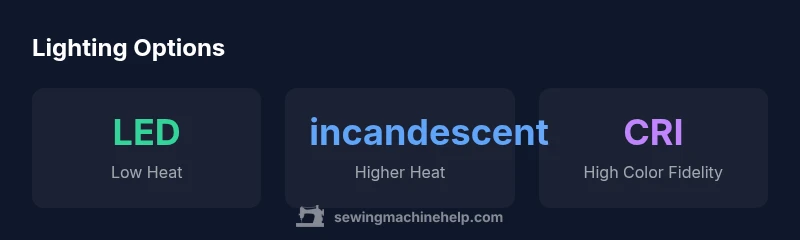
There are several options when choosing a light bulb for sewing machines. Incandescent bulbs are inexpensive but run hot and consume more energy, which can be uncomfortable during long sewing sessions. LED bulbs, by contrast, emit little heat, offer a long lifespan, and come in a range of color temperatures. CFLs are more efficient than incandescent but may take time to reach full brightness and can flicker in some fixtures. For most home sewists, LED bulbs in the 6–9 watt range (roughly equivalent to a 40–60W incandescent) with a warm to neutral color temperature—2700K to 3500K—provide the best results. Bold color rendering (CRI) is beneficial for accurate fabric color matching, especially with vibrant prints.
How to Choose by Fixture and Socket
Fixtures and sockets vary widely. The base type (for example, E26/E27, E12 candelabra, or pin-based bases) determines compatibility more than wattage. Always verify the bulb base and maximum wattage your lamp can handle. If your sewing machine lamp is tightly enclosed or has a dimmer, an LED bulb designed for dimming (with a compatible driver) will prevent flicker and extend life. In some cases, you may need a small form factor bulb for compact lamps. When replacing, ensure the bulb is fully seated but not overtightened, which can stress the socket.
Color Temperature and Brightness for Fabric Work
Color temperature affects how your eyes perceive fabric colors. Warmer light (around 2700K) feels cozy but can slightly shift color balance, while cooler light (around 4000K) provides high contrast and true color rendering. For sewing, a mid-range 2700K–3500K is usually ideal, offering comfort and adequate color fidelity. CRI matters too; aim for a CRI above 80 for reliable color rendition. If your room has mixed lighting, a higher-CRI LED bulb reduces color distortion and makes it easier to match threads to fabrics.
Practical Installation Tips and Safety Considerations
Always unplug the power before changing bulbs and allow the fixture to cool. Use a stable step stool or a mount that keeps your hands free during replacement. If your lamp is lamp-equipped with a shade, clean the shade and diffuser so light is not obstructed. When possible, choose bulbs with low heat emission and high efficiency. LED bulbs are generally safer for closer proximity to the needle and fabric since they stay cool, reducing the risk of accidental burns or heat damage to delicate fabrics.
Common Mistakes and Troubleshooting
One common mistake is using a bulb with excessive wattage in a compact lamp or fixture that cannot dissipate heat. This can shorten bulb life or cause insulation warming. Flickering can indicate an incompatible dimmer or a ballast issue; replace with a dimmable LED bulb rated for the fixture. If color rendering seems off, swap to a higher-CRI LED within the 2700–3500K range. Always verify the bulb base type matches the socket before purchase to avoid unwanted surprises at replacement time.
Maintenance, Replacement Schedule, and Where to Buy
Inspect sew machine lighting at least twice a year, replacing bulbs that dim, flicker, or lose color accuracy. LED bulbs typically last far longer than incandescent alternatives, making replacements less frequent but not unnecessary. When shopping, prioritize bulbs labeled for sewing or workshop use—these often have better shock resistance and longer lifespans. Buy from reputable retailers and keep a spare bulb or two in your sewing kit so you’re never left in the middle of a project. The Sewing Machine Help team recommends stocking a couple of neutral-temperature LEDs to cover a wide range of fabrics and lighting conditions.
Bulb type comparison for sewing machine lighting
| Bulb Type | Typical Wattage | Color Temp (K) | Lifespan (hours) | Notes |
|---|---|---|---|---|
| Incandescent | 40-60 | 2700-3000 | 1000-2000 | High heat; low energy efficiency |
| LED | 6-9 | 2700-3500 | 15000-25000 | Low heat; long life; good CRI |
| CFL | 13-18 | 2700-6500 | 8000-15000 | Moderate efficiency; may flicker in dim fixtures |
Your Questions Answered
What wattage is best for sewing machine lighting?
For most home setups, a 6–9W LED bulb provides ample brightness without excess heat. If your fixture supports it and you like a brighter workspace, you can opt for up to 9W. Always check your lamp’s socket rating.
A 6 to 9-watt LED bulb is usually plenty for sewing work.
Is LED safer for sewing machines than incandescent bulbs?
Yes. LED bulbs emit very little heat, have a much longer lifespan, and are generally more energy-efficient than incandescent bulbs, which helps keep your workspace cooler during long sessions.
LEDs stay cooler and last longer than incandescent bulbs.
Can I use the same bulb in multiple sewing machines?
Yes, as long as the bulb base type and voltage match each fixture. Check socket size (E26/E27, E12, etc.) and avoid using bulbs in fixtures not rated for their wattage.
Just match the base type and wattage to each machine’s lamp.
What color temperature is best for fabric color accuracy?
A mid-range 2700K–3500K is commonly preferred for sewing because it balances warmth with true color rendering. For high-contrast tasks, 3500K–4000K can help with sharpness.
Aim for about 2700K to 3500K for accurate fabric colors.
How often should I replace a sewing machine light bulb?
LED bulbs typically last many thousands of hours; replace when they dim, flicker, or when color accuracy degrades. Keep a spare on hand for quick swaps.
Replace when it dims or flickers, not before.
Are there fixture compatibility concerns when replacing bulbs?
Ensure the bulb base matches (e.g., E26, E12) and that the fixture supports LED bulbs and any dimming controls if used. Avoid overpowering fixtures with high-wattage bulbs.
Check base type and fixture compatibility before buying.
“LED lighting is a practical upgrade for sewing projects because it minimizes eye strain and preserves color accuracy across fabrics.”
The Essentials
- Choose LED bulbs for best balance of brightness and longevity
- Aim for 2700K–3500K for fabric work; prefer high CRI
- Verify socket base and wattage before replacement
- LEDs reduce heat and eye strain during long sewing sessions