Hat Making Sewing Machine: A Practical Guide for Home Sewists
Learn how to use a hat making sewing machine to craft durable, well-finished hats at home. This step-by-step guide covers machine setup, fabric selection, accessories, and finishing touches for beginners and hobbyists.


With a dedicated hat making sewing machine, you’ll learn how to select fabrics, set up appropriate presser feet, and execute precise stitching that holds its shape. This quick guide outlines the goal and the essential requirements: a reliable machine with adjustable stitch length, a walking foot or roller foot, suitable fabric, and a basic hat block. Follow the steps to start confidently.
Hat making sewing machine essentials for home sewers
Hat making sewing machine work sits at the intersection of fabric knowledge, pattern blocks, and precise sewing. According to Sewing Machine Help, a well-chosen setup and deliberate workflow dramatically reduce common errors when shaping crowns and brims. The goal is to create a hat that holds its form under wear and resists unwanted creasing. In this section we’ll outline the big picture: why a hat-specific workflow matters, what models and features support this work, and how to pair the machine with proper fabric and blocks. We’ll also touch on the role of practice swatches and test seams before committing to a final hat. Sewing projects like these benefit from a clear plan, consistent tension, and the right tool lineup. Sewing Machine Help Analysis, 2026 notes that organized, step-by-step guidance improves success rates for home hat projects, especially for beginners who are learning to balance crown shaping with edge finishing. By keeping the process structured, you’ll gain speed without sacrificing quality, and you’ll build confidence to tackle fancier shapes over time.
Key takeaway: plan your hat project, assemble the right feet, and practice on scraps before sewing the actual hat.
Top features to prioritize in a hat-making setup
A hat project benefits from several machine capabilities. First, a stable free arm and a flat narrow throat enable precise seams along crowns and brims. Look for adjustable stitch length, a capable needle system, and a walking foot (or roller foot) to feed bulky felt evenly. A lightweight, sturdy oscillating hook helps with consistent thread uptake, which is crucial when stitching multiple layers of interfacing and felt. Consider a cylinder arm for crown construction and an adjustable presser foot height to accommodate thicker brim applications. Quiet operation matters for long sessions, and adjustable speed control helps you manage delicate fabrics. Finally, ensure compatibility with heavy-weight needles (such as size 90/14 to 100/16) when working with felt and wool blends. The right combination reduces snagging and puckering, leading to cleaner edges on crown seams and brim attachments.
Fabric choices, interfacing, and block preparation
Hat construction begins with smart fabric selection and block setup. Felt and wool blends are common for classic hats; stable interfacing adds crown support without adding bulk. Before stitching, test your materials on scraps to adjust tension and needle choice. Pressing matters more than you might think: use a cotton setting, a tailor’s ham, and a steam iron to shape the crown without distorting the brim’s curve. Block selection matters too: align the crown block to your head size and choose a brim block that matches the intended silhouette. If you’re making a structured fedora or trilby, consider a lightweight fusible interlining to preserve a sharp edge while allowing comfortable wear. When sewing through multiple layers, slow feed and even pressure prevent distortion at critical seams.
Accessories that simplify hat sewing and shaping
Investing in the right attachments pays off: a walking foot ensures even feeding of thick felt, a teflon or roller foot reduces snagging on smooth surfaces, and a specialty edge guide helps maintain consistent seam allowances around curved shapes. A narrow hem foot makes delicate finishing cleaner on brim edges, while a curved needle helps with precise topstitching along the crown. Hat-making often benefits from block guides, spool stands, and a pressing cloth to protect surfaces. Keep pins, tailoring chalk, measuring tools, and a dedicated seam roller within easy reach to speed up setup and trimming. Remember to remove pins before final stitching to avoid accidents and thread snags.
Step-by-step workflow overview for hat projects
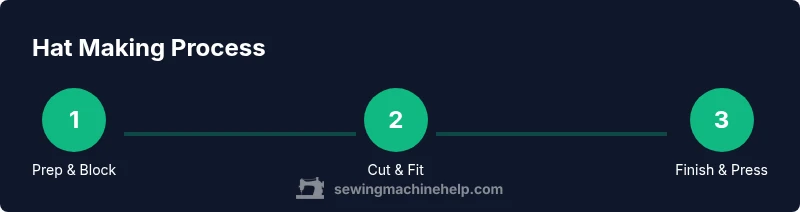
A structured workflow reduces mistakes and yields repeatable results. Start by tracing and cutting your hat blocks on the chosen fabric, then baste the crown pieces to check fit. Sew crown seams with a short stitch length, then press flat before attaching the brim. Bind edge finishes with a clean turning technique or a rolled hem, depending on style. Finally, shape the crown with light pressing and steam, then set the brim’s curve using appropriate blocks or a shaping form. Throughout, test seams on scraps, check tension after every major seam, and adjust as needed. This approach minimizes misalignment and makes it easier to reproduce the same hat in different sizes.
Troubleshooting common issues in hat sewing
Puckering often happens when edges aren’t supported by interfacing or when fabric is pulled while feeding. Use a walking foot and a stabilizing interfacing to reduce this risk. Slipping fabric around curved areas can be solved by slowing down and guiding the fabric with both hands, using a tailor’s roller to flatten curves, and ensuring the fabric is evenly distributed over the feed dogs. Crown shaping errors are usually caused by mis-sized blocks or uneven trimming—double-check your blocks, trim evenly, and re-test on scraps. If the brim edge becomes wavy, consider a single-pass topstitch close to the edge with a narrower stitch length and a light tack to secure the curvature. Safety is essential: always power off the machine when changing feet and never leave the needle in the fabric while adjusting the work.
Finishing, care, and maintenance for hat projects
Finish by pressing with a clean cloth and using a pressing cloth to protect delicate surfaces. Edge finishing can include a neat rolled hem or a bias binding, depending on the hat style. Once assembled, allow the hat to rest on a form to recover its shape before final wear. Store hats in a cool, dry place away from direct sunlight to prevent fading. Regular maintenance for your hat-making sewing machine includes cleaning lint, oiling moving parts as recommended by the manufacturer, and replacing worn needles promptly to avoid skipped stitches. A well-maintained machine produces consistent stitches and extends the life of both your machine and your hats.
Quick reference checklist for hat projects
- Choose your hat block set and fabric carefully
- Prepare blocks with proper interfacing and stabilizers
- Attach walking foot or roller foot for thick materials
- Practice stitches on scraps before final seams
- Press between steps to maintain crown shape
- Finish edges with appropriate hems or bindings
- Inspect final hat for symmetry and fit
Tools & Materials
- Hat-making sewing machine(A machine with adjustable stitch length, walking foot, and free arm for crown seams)
- Walking foot (even-feed foot)(Essential for feeding thick layers evenly)
- Needles: universal/sharp, sizes 90/14 to 100/16(Adapt needle type and size to fabric)
- Rolled hem foot or narrow hem foot(Optional for precise brim edging)
- Pressing tools: iron, pressing ham, and terry cloth pressing cloth(Shape and set seams without shine)
- Interfacing or lightweight foundation(Stabilizes crown without bulk)
- Hat blocks (crown and brim)(Size to fit wearer and style)
- Interlining or fusible lining (optional)(Adds warmth and structure)
- Pins, chalk or fabric marker, scissors, measuring tape(For precise cutting and marking)
- Tailor’s tape or ruler(Accurate measurements for blocks and seams)
- Fabric scraps for testing(Use to test tension, stitch length, and feeds)
Steps
Estimated time: Total 2-3 hours
- 1
Prepare workspace and fabric
Set up a clean, well-lit area. Gather hat blocks, fabric, interfacing, and test scraps. Verify machine is clean, threaded, and ready. This ensures you won’t pause mid-seam.
Tip: Test stitch on a scrap before touching the main fabric to confirm tension and feed. - 2
Trace and cut hat pieces
Place blocks on fabric, add seam allowances, and cut the crown pieces and brim. Label pieces to avoid mix-ups. Keep fabric aligned with grain to avoid distortion during shaping.
Tip: Cut a spare set of crown and brim pieces for practice. - 3
Stabilize crown with interfacing
Apply interfacing to crown pieces as needed. This adds structure without adding bulk. Ensure interfaces align with crown pieces to prevent stiffness.
Tip: Use a seam roller to fuse interfacing smoothly. - 4
Sew crown seams
With the walking foot engaged, sew crown pieces together along the center seam, then press open. Check for alignment and symmetry.
Tip: Take a slow test run on scrap before sewing the actual pieces. - 5
Attach brim and edge finish
Sew brim to crown, aligning the edge perfectly. Finish the brim edge with a rolled hem or binding as desired. Press to set curvature.
Tip: Use pins to hold the curve during sewing; avoid stretching. - 6
Topstitch and shape
Topstitch near the seams to secure layers. Shape the crown using a hat block or form, applying steam for crisp lines.
Tip: Keep steam light to prevent fabric distortion. - 7
Final press and inspection
Give the hat a final press on a form, check symmetry, and adjust any minor waviness. Remove stray threads and ensure all edges are secure.
Tip: Let the hat rest before testing wear for best shape retention. - 8
Care and storage planning
Store hats on a form or in a hat box to maintain shape. Provide care instructions to the wearer, including avoiding crushing and direct heat.
Tip: Include a dust cover or bag to minimize scuffs.
Your Questions Answered
What fabrics are best for hat making with a sewing machine?
Felt, wool blends, and sturdy cottons are common choices for beginner to intermediate hats. Lightweight interfacing and lining help with shape. Always test fabric on scraps before committing to the final project.
Felt and wool blends are great starting points, with cottons as a lighter option. Test on scraps first to avoid surprises.
Do I need special attachments for hat projects?
A walking foot, edge guide, and a curved needle are among the most helpful attachments for hat projects. Rolled hemming feet can simplify finishing edges on brims.
A walking foot and edge guide are very helpful; a curved needle can help with curved seams.
How do I avoid puckering on thick seams?
Use stabilizing interfacing, a walking foot, and correct needle size for the fabric. Slow down and guide the fabric, especially around curves and corners.
Stabilize with interfacing, slow down, and guide the fabric to prevent puckering.
What are common mistakes in hat making and how can I fix them?
Mis-sized blocks, uneven trimming, and rushed seams are common. Check block accuracy, trim evenly, and rehearse with scraps before final stitching.
Common mistakes include wrong block size and uneven trimming; check blocks and rehearse on scraps.
How should I care for a finished hat and when should I re-shape it?
Store hats on a form or in a box to maintain shape. Re-shape after wear if needed using light steaming and pressing while placed on a form.
Store on a form and re-shape with gentle steam if needed.
Watch Video
The Essentials
- Plan blocks and fabric choices before stitching.
- Use appropriate feet to manage bulky layers.
- Test on scraps to prevent mistakes on the final hat.
- Finish with precise pressing to preserve shape.
- Maintain the sewing machine for consistent results.