Sewing Machine Stitch Guide: Master Every Stitch Type
Explore a practical sewing machine stitch guide with stitch types, settings, and fabric tips. Aimed at beginners, it covers straight, zigzag, decorative stitches, and tension basics to help you sew with confidence.


A sewing machine stitch guide is a practical reference that covers stitch types, settings, and fabric guidelines to help you sew confidently. It helps you pick stitches, adjust tension, and finish seams cleanly. See our detailed guide for examples and a step-by-step workflow.
Why a stitch guide matters for beginners
Starting with the basics can feel overwhelming when a sea of stitch options sits on the machine. A well-structured sewing machine stitch guide breaks down each stitch’s purpose, recommended fabrics, and typical applications. It helps you avoid common missteps like using decorative stitches for heavy seams or choosing wrong tension for knit fabrics. For home sewists and hobbyists, a reliable guide translates machine settings into real-world results. According to Sewing Machine Help, mastering a core set of stitches first builds confidence and reduces fabric waste. The guide also encourages systematic testing: you learn how a straight stitch behaves on cotton, then compare it with a zigzag on knit samples. By anchoring your practice to a written reference, you’ll remember which stitch to reach for when a project calls for durability, stretch, or precise topstitching. The Sewing Machine Help team notes that consistent practice with scrap fabric is the fastest path to proficiency.
Common stitch types and their uses
A basic stitch guide highlights the stitches you’ll reach for in most projects. The straight stitch is your workhorse for seams and topstitching on woven fabrics. The zigzag stitch provides elasticity and edge finishing on knits and lighter fabrics while helping prevent fraying. Backstitch and reverse stitches secure ends, especially at the start and finish of seams. Decorative stitches add personality but require testing to ensure they don’t overwhelm your fabric. Always note which fabrics each stitch works best with and keep a quick-reference chart handy. The Sewing Machine Help team emphasizes practicing a few core stitches before adding ornamentation, ensuring reliability before complexity grows.
Reading a stitch chart: what the symbols mean
Stitch charts translate machine settings into symbols you’ll see on the dial or screen. Look for indicators for length (how long), width (how wide), stitch type shape, and reversal arrows. A common approach is to map symbols to actual fabric outcomes by running small trials on scrap fabric. When you understand the chart, you can quickly select the correct stitch for seams, topstitching, or decorative work. If your machine uses alphanumeric codes, keep a reference sheet nearby and annotate it with your preferred settings.
Dial settings: tension, length, width explained
Tension balances thread interaction between top thread and bobbin. If stitches pull tight or pucker, adjust tension incrementally and test on scraps. Stitch length affects seam strength and fabric behavior; shorter lengths can be stronger but may gather delicate fabrics, while longer lengths reduce perforation on heavy textiles. Width control is essential for zigzag and decorative stitches; increasing width enlarges the stitch footprint. Start with factory defaults, then tailor tweaks for each fabric type, weight, and thread. The key is methodical testing and documentation so you reproduce successful results.
Practical workflow: choosing stitches by project
Begin with the fabric type and garment or item in mind. For woven fabrics like cotton, use a straight stitch with moderate length. For knits, a slightly stretchier zigzag or walking foot helps prevent curling. For hems, experiment with blind hem stitches or narrow decorative stitches appropriate for the textile. Maintain a small project checklist: fabric, stitch type, length, width, tension, and finish. Keeping a notebook or digital note helps you replicate reliable settings across projects.
Testing and validating stitches on fabric scraps
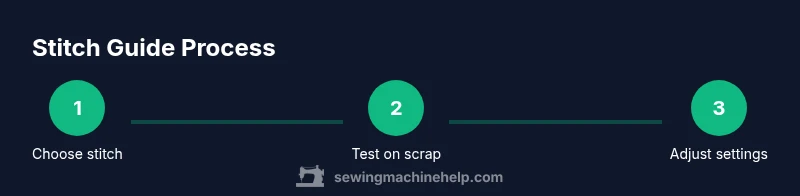
Always test stitches on fabric scraps that resemble your project material. Create samples for each stitch you plan to use, then evaluate seam strength, curl, and edge finish. Compare different tension and length combinations to find the best balance. Record winning settings in your stitch guide or a dedicated notebook. This habit reduces surprises during the final run and preserves fabric waste.
Troubleshooting common stitch issues
If stitches skip, check needle type and height, ensure the needle is properly installed, and verify thread paths. If the fabric gathers or puckers, adjust tension, decrease stitch length, or stabilize the fabric with clips or spray starch. Thread breakage often points to a bent needle, improper threading, or using the wrong needle for the fabric. Systematic adjustments with tests help isolate the root cause.
Advanced tips for decorative stitches
Decorative stitches shine with careful planning. Use stabilizers or wash-away stabilizer for delicate fabrics. Space motifs evenly by marking guide lines on the fabric. For dense stitching, increase stitch length slightly to prevent thread builds that won’t lay flat. Layering different stitches can create interesting textures, but test combinations first on scraps to avoid unexpected results.
Quick-start reference you can print
Create a one-page cheat sheet that lists core stitches, their typical fabrics, recommended lengths, and width ranges. Include a short troubleshooting section and a reminder to always test on scraps. A printable guide helps you stay consistent when sewing sessions are on a tight schedule.
Tools & Materials
- Sewing machine with stitch selector dial or digital interface(Essential to access stitch types discussed)
- Manual or built-in stitch chart from the machine(Reference for settings)
- Scrap fabric in varied weights(For testing stitches and tension)
- Sharp scissors or rotary cutter(Trim threads and fabric)
- Pins or clips(Hold fabric steady during tests)
- Chalk, fabric pen, or removable marker(Mark test lines and guides)
- Ruler or measuring tape(Measure stitch length and seam allowances)
- Bobbin for test stitches(Pre-wound bobbins helpful)
- Needle assortment (sharp, ballpoint for knits)(Match needle to fabric weight)
- Thread in multiple weights and fibers(Experiment with top thread and bobbin thread)
- seam ripper(Useful for correcting mistakes)
Steps
Estimated time: 30-45 minutes
- 1
Inspect stitch chart and plan
Review your machine's stitch chart and choose a core set of stitches suitable for your fabric. Note which stitches you’ll test first and what outcomes you expect.
Tip: Document initial settings for future reference - 2
Prepare fabric scrap and mark guides
Select a scrap that mirrors your project fabric. Mark straight lines and guide points to assess alignment and topstitching width.
Tip: Mark with light, erasable chalk - 3
Thread machine and set up for tests
Thread the machine and wind a fresh bobbin. Start with standard needles and tension close to factory defaults.
Tip: Always test with the same thread weight you’ll use later - 4
Test straight stitch and basic zigzag
Sew short samples at a mid-length and mid-width, noting how fabric feeds and how the stitch sits on the surface.
Tip: Adjust tension gradually in 0.5 steps - 5
Experiment with length and width
Vary stitch length for seams and decorative purposes; alter width for zigzag to achieve desired edge finish.
Tip: Record the most reliable combination - 6
Evaluate and annotate outcomes
Compare samples for stability, curl, and seam allowance behavior. Choose the best settings for your project.
Tip: Label the winning samples clearly - 7
Apply to a real project
Transfer tested settings to the actual fabric and complete the project with confidence.
Tip: Sew slowly at first to ensure accuracy - 8
Document and store settings
Save the approved stitch types, lengths, widths, and tension in a stitch guide notebook or file.
Tip: Keep your guide within arm’s reach
Your Questions Answered
What is a sewing machine stitch guide?
A sewing machine stitch guide is a reference that explains stitch types, recommended fabrics, and settings. It helps you choose the right stitch and adjust tension for reliable results.
A stitch guide explains stitch types, fabrics, and settings, helping you pick the right stitch and adjust tension for reliable sewing.
How do I choose stitches for a project?
Start with the fabric type and project goal. Use straight stitches for seams on woven fabrics, zigzag for stretch or edge finishing, and reserve decorative stitches for embellishment after testing on scraps.
Begin with fabric type and project goal. Use straight stitches for seams, zigzag for elasticity, and test decorative stitches on scraps before using them.
What is the difference between stitch length and width?
Length determines seam density and fabric penetration; width controls how wide the stitch spreads in zigzag or decorative stitches. Both impact durability and appearance.
Length sets how dense the stitch is; width controls the spread of zigzag or decorative stitches. Both affect look and strength.
Why does my stitch skip or thread break?
Skips can result from bent needles, incorrect threading, or mismatched needle/fabric. Thread breaks often come from poor threading or sharp edges on the needle or machine path.
Stitches skip due to bent needles or threading errors; thread breaks come from poor threading or rough machine paths.
How often should tension be adjusted?
Tension should be adjusted when moving to a new fabric weight or thread type. Make small changes and test on scraps until the stitches lie flat and balanced.
Tension changes as you switch fabrics or threads. Tweak a little and test on scraps until balanced.
Can I learn decorative stitches with a stitch guide?
Yes. Start with simple decorative stitches on scraps, evaluate fabric compatibility, then gradually apply them to non-critical projects as you gain confidence.
Absolutely. Begin with simple decorative stitches on scraps and build up to real projects as you gain confidence.
Watch Video
The Essentials
- Master the main stitch types and uses
- Test stitches on scrap fabric before sewing
- Adjust tension to fabric type and thread
- Keep a stitch guide handy for consistency
- Practice decorative stitches to expand skills