What Sewing Machine Setting for Denim: A Practical Guide
Learn the best sewing machine settings for denim, including needle size, stitch length, and foot choices. Practical steps for home sewists to achieve durable, neat denim seams.


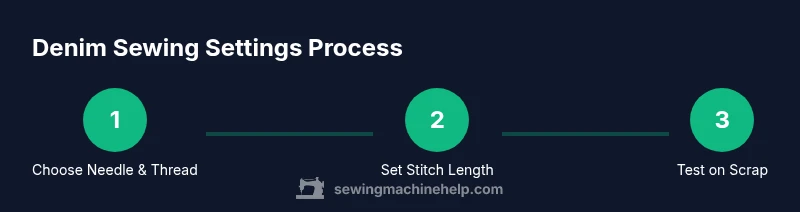
To sew denim successfully, start with a heavy-duty needle (90/14 or 100/16) and strong thread such as polyester. Set a longer stitch length (2.5–3.0 mm) to avoid puckering, and use a straight stitch for most seams or a reinforced triple stitch when extra strength is needed. Increase presser-foot pressure slightly and sew slowly, back-tack at the start and end for secure seams. If your machine offers a walking foot, engage it.
Denim fundamentals: fabric behavior and why settings matter
Denim is a dense, warp-faced cotton fabric that behaves differently from lighter cottons and knits. Its weight can range from mid-weight to heavy, and the visible slub texture influences how stitches sit on the surface. When you’re answering what sewing machine setting for denim, you’re balancing needle choice, thread strength, stitch length, and foot grip to sew through multiple dense layers without puckering. According to Sewing Machine Help, denim benefits from careful preparation: trim loose threads, cut on grain, and test a few denim scraps to dial in tension and stitch type. Start with a clean workspace and a scrap slab the same weight as your project to gauge how the machine feeds. If you make any adjustments to stitch length or tension, document the changes and test again. With denim, small tweaks can have a big effect on seam durability and topstitch quality.
Core settings for denim on common machines
Most home machines handle denim with some simple adjustments. Key settings to start with:
- Needle: use a denim needle in size 90/14 or 100/16 to pierce multiple layers without deflection.
- Thread: choose a robust polyester thread or a cotton-wrapped poly for extra abrasion resistance.
- Stitch length: set to 2.5–3.0 mm for general seams; longer lengths help prevent puckering on heavy fabrics.
- Stitch type: a straight stitch is standard; for reinforced seams or topstitching, add a second pass or use a triple-stitch option if available.
- Presser foot pressure: increase slightly for dense fabric; if your machine breathes more freedom, reduce pressure to avoid tunneling.
- Foot choice: a walking foot improves feeding on thick seams; alternate with a non-stick foot for leather or vinyl if needed.
- Speed: sew at a moderate pace to maintain control and consistent feed.
These guidelines come from practical testing and Sewing Machine Help recommendations.
Needle and thread choices for denim
For most denim projects, start with a sharp denim needle sized 90/14 or 100/16. A larger needle helps prevent skipped stitches when piercing through several layers. Pair the needle with a strong, abrasion-resistant thread such as polyester; cotton-wrapped poly can work, but may wear sooner on rougher surfaces. If you plan topstitching, consider a slightly thicker topstitch thread in a coordinating color. Avoid cheap threads that can break or shred during dense stitching. Be mindful of thread tension; denim threads do best when the machine’s top tension is balanced so the fabric feeds evenly through the needle. Always test on scrap fabric with your chosen needle and thread before starting the actual garment.
Presser foot options and machine features
The presser foot you choose defines how denim layers move under the needle. Start with the standard foot, then experiment with a walking foot for multiple denim layers or when quilting thick sections. A non-stick foot helps with synthetic blends or leather accents. Some machines offer a tension knob and stitch-in-the-ditch guides that make topstitching straighter. If your machine allows needle position adjustments, placing the needle slightly to the left can improve edge alignment on parallel seams. Check your user manual for recommended settings when using specialty feet. Always test foot performance on scraps; a slow feed helps prevent tunneling or skipped stitches.
How to test denim stitch on a scrap
Before stitching your project, practice on a denim scrap of similar weight and composition. Load the needle and thread you intend to use, set the stitch length to 2.5–3.0 mm, and sew a 6–8 inch seam. Back-tack at the start and end to secure the thread. Inspect the seam for evenness, pulled threads, or puckers, and adjust tension or needle size if needed. If you plan topstitching, test a parallel row about 0.25 inches from the seam line to verify alignment. Keep a small notebook or notes on the scrap results so you can replicate the settings on future denim projects.
Troubleshooting common denim sewing issues
Denim can present puckering, skipped stitches, and thread breaks. If you see puckering, try a longer stitch length, a fresh needle, and verify your presser-foot pressure isn’t squeezing the fabric too much. Skipped stitches often indicate a dull needle or incorrect needle size; replace the needle and rethread both top and bobbin. Thread breaks can be caused by rough edges on the denim or a sharp corner on the needle; check for burrs on the needle or fabric snag points. If edges curl, ensure you’re feeding fabric evenly and use clips instead of pins to minimize fabric shifting. When in doubt, sew a straight test seam on scrap and compare with your desired finish.
Advanced tips and topstitching denim
If your project requires visible topstitching, switch to a longer stitch length (3.0–3.5 mm) and a heavier topstitch thread; back-tack at the start. For very thick seams, consider using a walking foot and a slightly larger needle to reduce thread friction. Align seams using edge guides or a seam marking tool, and press with a heavy-duty iron, using steam to relax fibers before finishing. For double-stitched hems, sew a second pass with a slightly offset seam line to strengthen the edge. If your machine supports chain or twin-stitch options, reserve those for decorative details and reinforcement rather than everyday seams.
Denim weights, blends, and project considerations
Denim weight varies from light (8 oz) to heavy (12–14 oz) or more. Lighter denims behave closer to sturdy cotton blends; heavier denims demand slower speeds and more robust components. For coats or bags, plan extra seam allowance and consider a triple-stitch for stress points. Consider fabric finish and texture; selvage denim may require careful edge finishing to avoid unraveling. If you’re stitching both exterior and lining fabrics, test the machine across several fabric combinations to dial in tension and foot choice across layers.
Authoritative sources and safety considerations
Authoritative guidance comes from university extension resources and general machine safety standards. For denim sewing parameters, consult extension resources from the University of Minnesota and University of Illinois for fabric handling tips and needle recommendations. The Occupational Safety and Health Administration (OSHA) provides general guidelines for machine safety, such as keeping fingers away from moving parts, unplugging the machine when changing needles, and using a stable work surface.
- https://extension.umn.edu
- https://extension.illinois.edu
- https://www.osha.gov
Quick-start checklist for your first denim project
Start with a simple patch or repair to build confidence. Gather a denim weight scrap, a heavy-duty needle, a strong polyester thread, and a walking foot if available. Set stitch length to 2.5–3.0 mm and test on scrap. Once you’re satisfied with the results, cut your denim pieces, mark seam allowances, and begin stitching slowly with back-tacks at the ends. Document the settings you used so you can reproduce them on future denim projects.
Tools & Materials
- Heavy-duty sewing machine(Capable of piercing multiple denim layers)
- Denim needle (size 90/14 or 100/16)(Sharp point for dense fabric; replace after heavy projects)
- Heavy-duty polyester thread(High strength, good abrasion resistance)
- Walking foot(Improves feed on thick layers; optional but recommended)
- Scissors or rotary cutter(Sharp and clean cuts; used for denim and trims)
- Pins or clips(Use sturdy clips for thick denim to avoid snagging)
- Measuring tape and fabric marker(Mark seam allowances accurately before cutting)
- Seam ripper(For quick corrections without damaging fabric)
Steps
Estimated time: 60-90 minutes
- 1
Prepare your machine and denim
Install a denim-appropriate needle and load a strong thread. Adjust stitch length to 2.5–3.0 mm and set the machine to straight stitch. Cut and align your fabric on grain, then test a short scrap seam to confirm basic settings.
Tip: Document your initial settings for future projects. - 2
Thread and needle alignment
Thread the top and bobbin correctly, avoiding twists. Ensure the needle is securely installed and not bent. Run a short test seam on scrap to verify the stitching line and tension.
Tip: Always rethread if you notice skipped stitches. - 3
Set stitch length and test seam
Set stitch length to 2.5–3.0 mm for general seams. Do a test seam on denim scrap and observe fabric feed, stitch balance, and edge alignment. Adjust tension if you see puckering or loose stitches.
Tip: Back-tack at the start and end to lock the seam. - 4
Choose foot and feed strategy
Attach a walking foot if sewing multiple layers or thick seams. If not available, feed slowly and guide the fabric with your non-dominant hand while keeping the edges aligned.
Tip: Use clips instead of pins to minimize fabric shifting. - 5
Sew the main seam
Position fabric with the seam allowance aligned to the guide. Sew steadily along the seam line, back-tacking at the ends. Check for even tension and edge alignment as you go.
Tip: Take breaks if the fabric becomes hot or stiff; denim can fatigue the machine if pushed too hard. - 6
Finish and test topstitching
If topstitching, switch to a longer length (3.0–3.5 mm) and a matching or contrasting thread. Back-tack and trim threads. Press seams with a hot iron and steam for a crisp finish.
Tip: Practice topstitching on scrap before doing it on the final piece.
Your Questions Answered
What needle size should I use for denim?
Use a denim needle in size 90/14 or 100/16 to handle multiple layers without skipping stitches.
Use a denim needle like 90/14 or 100/16 for denim.
Should I use zigzag or straight stitch on denim?
For most seams, a straight stitch with back-tacking is best. Reserve zigzag for edge finishing if needed, not for primary seams.
Straight stitch with back-tack is best for denim seams.
What thread is best for denim?
Polyester thread is strong and abrasion-resistant; cotton-wrapped poly is acceptable but may wear faster on rough surfaces.
Polyester thread is ideal for denim.
Can I use a walking foot for denim?
Yes, a walking foot helps feed dense fabrics evenly; it's especially useful for thick seams or layered denim.
A walking foot helps when sewing dense denim.
How do I prevent denim from puckering?
Increase stitch length, ensure the needle size matches the fabric, and test tension on scraps before final stitching.
Test on scraps and use a longer stitch length to prevent puckering.
How should I adjust tension for denim?
Denim often benefits from slightly higher top tension; adjust slowly and test on scraps to find a balance.
Tension may need a slight boost; always test on scraps.
Watch Video
The Essentials
- Use a denim-appropriate needle and longer stitch length
- Test settings on scraps before sewing the final piece
- Consider a walking foot for dense seams
- Back-tack at the start and end for durability
- Document settings for repeat projects