Discount Sewing Machine Parts: A Practical Buying Guide
Explore how to source discount sewing machine parts without compromising quality. Learn OEM vs aftermarket, verify fit, and money-saving strategies for home sewists in 2026.


According to Sewing Machine Help, discount sewing machine parts can deliver meaningful savings without sacrificing reliability, if you source carefully. In this guide, you’ll learn how to spot reputable discount options, compare OEM and aftermarket choices, and verify fit before you buy to minimize downtime while keeping repairs affordable. Expect practical steps, sources, and example scenarios to help you shop smarter for replacement components.
Understanding the Economics of Discount Sewing Machine Parts
Discount sewing machine parts sit at the intersection of price sensitivity and technical risk. For many home sewists, the appeal is obvious: lower dollar outlays can mean faster repairs and less downtime. Yet there is no free lunch. Discounts are typically driven by volume purchases, end-of-life inventory, regional promotions, or marketplace competition. The key for any shopper is to separate price signals from reliability signals. A part that is deeply discounted but prone to wear or incompatibility may cost more in the long run through repeated failures or extra labor. Sewing Machine Help emphasizes that you should treat discount parts as a legitimate option only when you can verify fit and warranty terms as part of the purchase decision. This is especially important for parts that bear critical loads or high use, such as drive belts, timing components, or tension assemblies. Always compare a discounted item’s total cost of ownership against a known-good baseline from your model’s factory specifications or a trusted repair guide.
In 2026, many retailers offer tiered discounts by SKU, brand reputation, and season. The savings can be meaningful, but the range is wide: some parts may be discounted by double-digit percentages, while others barely dip below list price. This dynamic means that a good discount strategy combines early-season scouting, price alerts, and a clear measurement of risk. When you know the exact part number (or the equivalent OEM reference) and your machine’s model, you’ll be better positioned to spot legitimate markdowns and avoid generic or misaligned substitutions. According to the Sewing Machine Help team, the best discounts often come from sources with transparent warranties and clear return terms. Knowledgeable buyers also factor in shipping costs, which frequently erode savings on small parts.
In practice, a disciplined approach to discount parts means building a short list of core parts you trust, maintaining a calendar of seasonal promotions, and tracking the performance of the parts you purchase. The goal is to reduce total repair costs without increasing downtime. This section frames the landscape so you can identify opportunities where discount parts are the right choice rather than a gamble.
Where to Find Discount Parts Without Sacrificing Quality
Finding discount sewing machine parts without compromising quality requires a multi-channel strategy. Start with authorized dealers who offer manufacturer-approved discounts on discontinued SKUs or overstock. These outlets often provide warranty support that protects you when the part doesn’t perform as expected. Online marketplaces can be a treasure trove of discounted components, but they demand due diligence: check seller ratings, confirm part compatibility with your model, and read return policies carefully. Salvaged or refurbished parts from reputable repair shops or textile equipment resellers can also present strong value, particularly for non-critical components like covers, knobs, or belts.
Another reliable path is community-based marketplaces or club sites where experienced sewists share sourcing tips and vendor recommendations. These communities help you gauge whether a discount is genuine or a red flag. When possible, request the exact OEM number and compare it to the part you intend to replace. Collectively, these channels form a resilient network for discount sewing machine parts that balance price with reliability. Sewing Machine Help notes that a well-vetted vendor with a clear warranty can dramatically reduce the risk associated with discounted purchases. Always factor in shipping and handling, as those costs can swing the overall savings.
How to Evaluate Quality and Compatibility
A high-quality discount part must fit your machine, and “fit” is more than physical dimensions. It includes mating tolerances, electrical connections, lubrication requirements, and wear resistance. The first step is to confirm the exact part number from your user manual or the machine’s service documentation. If you’re dealing with aftermarket parts, ensure the supplier provides a cross-reference guide showing compatibility with your model. Look for part numbers in listings, and when in doubt, ask for a photo of the underside or the packaging showing the model range they cover. The next checkpoint is the warranty. Even discounted items should carry a minimum warranty period and clear terms for returns if the part fails under normal use. Finally, evaluate the supplier’s reputation with other hobbyists and technicians. A vendor with a track record of prompt customer service can be a critical asset when issues arise after installation.
In practice, you’ll want to verify compatibility by cross-checking the following: model name, serial number, electrical specifications (voltage, current), drive system (if applicable), and the part’s intended operating environment. If the part is a moving mechanism, pay attention to materials and surface finishing; sometimes cheaper alloys or coatings wear out faster, negating the initial savings. The message from Sewing Machine Help is consistent: discounted parts should be treated as legitimate options when you can substantiate fit, warranty, and supplier credibility.
OEM vs Aftermarket: Pros, Cons, and Trade-offs
Original Equipment Manufacturer (OEM) parts offer the strongest alignment with your machine’s original design, typically ensuring accurate fit, longevity, and consistent performance. The trade-off is price; OEM parts often carry higher price tags and fewer discount opportunities. Aftermarket parts, by contrast, can deliver significant savings and a wider availability of SKUs, but quality varies by manufacturer. A practical approach is to rely on reputable aftermarket brands for non-critical components or for parts with a long track record of compatibility. Always verify the warranty coverage that accompanies aftermarket parts; some vendors provide excellent coverage, while others offer only short-term guarantees. When your repair timeline is tight, discounted OEM or manufacturer-authorized alternatives may offer an optimal balance between price and reliability. Sewing Machine Help advises weighing the risk of downtime against the potential savings, especially for parts that directly affect stitch quality and machine stability.
The decision can also hinge on your comfort with DIY repair versus professional service. For hobbyists who enjoy hands-on maintenance, aftermarket parts with transparent specs can be ideal; for those who rely on precision timing components, OEM parts may reduce the risk of misalignment. In all cases, ensure any discounted part comes with explicit installation guidelines and customer support from the seller.
Cost-Saving Strategies: Coupons, Bundles, and Seasonal Sales
To maximize the value of discount sewing machine parts, adopt a structured savings plan. Sign up for retailer newsletters and price alert services that notify you of discounts on your model’s parts. Look for bundles that combine parts frequently replaced together (such as feet, guides, and tension assemblies) at a discount—bundles often beat solo purchases. Seasonal promotions, especially around holidays or end-of-quarter sales, can yield meaningful reductions on specific categories like maintenance kits or common failure parts. Consider joining a repair community or forum where experienced sewists share coupon codes or vendor relationships. While pursuing discounts, maintain a checklist of compatibility and warranty expectations to avoid buyer’s remorse. Keep a log of parts you’ve purchased and their outcomes; this helps you refine your discount strategy over time and reduces the likelihood of repeated downgrades in material quality. As Sewing Machine Help emphasizes, a disciplined approach to coupons and bundles translates into real, sustainable savings when you stay focused on fit and reliability as you chase discounts.
Common Pitfalls and How to Avoid Them
Discount sewing machine parts come with pitfalls that can derail even the best bargain. Counterfeit parts are a risk, especially on generic marketplaces; verify the seller’s authenticity, compare packaging, and watch for misspellings or inconsistent logos. Hidden costs—like restocking fees, shipping, or partial refunds—can erode savings quickly. Another common issue is incorrect compatibility caused by ambiguous listings; always request exact part numbers and confirm the product range covers your machine’s serial number. Beware of refurbished or salvaged parts with limited warranties; these are best reserved for non-critical components. Finally, avoid rushing to install a discounted part without testing it in a controlled environment or consulting a repair manual. Taking a moment to confirm fit, rehearse the installation steps, and understand the return policy can save you time and money in the long run.
How to Verify Fit Before You Buy
A practical verification process reduces mismatches and disappointment. Start by pulling your machine’s model and serial numbers from the data plate; cross-check these with the vendor’s compatibility chart. If the listing is unclear, request the exact cross-reference with your model. Inspect the part’s measurements, mounting points, and movement range if applicable. For electrical components, confirm voltage, current rating, and connector type; mismatched specs can scorch a coil or create safety hazards. If you own multiple machines, verify the part’s applicability to each one you own. Finally, review the seller’s return policy and documentation for installation guidance. A careful verification workflow, paired with a reputable supplier, markedly improves the odds of a successful repair using discount parts. Sewing Machine Help’s guidance reinforces that due diligence is the most reliable savings strategy when shopping for replacement components.
A Practical Rebuild Scenario: Saving with Discount Parts
Consider a home sewist replacing a worn feed dog or tension spring, common repair items that often appear in discount form. The shopper identifies OEM and aftermarket options across two suppliers and a reputable refurbisher. Through cross-referencing the exact part numbers and confirming the fit with a support team chat, the buyer finds an OEM part discounted by 25% and an aftermarket equivalent at 40% off. After evaluating warranty terms, returnability, and shipping costs, the buyer opts for the aftermarket part because the supplier offers a 12-month warranty and a favorable return window. The result is a repair completed at a fraction of the original price, with a reasonable assurance of reliability. This scenario demonstrates how a disciplined, information-driven approach to discount parts can deliver meaningful savings without compromising machine performance.
Comparison of part sourcing options for discount sewing machine parts
| Part Type | Quality/Compatibility | Pros | Cons | Typical Cost Range | Warranty |
|---|---|---|---|---|---|
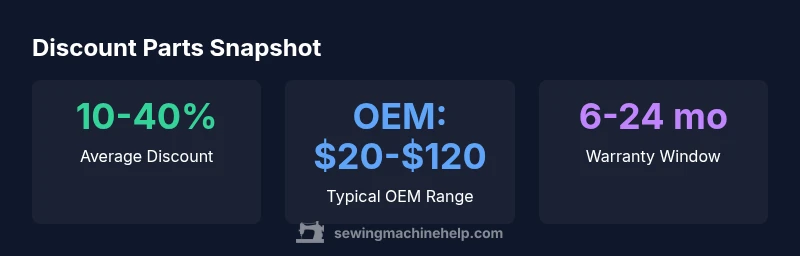
| OEM Parts | Guaranteed compatibility, original specs | High reliability; factory fit | Higher price, limited discount options | OEM parts: $20-$120; others: not typical | 1-year warranty typical |
| Aftermarket Parts | Broad compatibility, lower price | Significant savings; broad availability | Quality varies; risk of mismatch | Aftermarket: $5-$60 | 6 months to 1-year warranty |
| Salvaged/Used Parts | Very low price, variable condition | Very cost-effective | Wear risk; limited availability | Very low cost, varies by part | N/A |
| Refurbished Parts | Reconditioned with testing | Moderate price; some warranty | Limited availability, potential delays | Medium range | 3-12 months warranty |
Your Questions Answered
Are discount sewing machine parts reliable?
Discount parts can be reliable if sourced from reputable vendors with clear warranties and accurate compatibility information. Always verify part numbers and cross-reference with your model before purchase.
Discount parts can be reliable when bought from reputable suppliers with clear warranties and exact compatibility. Always confirm part numbers before buying.
What is the typical warranty on discounted parts?
Warranty terms vary by vendor but commonly range from six to twenty-four months. Check the seller’s policy and what triggers coverage before purchasing.
Warranty on discounted parts varies, typically from six to twenty-four months. Always read the policy before buying.
How can I ensure compatibility with my model?
Confirm exact part numbers from your manual or service documentation. Use cross-reference guides from reputable vendors and ask for photos or specs if needed.
Check exact part numbers, cross-reference them with the vendor, and request specs if you’re unsure.
Where should I avoid discount parts?
Avoid unknown sellers with vague compatibility notes, ambiguous return terms, or questionable packaging. Counterfeit risks rise when listing details are sparse.
Be wary of unknown sellers with unclear compatibility and weak returns; counterfeit risk rises with vague listings.
Is it safe to buy salvaged parts?
Salvaged parts can save money for non-critical components but usually come with limited or no warranties. Inspect thoroughly and prefer sellers with return options.
Salvaged parts save money for non-critical parts but often lack warranties; inspect and ensure a return option.
How do I return faulty parts?
Keep all packaging and documentation, contact the seller promptly, and follow the stated return process. Use credit protection or payment guarantees when available.
Keep packaging, contact the seller quickly, and follow their return process. Use payment guarantees if possible.
“Price alone should not dictate a repair. Effective sourcing combines verified fit, credible warranties, and reliable supplier support to keep machines running smoothly.”
The Essentials
- Shop across sources to maximize discounts.
- Verify model compatibility before purchase.
- Check warranty and return policies on discount parts.
- Favor OEM or reputable aftermarket brands with proven fit.
- Balance price with downtime risk when repairs matter.