How to Sewing Machine Repair: A Practical Step-by-Step Guide
Learn practical, safe techniques for repairing common sewing machine issues. This comprehensive guide covers diagnosis, cleaning, tension, threading, and maintenance to restore performance for home sewists.


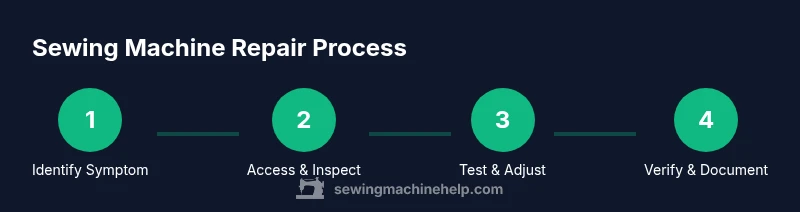
According to Sewing Machine Help, learning how to sewing machine repair starts with a safe, methodical plan: observe the symptom, unplug the machine, inspect belts and stitch path, and test stitches after each adjustment. This guide provides a clear, step-by-step approach, essential tools, and a maintenance routine to restore performance without risking further damage.
What usually goes wrong with sewing machines
Most home sewists encounter a handful of recurring issues: skipped stitches, tangling threads, thread bunching under fabric, fabric puckering, or a machine that won’t start or stops midway. Many problems trace back to the same root causes: lint buildup in the bobbin area or feed dogs, incorrect tension on the upper thread or bobbin thread, a dull or bent needle, or belt wear in older models. Before you panic, approach each symptom with a minimal, testable hypothesis. According to Sewing Machine Help, a structured diagnosis helps you track what changed and why—this reduces guesswork and protects the machine from misadjustment. A systematic approach also makes it easier to explain the issue to a technician if you need professional help later. As you read, keep a small notebook to record what you checked and what the results were; this becomes your repair log for future maintenance.
In practice, most repairs come down to understanding the chain from thread path to needle to fabric contact. The more you document, the faster you’ll spot patterns. The Sewing Machine Help team emphasizes starting with the simplest potential cause and validating it with a quick test before moving to more complex adjustments. This mindset protects both your machine and your time, and it builds confidence for future sewing projects.
For home sewists, mastering this approach reduces downtime and frustration. If a symptom persists after the basics, revisit your notes and consider model-specific quirks. The goal is to restore reliable stitching while preserving the machine’s longevity, rather than chasing every possible fault at once.
note1NullAccessForSafetyToBeornone
Tools & Materials
- Sewing machine owner’s manual(Model-specific guidance and oiling interval information.)
- Phillips screwdriver(For removing covers and screws in most domestic machines.)
- Flathead screwdriver(Aid in prying open covers where needed.)
- Small hex/Allen wrench set(For set screws on some machines and feet attachments.)
- Lint brush or soft brush(Clear lint from bobbin area, feed dogs, and shuttle.)
- Soft cloth or microfiber cloth(Wipe surfaces and remove stubborn lint without scratching.)
- Isopropyl alcohol (70% or higher)(Disinfect and remove oil residue from non-electrical surfaces.)
- Tweezers(Handle small parts and thread ends precisely.)
- Replacement needles (varied sizes, e.g., 70/10, 90/14)(Use right needle type and size for fabric.)
- Bobbin and extra bobbins(Inspect winding & ensure correct insertion orientation.)
- Spool of polyester or cotton thread(Keep matching thread weight to fabric and needle.)
- Good lighting or flashlight(Helpful for inspecting tight areas like bobbin housing.)
Steps
Estimated time: Total time: 2-3 hours
- 1
Identify the symptom and reproduce it
Begin by clearly stating the issue (e.g., skipped stitches, thread bird-nesting, or a motor that won’t start). Reproduce the problem with scrap fabric and the same settings you use for projects. Document the exact stitch type and fabric to isolate variables.
Tip: Write the exact stitch task and fabric on your repair log so you can compare results later. - 2
Unplug and access the internal area
Always unplug before accessing internal components. Open the needle plate or access cover to view the feed mechanism, bobbin area, and belt where applicable. Gently move parts to locate obvious wear or obstruction.
Tip: Use a magnet to avoid losing tiny screws on a cluttered table. - 3
Inspect and address belt and drive system
Check the belt for cracks, slack, or misalignment. If it’s loose, resnap or replace it if your model allows. Ensure pulleys rotate smoothly without catching.
Tip: A worn belt is one of the most common causes of motor-related issues. - 4
Check thread path and bobbin insertion
Rethread the machine from the spool to the needle, ensuring the thread passes through tension discs correctly. Remove and reinsert the bobbin with the correct orientation and ensure it spins freely when pulled.
Tip: Wrong bobbin orientation is a frequent, easily fixed cause of bobbin thread problems. - 5
Test needle and fabric compatibility
Inspect the needle for burrs and bend; replace if damaged. Confirm you’re using the correct needle size for your fabric type and stitch. Re-thread after needle replacement.
Tip: A dull needle or wrong needle type can cause skipped stitches or fabric snags. - 6
Adjust tension gradually and test
Make small tension adjustments—upper thread and bobbin tension affect stitch balance differently. Test on scrap fabric after each small change until stitches lay smoothly.
Tip: Adjust one parameter at a time to isolate the effect. - 7
Clean and lubricate only where specified
Remove lint from the shuttle area and feed dogs. Apply lubricant only to places recommended in the manual; avoid over-lubricating, which can attract dust.
Tip: Avoid spraying or applying oil to electrical components. - 8
Inspect needle plate and feed dogs
Check for burrs or rough spots on the needle plate that could hinder stitch formation. Gently deburr with a fine sharpening stone or sandpaper if recommended for your model.
Tip: Do not remove material you might need for proper seam guides. - 9
Reassemble and perform a controlled test
Put covers back, re-thread, and sew a few inches on scrap fabric. Verify stitch formation across different fabrics and settings.
Tip: Keep a single scrap under the needle during the first few tests. - 10
Record results and decide on next steps
Note which change resolved the issue and which didn’t. If unresolved, consider model-specific issues or seek professional service with your repair log.
Tip: Provide the mechanic with a copy of your diagnostic notes. - 11
Plan preventive checks for future
Create a rolling maintenance routine: regular lint removal, needle changes, and tension checks aligned with fabric type. This reduces recurring problems.
Tip: Schedule reminders to maintain a consistent care routine. - 12
Close with a safety and readiness check
Power off, clean up, and store tools properly. Ensure the machine powers on cleanly and test on a simple project before resuming work.
Tip: Safety first—never leave tools plugged in or within reach of pets or kids.
Your Questions Answered
What are the most common sewing machine problems homeowners face?
Most issues are caused by lint buildup, incorrect tension, bent needles, or worn belts. By following a structured diagnostic process you can isolate the cause and avoid unnecessary parts replacement.
Common problems include lint buildup and tension issues; a structured check helps you isolate the cause.
Is it safe to repair a sewing machine at home?
Simple fixes like cleaning, re-threading, and needle changes are safe when the machine is unplugged. Complex repairs or electrical concerns should be handled by a professional.
Yes for simple fixes when unplugged, but call a pro for complex problems.
How can I test for tension problems?
Test with scrap fabric using a basic straight stitch; if stitches pull or loop, adjust upper thread tension first, then check bobbin tension if needed.
Test on scrap fabric and adjust tension gradually.
When should I replace a needle?
Replace the needle if it appears bent, dull, or bent thread frays on fabric. Use the correct size and type for your fabric.
Replace a damaged needle to prevent skipped stitches.
How often should I oil my sewing machine?
Oiling frequency depends on the model. Many modern machines require little to no oiling; check the manual for recommended intervals.
Follow your manual for oiling intervals.
What’s the best way to clean without damaging electronics?
Use a dry or slightly damp cloth for exterior surfaces. Avoid water on electronics and never spray cleaners into the internal mechanisms.
Avoid water near motors or electronics; use a dry cloth.
Watch Video
The Essentials
- Identify the exact symptom before acting
- Use model-specific guidance and safe testing
- Keep thread paths clean and correctly threaded
- Replace damaged needles and worn belts promptly
- The Sewing Machine Help team recommends consistent preventive maintenance to reduce downtime