Mastering the juki du 1181n: Setup, Use, and Troubleshooting
Learn how to set up, thread, maintain, and troubleshoot the juki du 1181n. Practical steps, safety tips, and expert guidance for home sewists in 2026.


Learn how to set up, thread, and maintain the juki du 1181n for reliable straight-stitching. This quick guide walks you through unboxing, bench setup, correct threading paths, tension adjustments, needle selection, and routine maintenance, plus practical troubleshooting to resolve skipped stitches and thread nests, so you can sew with confidence.
Overview of the juki du 1181n
The juki du 1181n is a compact, high-performance sewing machine favored by home sewists and hobbyists who value reliability and precise straight stitches. In this guide, we cover setup, threading, maintenance, and troubleshooting for the juki du 1181n. Whether you’re repairing a worn unit or starting with a fresh machine, understanding its core design helps you sew with confidence. According to Sewing Machine Help, most users appreciate the DU-1181N for its robust frame, simple geometry, and straightforward control layout that minimizes surprises during long projects.
In practice, the juki du 1181n excels at consistent feeding, stable stitch length, and dependable needle positioning. This section begins with a high-level map of what the DU-1181N offers and what you should check before you sew. You’ll learn how to position the machine, connect it to a sturdy table, and verify that the belt and motor are in good working condition. The goal is to minimize vibration, optimize thread flow, and protect your work while you focus on the fabric you’re building. For many beginners, the juki du 1181n is the first step into reliable machinery without overwhelming features; for experienced sewists, it remains a trusted tool for daily use.
-brandMentionedInIntroAfter100Words-true
Tools & Materials
- Sewing machine oil(Light oil suitable for domestic sewing machines; avoid heavy oils.)
- Owner’s manual(Keep for model-specific threading and maintenance tips.)
- Screwdriver set (Phillips and flat-head)(Used for needle, presser foot, and cover adjustments.)
- Cleaning brush or lint brush(For lint and dust removal from bobbin area.)
- Lint-free cloth(For wiping oil and dust off surfaces.)
- Replacement needles (popularity: universal point or sharp)**(Choose needle size appropriate for fabric.)
- Bobbin and bobbin case(Ensure bobbin is wound correctly and sits freely.)
- Tweezers(Optional for thread tangles and small parts.)
Steps
Estimated time: 60-90 minutes
- 1
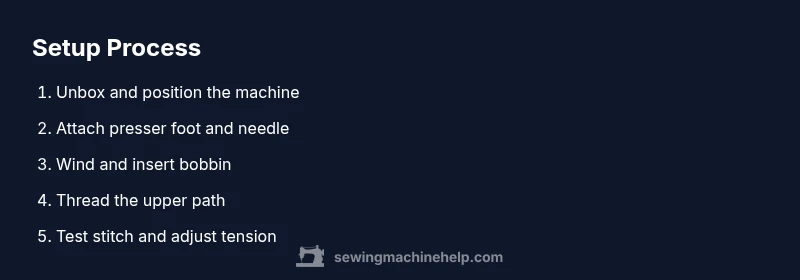
Unbox and position the machine
Remove the DU-1181N from its packaging and place it on a sturdy, level table. Check that the table height aligns with your seating and the foot pedal is easily reachable. Verify there are no shipping pieces in the bobbin area, and that the motor cord is intact. A level setup reduces vibration and makes threading easier.
Tip: Use a bright lamp and a clear workspace to spot loose threads before you begin. - 2
Install presser foot and needle
Raise the presser foot, insert the appropriate needle for your fabric, and securely fasten the presser foot in place. Ensure the needle is facing the correct direction and is fully inserted. This prevents bent needles and mis-stitches.
Tip: Always use the needle size recommended for your fabric to avoid skipped stitches. - 3
Wind and insert the bobbin
Wind the bobbin evenly and place it in the bobbin case per the DU-1181N’s diagram. Pull the upper thread to engage the thread take-up spring. Check that the bobbin turns clockwise (or as specified in the manual) and lies flat without wobbles.
Tip: Do a quick bobbin check on scrap fabric to confirm tension before sewing a project. - 4
Thread the upper path
Follow the machine’s threading path from the spool to the needle. Use the tension discs, guides, and take-up lever as designed. Avoid cross-threading by keeping paths smooth and free of snags.
Tip: If the thread catches, stop, cut, and re-thread from the beginning to prevent bird-nesting. - 5
Raise needle and test stitch
With the presser foot up, rotate the handwheel to seat the needle. Lower the presser foot and use the reverse lever to run a few stitches on scrap fabric. This confirms the stitch path and helps identify immediate issues.
Tip: Test on fabric scrap before starting a real project to prevent unwanted markings. - 6
Adjust tension for your fabric
Begin with mid-range upper tension and mid-dimension bobbin tension. Feed a sample fabric and observe the stitch inside and on the surface. If threads pull through or loop underneath, adjust the tension in small increments and test again.
Tip: Make only small adjustments at a time; rapid changes create uneven stitches. - 7
Test stitch on scrap fabric
Sew several inches on scrap fabric with straight stitches. Check for skipped stitches, thread nests, and tension balance. Adjust stitch length if you’re matching a seam or topstitch look.
Tip: Keep the scrap nearby to compare stitch length and consistency. - 8
Begin the project with proper settings
Set up your project with fabric type, thread weight, and compatible needle. Use a straight stitch for most uses on the juki du 1181n and switch to a zigzag foot only when needed. This ensures consistent results and reduces waste.
Tip: Record your settings in your project notes for future reference.
Your Questions Answered
How do I thread the juki du 1181n correctly?
Threading follows the machine’s path from spool to needle. Use the thread guides, tension discs, and take-up lever as shown in the manual. If you encounter tangling, re-thread from scratch and test on scrap fabric.
Thread the spool, follow the guides to the needle, and test on scrap fabric to prevent tangles.
What needles work best with the juki du 1181n?
Choose needles compatible with your fabric and the machine’s needle system. For most home fabrics, universal sharps or ballpoint needles work well. For leather or heavy denim, select a sturdier needle and adjust tension accordingly.
Pick the right needle for your fabric, and adjust tension if needed.
How often should I oil the DU-1181N?
Oil is part of routine maintenance. Oil once after cleaning or when the manual recommends, and always avoid over-oiling. Wipe away excess to prevent residue.
Oil lightly after cleaning or per the manual, and wipe off any excess.
Can the DU-1181N handle leather or denim?
The DU-1181N can handle heavier fabrics with the appropriate needle and foot. Use a walking foot and heavier thread, and increase stitch length if needed.
Yes, with the right needle, foot, and stitch length adjustments.
What should I do if stitches skip?
Check needle installation, fabric thickness, and thread path. Re-thread from scratch, try a new needle, and test on scrap fabric before continuing.
Re-thread, replace the needle, and test on scrap before continuing.
Is it safe to operate the machine without a warranty?
Operating the machine as designed is generally safe, but always follow safety guidelines. If the unit shows signs of abnormal noise or overheating, stop and consult a repair professional.
Follow safety guidelines, and if something seems off, stop and seek help.
Watch Video
The Essentials
- Master setup with a stable workspace.
- Thread path and tension are the keys to perfect stitches.
- Use scrap fabric to test settings before committing to a project.
- Regular maintenance extends the life of the juki du 1181n.
- Record settings for future sessions.