Sewing Machine Troubleshooting: Quick Guide for Home Sewists
A practical guide to sewing machine troubleshooting for home sewists. Learn quick checks, a diagnostic flow, and step-by-step fixes to resolve common problems safely.


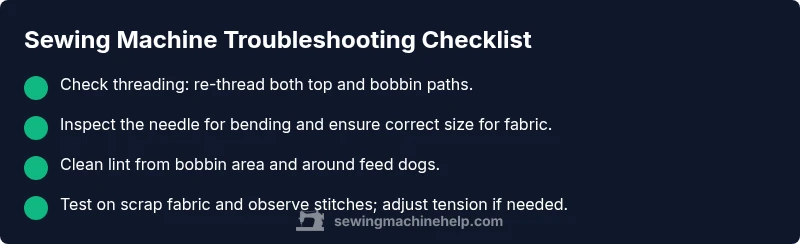
Most sewing machine troubles come from threading errors, lint buildup, or incorrect needle tension. Begin with quick checks: re-thread the machine, replace the needle, and clean the bobbin area. Run a test stitch on scrap fabric. If issues persist, follow the diagnostic flow and step-by-step fixes below, including safety reminders and when to seek service.
What sewing machine troubleshooting covers
Sewing machine troubleshooting is a practical, hands-on process that helps home sewists identify and fix problems that interrupt stitches, fabric feeding, or machine operation. It emphasizes reliable, low-risk steps you can perform without fancy diagnostics. According to Sewing Machine Help, most everyday issues start with setup or maintenance rather than major mechanical failures. In this section, you’ll learn how to frame a problem, gather the right tools, and follow a safe, repeatable routine that works across many brands and models. You’ll also see how to distinguish between issues caused by threading, needle selection, tension, or fabric feed, so you can target the right area quickly and avoid unnecessary disassembly. This guide also emphasizes safety, version-agnostic advice, and practical tests using scrap fabric to confirm that repairs actually fix the problem.
Common symptoms and quick checks
If your stitches are loose, thread breaks, fabric bunches, or the machine won’t start, start with the simplest checks. Re-thread top and bobbin, replace the needle if bent or dull, and clean lint from around the bobbin case. Run a quick test on scrap fabric with a straight stitch. If the machine is noisy or hard to push, check the presser foot, feed dogs, and ensure the machine is properly oiled if your model requires it. These quick checks solve the majority of day-to-day issues and set a baseline for deeper diagnostics. Remember, never force the machine through a problem; stop, re-check, and proceed.
Why timing, thread, and tension cause most issues
Many problems in sewing machine troubleshooting boil down to three common factors: timing, thread path, and tension. A mis-threaded path or the wrong needle can distort stitches or cause breaks. Confirm the needle is properly installed (level, facing the correct direction) and that the thread follows the correct path through the tension discs, take-up lever, and thread guides. If the stitch looks uneven, test the tension on a scrap piece and adjust gradually. The bobbin case should rotate smoothly with gentle tension; if it binds, remove lint and reassemble. Sewing Machine Help analysis shows that consistency comes from clean paths and matched components rather than exotic fixes; stick to the basics first.
How to organize a systematic troubleshooting routine
Adopt a repeatable routine so you can isolate issues without guessing. Start with safety: unplug, remove the presser foot, and ensure the area is well-lit. Gather simple tools: a small brush, lint cloth, spare needles, and the manual. Then perform a controlled test on scrap fabric with a basic stitch, observing for skipped stitches, thread breaks, or feed problems. If something fails, address one variable at a time: re-thread, replace needle, adjust tension, check bobbin, and clean lint. Always re-test after each change to confirm the effect, and keep notes so you know what has been tried. This structured approach reduces frustration and speeds up resolution.
Step-by-step deep dive into thread jams and skipped stitches
Thread jams and skipped stitches are the most frequent headache for beginners. In this section we outline a practical approach you can apply without specialized tools. Start by powering down and unplugging, then remove the thread, bobbin, and needle to inspect each path for kinks or misalignment. Re-thread carefully, replace a bent needle, and test on scrap fabric. If tension is still off, adjust gradually and verify that the take-up lever moves freely. Finally, ensure the bobbin is seated correctly and that the stitch plate isn’t obstructed. By methodically checking each area, you can resolve the majority of jam/skip scenarios and maintain smooth operation.
Safety, maintenance, and when to seek professional help
Safety comes first: unplug before any inspection, avoid disassembly beyond what your manual allows, and wear eye protection if you’re dealing with a stubborn jam. Regular maintenance includes cleaning lint from the bobbin area, wiping away dust, and following the model’s lubrication schedule. If you hear grinding, notice unusual resistance, or the machine fails basic checks after you’ve retried the steps, stop and seek professional service. The Sewing Machine Help team emphasizes when professional help is needed to prevent further damage and to preserve warranty terms. Regular maintenance and mindful troubleshooting reduce downtime and extend machine life.
Steps
Estimated time: 30-45 minutes
- 1
Power down and prepare workspace
Unplug the machine, remove the presser foot, and clear the workspace. Gather a small brush, spare needles, and scrap fabric for testing. This minimizes risk and makes subsequent steps smoother.
Tip: Keep a small notebook to log what you change during troubleshooting. - 2
Remove thread and the bobbin for inspection
Take out the thread from the top path and remove the bobbin. Visually inspect for kinks, loose threads, or burrs. Reinsert the bobbin and re-thread the machine after ensuring the path is clear.
Tip: Use a bright light or magnifier to spot fine lint or threading issues. - 3
Check needle and top thread path
Remove and inspect the needle for bending or damage; replace with a new needle of the correct type for your fabric. Retime the top thread, ensuring it follows the correct guides toward the take-up lever.
Tip: Always thread with the presser foot up to open the tension discs. - 4
Inspect bobbin housing and timing considerations
Re-seat the bobbin in the correct direction and ensure the cover plate is fully snapped in. If you suspect timing issues, avoid forcing screws—timing is a complex repair and may require professional service.
Tip: Only attempt timing adjustments if you have the service manual. - 5
Clean lint, re-thread, and test
Clean all lint from the bobbin area and feed dogs. Re-thread both top and bobbin, then sew a short scrap fabric test. Observe stitch quality and feed smoothness.
Tip: Test at a low speed to maintain control and reduce ricocheting fabric. - 6
Evaluate results and plan next steps
If the test still isn’t right, gradually adjust tension and needle size, then re-test. If the problem persists, consider professional servicing or checking support resources from your model’s manufacturer.
Tip: Document what you changed so you can revert if needed.
Diagnosis: Stitches are skipped, thread breaks, or fabric misfeeds
Possible Causes
- highTop thread path or tension mis-set
- highBobbin incorrectly threaded/placed
- mediumNeedle is bent or wrong type for fabric
- mediumLint buildup in bobbin area or feed mechanism
Fixes
- easyRe-thread the top thread and re-check tension with scrap fabric
- easyRe-thread the bobbin correctly and ensure the bobbin case seats properly
- easyInspect and replace the needle if bent or the wrong size/type for the fabric
- easyClean lint from the bobbin area and feed dogs; lubricate if your model requires it
Your Questions Answered
Why is my sewing machine skipping stitches?
Skip stitches are often caused by threading errors, wrong needle type, or tension problems. Re-thread both top and bobbin, replace or reinstall the needle, and test on scrap fabric. If it persists, consult the diagnostic flow to identify the cause.
Skip stitches usually come from threading or needle issues. Re-thread, replace the needle, and test on scrap fabric; then follow the flow if it still fails.
What should I do if fabric bunches under the needle?
Fabric bunching typically points to tension or presser foot height problems. Check the presser foot pressure, ensure the fabric feeds evenly, and verify the needle and thread are suited for the fabric.
Bunching often means tension or feed problems; adjust tension and presser foot, then try a test stitch.
How often should I clean and oil my machine?
Regular lint removal after sewing sessions helps prevent jams. Follow your model’s manual for lubrication requirements and avoid over-oiling.
Clean lint regularly and oil only as recommended by your machine’s manual.
Is it safe to service a machine at home?
Basic troubleshooting is safe if you unplug and avoid disassembly beyond what the manual allows. If unsure, seek guidance from the manufacturer or a professional.
Basic fixes are fine to do at home as long as you unplug first and don’t take apart anything risky.
When should I seek professional service?
If basic checks don’t resolve the issue, or you hear grinding and see unusual movement, a technician should inspect the machine to prevent further damage.
If basic fixes fail or you hear grinding, get a professional to service the machine.
How do I know if the bobbin is threaded correctly?
Ensure the bobbin is seated the right way, unwinds with the correct direction, and the case sits securely. If in doubt, reinstall using the manual’s diagrams.
Bobbin threading should be snug and correctly oriented; re-seating it usually fixes most bobbin issues.
Watch Video
The Essentials
- Start with basics before diving deeper
- Re-thread top and bobbin to fix most issues
- Replace bent or wrong-size needles promptly
- Clean lint from bobbin area to prevent jams
- Maintain a simple troubleshooting log to track changes