What's Wrong With My Sewing Machine Stitches? A Quick Troubleshooting Guide
Urgent, practical guide to diagnose and fix common sewing machine stitch problems. Learn step-by-step checks, safety tips, and when to call a pro. Based on Sewing Machine Help analysis, this guide helps home sewists restore clean stitches fast.


Stitch problems are usually caused by simple setup mistakes. Start by re-threading the machine from scratch (top thread and bobbin), installing a fresh needle of the correct type, and testing on scrap fabric. If issues persist, check the thread path, fabric, and tension in order. According to Sewing Machine Help, a systematic approach fixes most issues quickly.
Why stitches go wrong
Stitches can go haywire for several reasons, but the most common culprits are setup errors and wear that sneaks up over time. When someone asks, "what's wrong with my sewing machine stitches?" the answer is usually found in a few simple checks first. According to Sewing Machine Help, the majority of stitch problems start with how the machine is threaded, the needle installed, and the fabric being stitched. Start by diagnosing one variable at a time, and keep track of the exact settings you used. This discipline saves time and reduces frustration for home sewists and beginners who want reliable results fast.
In practical terms, think of stitches as a system: top thread, bobbin, needle, fabric, and machine settings all interact. If any one piece is off—even slightly—the stitch quality can deteriorate quickly. The goal is to restore harmony among these components so the fabric feeds smoothly, the needle penetrates cleanly, and the stitch length stays even. The Sewing Machine Help Team emphasizes that a calm, methodical approach yields the best outcomes rather than random fiddling. This section introduces the mindset you’ll use throughout the troubleshooting journey.
-sectionNote-1-
Steps
Estimated time: 30-45 minutes
- 1
Re-thread from scratch
Power off the machine, remove the needle plate area if needed, and re-thread the top thread through every path. Verify the thread lies smoothly in the guides and tension discs. Thread the needle from front to back as required by your model.
Tip: Double-check the thread path against your user manual since misrouting is a frequent culprit. - 2
Inspect and replace the needle
Remove the old needle and inspect for bending or burrs. Install a new needle of the correct type and size for your fabric. Tighten needle clamp securely.
Tip: Always use the right needle for the fabric to prevent skipped stitches. - 3
Revisit the bobbin setup
Take out the bobbin, wind a fresh bobbin if it looks uneven, and reinsert according to your machine’s path. Ensure the bobbin case sits snugly and moves freely.
Tip: A loose bobbin can cause inconsistent stitches or loops under the fabric. - 4
Test on scrap fabric
Use a scrap piece with similar weight to your project. Run several slow stitches to observe top and bottom thread behavior before resuming your project.
Tip: If you see thread nests or looping, stop and re-evaluate tension and threading. - 5
Adjust tension and stitch type
Experiment with slight tension adjustments and choose a stitch type appropriate for the fabric. For woven fabrics, standard straight stitch is typical; for knits, consider a zigzag or stretch stitch.
Tip: Make only small changes at a time to isolate the effect. - 6
Check fabric feed and presser foot
Confirm the fabric is not puckering and the feed dogs are moving. Use the correct presser foot for the stitch you’re making. Lower or raise the presser foot as needed.
Tip: Too much pressure can pull threads tight and cause uneven stitches. - 7
Document settings and finalize
Record the final tension and stitch settings that worked on your fabric. This helps you reproduce the fix on future projects and reduces repeat troubleshooting.
Tip: Keep a small sewing log for quick reference.
Diagnosis: Stitches are uneven, loops appear on the fabric surface, or bobbin thread shows on the top side.
Possible Causes
- highTop thread tension is misadjusted or not properly threaded through the tension discs
- highBobbin is wound or installed incorrectly, or the bobbin case is not seated properly
- mediumNeedle is bent, dull, or the wrong type/size for the fabric
Fixes
- easyRe-thread the top thread correctly, ensuring it goes through the tension discs and pressure foot before threading the needle
- easyRemove and re-thread the bobbin and bobbin case, check for any织 thread caught in the path, and reseat the bobbin case
- easyReplace the needle with a fresh, appropriate size/type for the fabric (e.g., jeans needle for denim) and test again
Your Questions Answered
Why are my stitches loose on the top edge of the fabric?
This is most often caused by top thread tension being too loose or the thread not seating properly in the tension discs. Re-thread, adjust the tension slightly, and test on scrap fabric.
Loose top stitches are usually due to tension or threading issues—re-thread and test before continuing.
Why is bobbin thread appearing on the fabric surface?
Bobbin thread on the top usually means the bobbin is threaded incorrectly or the bobbin case tension is off. Rewind/reinsert the bobbin and re-check the case.
If bobbin thread shows on top, re-check the bobbin setup and case tension.
What causes thread nests under the fabric, and how do I fix them?
Thread nests occur when tension is unbalanced or threading is wrong. Start by re-threading, check the needle, and test on scrap with a different fabric weight.
Nests are a sign to recheck tension and threading.
Does needle size affect stitch quality?
Yes. Using an inappropriate needle for the fabric can cause skipped stitches or fabric damage. Choose the needle type and size to match the fabric and stitch.
Needle choice matters for stitch quality.
What if none of the fixes work?
If issues persist after re-threading, needle replacement, and tension adjustment, consult your sewing machine’s manual or contact a professional technician.
If it still doesn’t fix, seek professional help.
Watch Video
The Essentials
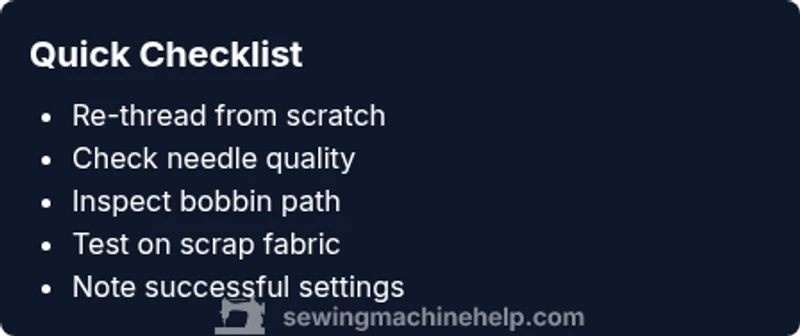
- Rethread from scratch to reset the stitch path
- Use a new needle appropriate for the fabric
- Re-seat and test the bobbin setup
- Always test on scrap fabric after changes
- Document successful settings for future projects