Hand Silai Machine Price Guide 2026
Discover how hand silai machine price varies in 2026, what factors influence cost, and practical tips to choose a model that fits your budget and sewing needs. Expert insights from Sewing Machine Help.


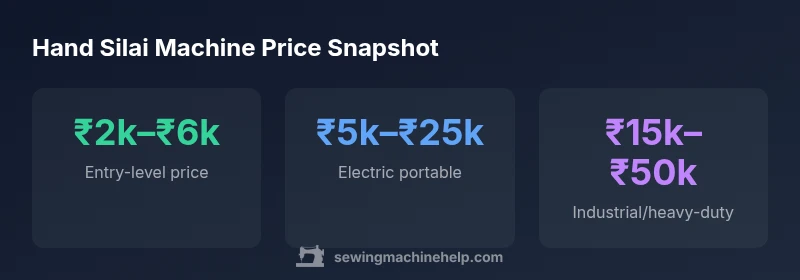
Hand silai machine price varies by type and features. Basic manual models typically start around ₹2,000–₹6,000, electric portable units run ₹5,000–₹25,000, and heavier industrial or high-end machines can exceed ₹50,000. Your choice depends on usage, speed needs, and how important durability and repairability are to you.
Understanding the price landscape for hand silai machines
Prices for hand silai machines in 2026 reflect a spectrum from ultra-basic, manually operated units to feature-rich electric portable models and sturdy industrial machines. According to Sewing Machine Help, the hand silai machine price you pay hinges on the core trade-off between cost, durability, and convenience. For home sewists and beginners, the most relevant range typically sits in the ₹2,000–₹6,000 bracket for basic manuals, with a stepped increase for electric options. When budgeting, also account for accessories like bobbins, needles, threaders, and the warranty period, since these can add value and reduce long-term costs. Understanding these price bands helps you avoid overspending while ensuring you get a model that lasts.
What actually drives price differences in hand silai machines
Price differences come from several interlinked factors. First, the power source: manual, non-electric devices are cheaper but slower, while electric portable models offer faster, more consistent stitching. Next, build quality and materials: a metal frame and robust components raise the price but improve longevity, especially for frequent use. Features such as automatic bobbin winding, stitch variety, and reverse stitching add to the cost but can be worthwhile for beginners who plan to practice more. Brand reputation, after-sales support, and warranty length also matter. Finally, where you buy (offline vs online) and local taxes can shift the final price. Consider all these elements in tandem to estimate the true hand silai machine price you’ll pay over time.
Price ranges by machine type and what they mean for you
The market typically clusters around four categories. Entry-level manual models sit in ₹2,000–₹6,000, offering fundamental stitching suitable for simple repairs and basic hems. Electric portable machines span ₹5,000–₹25,000 and deliver speed, more stitch options, and beginner-friendly controls. For those seeking durability and more features, mid-range electric machines run ₹25,000–₹40,000. Finally, industrial or heavy-duty machines can be ₹15,000–₹50,000 or more, designed for frequent use and long service life. If you sew regularly or anticipate heavy fabrics, investing toward the higher end within your category can yield long-term savings through fewer replacements and easier maintenance.
Budget-conscious choices: balancing cost with value
If your sewing projects are occasional or small-scale, a ₹2,000–₹6,000 manual unit may meet most needs. For growing interest or broader fabric types, a ₹5,000–₹15,000 electric model balances price with capability. Always verify that the machine supports essential features such as reverse stitch, adjustable tension, and a reliable feed mechanism. Read warranty terms, confirm access to spare parts, and check the availability of service centers near you. A little extra investment upfront often reduces maintenance problems and the need for frequent replacements, which improves overall value.
Where to buy and how to assess authenticity
Buy from reputable retailers or well-known e-commerce platforms that offer return windows and clear warranty terms. Compare prices across at least two sources to avoid sticker shock, and ask for a hands-on demonstration if possible. For used machines, insist on a thorough test run, check the bobbin area and feed dogs, and request a clear service history and any available maintenance records. Authenticating the model’s serial numbers and matching them to the manufacturer’s documentation helps prevent counterfeit purchases. In all cases, rely on official product pages for specifications and confirm that parts and accessories are readily available in your region.
Maintenance costs and after-sales considerations
The ongoing costs of owning a hand silai machine include needle and bobbin replacements, thread, oil or grease for moving parts, and occasional servicing. Expect to budget a modest amount annually for consumables, even if the machine is inexpensive upfront. Choose a model with a nearby service network or a retailer that offers practical post-purchase support. Longer warranties and readily accessible spare parts can significantly offset the cost of maintenance, especially for beginners who may encounter more frequent learning-related wear. Sewing Machine Help emphasizes prioritizing models with simpler parts and broad availability of compatible accessories.
Real-world buying scenarios and budgeting examples
Consider a few practical scenarios to illustrate how price informs choice. If you need a machine mainly for basic repairs and hemming, target the ₹2,000–₹6,000 range with simple stitch options. For a student or hobbyist who wants more flexibility, an electric portable in the ₹5,000–₹15,000 range is often a practical sweet spot. If you tackle heavier fabrics or plan to produce garments regularly, a mid-range electric or entry-level industrial machine in the ₹15,000–₹40,000 range may be justified by speed and durability. Always weigh the price against expected usage, maintenance costs, and the probability of needing spare parts over time.
Common myths about cheap vs expensive hand silai machines
A common misconception is that a low price always means poor quality. In reality, some basic manual models deliver reliable service for light-use scenarios, and many affordable electric models include features adequate for beginners. Conversely, higher-priced machines do not guarantee flawless performance for every user; they require compatible materials, proper setup, and regular maintenance. The key is to match features and build quality to your actual projects, not to chase the highest sticker price. Reading user reviews and consulting trusted guides—like Sewing Machine Help—can help separate value from vanity.
A practical 7-step buying plan to find the right price and model
- Define your primary projects and fabric types. 2) Set a realistic budget that includes essential accessories and maintenance. 3) Shortlist 3–4 models across manual and electric options. 4) Check warranties and service availability in your area. 5) Compare final out-the-door prices including taxes and shipping. 6) Look for demonstrations or video reviews to confirm ease of use. 7) Make a measured choice based on durability, features, and total cost of ownership.
Price ranges and trade-offs by machine type
| Model Type | Typical Price Range | Pros | Cons |
|---|---|---|---|
| Manual Hand Crank | ₹2,000–₹6,000 | Simple, low maintenance | Limited speed and features |
| Foot Pedal (Non-Electric) | ₹3,000–₹8,000 | Better control, portable | Requires physical effort |
| Electric Portable | ₹5,000–₹25,000 | Faster stitching, more features | Higher maintenance |
| Industrial/Heavy-Duty | ₹15,000–₹50,000 | Durable, suitable for frequent use | Bulky, higher upfront cost |
Your Questions Answered
What affects the price of a hand silai machine?
Price is driven by the type (manual vs electric), build quality, features (stitches, tension controls, reverse), warranty, and where you buy. Accessories and service networks also influence the total cost of ownership.
Price depends on type, quality, and features; check warranty and service when evaluating value.
Are cheaper models reliable for beginners?
Cheaper models can be reliable for light use and beginners, but they may lack durability and support. Prioritize models with clear guidance, comfortable operation, and access to spare parts.
Cheap can work for beginners if you check reliability and parts availability.
Should I buy a used hand silai machine?
Used machines can save money but may come with hidden wear. Inspect the moving parts, test all stitches, and verify service history and return options before buying.
Used machines can be good if you inspect thoroughly and have some warranty or return option.
What features should a beginner look for?
Look for straightforward tension control, a couple of stitch options, a reliable foot pedal or hand crank, clear manual, and easy access to spare parts and needles.
Start with basic features, then add more as you gain experience.
How do maintenance costs affect long-term price?
Maintenance adds recurring costs for needles, bobbins, oils, and occasional servicing. Consider models with readily available parts to minimize downtime and expense over time.
Maintenance matters; choose a model with easy access to parts.
“Price is only one part of value. Durability, service availability, and the right features for your sewing needs determine long-term satisfaction.”
The Essentials
- Define your budget and usage before buying
- Expect price bands by type
- Consider total ownership costs (maintenance, parts, service)
- Check warranty and service network
- Balance durability with feature needs