Singer Tailoring Machine Price Guide 2026
Explore current price ranges for Singer tailoring machines, what drives cost, and how to choose the best value for home sewers. This 2026 guide covers entry-level to refurbished options with practical buying tips.


Singer tailoring machines typically cost between $200 and $800, depending on the model, features, and whether it’s new or refurbished. The Sewing Machine Help team notes that price bands reflect stitch options, durability, and included accessories. In this guide we’ll break down current price ranges, what drives costs, and how to evaluate value for home sewers.
Understanding the price landscape for tailoring machines
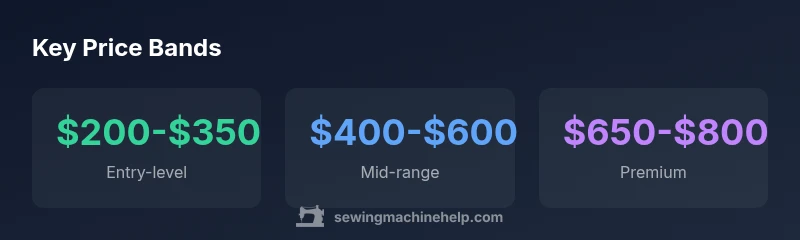
Price for Singer tailoring machines varies widely because models range from entry-level to professional-grade, with refurbishments and bundles adding further variation. According to Sewing Machine Help, the singer tailoring machine price landscape is shaped by model class, build quality, and included accessories. In general, new entry-level machines land in the $200-$350 range, mid-range models typically fall in the $400-$600 band, and premium packages push toward $650-$800. Refurbished units can start around $120-$250, offering considerable savings with some trade-offs in warranty or accessories. For home sewers, understanding these bands helps you identify value without overpaying for features you won’t use. Keep your projects front and center when you compare prices, not just the sticker price.
How features drive price in Singer machines
The price you pay for a Singer tailoring machine is largely a function of features and performance. Built-in stitch programs, automatic needle threading, speed control, presser-foot pressure, and the durability of the metal frame all push the price up. More stitches and automated functions generally mean higher cost, but they can also save time on frequent tasks like hems or buttonholes. For beginners, a basic set of stitches plus reliable bobbin handling often provides the best value. Seasoned hobbyists may seek heavy-duty models with stronger motors for thicker fabrics. When evaluating price, list your must-have features first and then compare machines that meet those criteria across price bands.
New vs. refurbished: value considerations
New machines come with full warranties and the latest warranty terms, but they cost more upfront. Refurbished Singer tailoring machines can offer substantial savings, often with a limited warranty and tested performance. If you choose refurbished, confirm the return policy, get a clear warranty period, and verify that essential parts—loopers, needles, and thread path—are in good condition. For many home sewers, refurbished models from reputable retailers strike a strong balance between price and reliability, especially when you need features without paying premium for brand-new status.
A practical buying framework for home sewers
Start by defining your projects: alterations, quilting, or garment construction? List non-negotiables (e.g., at least 7-stitch programs, speed under 900 SPM, reliable top-loading bobbin) and nice-to-haves (e.g., automatic thread cutter, quilting stitches). Set a budget based on your plan: entry-level up to $350, mid-range up to $600, and premium up to $800. Shop across retailers and watch for promotions, bundle deals, and included accessories. Always compare warranty terms and check user reviews focused on reliability and service. If possible, test the machine in-store or watch detailed demonstrations online before buying.
Budget planning: how to set a realistic target
To set a realistic target, estimate total cost of ownership: purchase price plus maintenance, thread, needles, and potential service calls. Plan for basic maintenance every 6–12 months, which may include oil changes and belt checks. Expect a small, recurring cost for items like presser feet compatible with your projects. If you anticipate ongoing sewing through the year, a mid-range model with a solid warranty can reduce long-term costs by avoiding frequent repairs. Allocate funds for occasional upgrades if your projects evolve.
Maintenance and lifecycle costs to consider
Maintenance pays back in reliability and fewer shop visits. Regular oiling, cleaning, and needle replacement prevent performance drops and skipped stitches. Keep a simple log of service intervals and parts replaced; it helps you decide when a model is truly worth upgrading. Consider the lifecycle cost: a cheaper machine might accrue higher upkeep, while a more expensive unit with a longer warranty could cost less over five years. By focusing on durability, you maintain a lower cost per project over time.
Price bands and value drivers for Singer tailoring machines
| Model Tier | Typical Price Range | Key Pros | Best For |
|---|---|---|---|
| Entry-level | $200-$350 | Affordable; basic stitches | Beginner projects and simple repairs |
| Mid-range | $400-$600 | More stitches, faster motor | General sewing, alterations |
| Premium/Complete | $650-$800 | Top features, durable | Hobbyist projects; frequent use |
| Refurbished | $120-$250 | Budget-friendly; tested | Training, practice, limited use |
Your Questions Answered
What affects the price of Singer tailoring machines?
Price is driven by stitch options, motor power, build quality, included accessories, new vs refurbished status, and warranty. Higher-end models typically offer more stitches and faster operation.
Prices vary based on features and condition. Look for the most important options for your projects.
Are refurbished Singer tailoring machines a good deal?
Refurbished machines can offer substantial savings with a limited warranty and tested performance. Ensure return policies and verify essential parts are in good condition.
Refurbished units can be a smart bargain if you verify condition and warranty.
What is the typical price range for new Singer tailoring machines?
New models commonly fall in the entry to mid-range bands, with most dependable options appearing between $200 and $600 for core features; premium units reach $800+.
Most new models sit between a couple hundred and six hundred dollars for everyday use.
How can I tell if a Singer tailoring machine is overpriced?
Compare current price bands for the features you need, check warranty terms, and read reviews about reliability. If a model offers premium features you won’t use, it may be overpriced for you.
Look for value: features you’ll actually use plus a solid warranty.
What should beginners look for when buying a Singer tailoring machine?
Begin with essential stitches, ease of use, and a reliable motor. Prioritize good bobbin access, thread path, and a reasonable warranty. Avoid overloading on advanced bells-and-whistles you won’t employ.
Start with basics, test ease of use, and check warranty.
“Understanding price bands helps you pick the right Singer tailoring machine for your projects and budget without overpaying.”
The Essentials
- Define your needs before buying.
- Price bands: entry-level $200-$350; mid-range $400-$600.
- Premium options $650-$800.
- Refurbished units can save money.
- Warranty matters for long-term value.