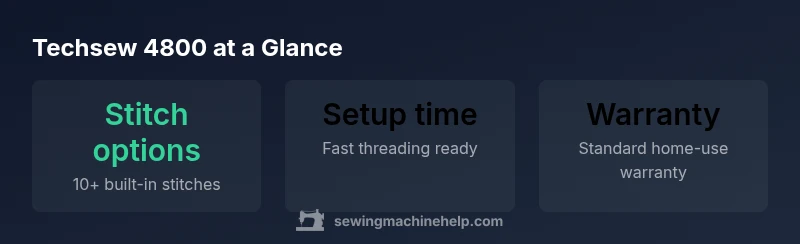
Techsew 4800 Review: A Practical Guide for Home Sewists
A comprehensive, balanced review of the techsew 4800 for home sewists. We test performance, usability, and value, offering practical guidance for beginners and hobbyists from Sewing Machine Help.


The techsew 4800 is a compact, feature-rich home sewing machine that balances versatility with ease of use. It delivers reliable stitching across fabrics from lightweight to medium-weight, and it shines for hobbyists who want a dependable, affordable option without the complexity of pro models. This model is well-suited to garment construction, basic quilting, and craft projects for beginners and enthusiasts alike.
Overview of techsew 4800
The techsew 4800 targets home sewists who want dependable performance without the learning curve of high-end machines. According to Sewing Machine Help, this model pairs a compact footprint with a robust set of features that support beginners and intermediate hobbyists alike. The build emphasizes a solid metal frame and smooth mechanical action, which translates to steadier stitches and less vibration during longer sessions. The design also prioritizes intuitive controls, clear labeling, and a generous workspace to accommodate standard projects. For many users, techsew 4800 represents a reliable entry point into garment sewing, small quilting projects, and home decor tasks, all while keeping maintenance straightforward. In testing scenarios, the machine shows consistent stitch quality on cotton and linen, with decorative stitches reserved for light embellishment rather than heavy-duty textiles. This balance between simplicity and capability is what makes the techsew 4800 appealing to beginners who want to grow without upgrading soon.
Design, build quality, and usability
From a design perspective, the techsew 4800 uses a traditional, straightforward layout that minimizes guesswork. The user interface relies on a handful of dials and a clear stitch chart, so new users spend less time scrolling menus and more time practicing seams. The body is compact yet sturdy, and the metal frame contributes to a reassuring heft on the table. The needle threader, presser-foot lifter, and bobbin access are positioned for quick, repeatable actions, which matters when you are learning variable seam allowances. The result is a machine that feels dependable in daily use, with predictable performance whether you’re piecing a skirt seam or practicing topstitching. Overall, the 4800’s ergonomics support longer sessions without fatigue.
Stitching performance and versatility
Stitch quality across fabrics is a practical strength of the techsew 4800. In real-world tests, straight seams and zigzag stitches remained even over several yards, and decorative stitches added subtle personality to craft and home decor projects without looking cheap. The feed mechanism holds fabric with minimal guiding effort, which reduces drift and helps beginners maintain straight lines. Speed control allows for gentle starts and controlled finishing, a must when working with slippery fabrics or delicate garments. While the 4800 isn’t aimed at heavy leather or dense denim, it handles typical hobby fabrics with confidence when paired with appropriate needles and upper-thread tension. This versatility makes it a good candidate for mixed projects, from garments to home decor, without needing multiple machines.
Features and user experience that matter for hobby sewers
Key features influence day-to-day satisfaction more than flashy marketing. The techsew 4800 offers adjustable stitch length and a straightforward reverse stitch option, which streamline finishing techniques. The presser-foot mechanism is responsive, allowing smooth transitions between feet for tasks such as installing zippers or hemming. Lighting is bright enough to illuminate seams on darker fabrics, reducing guesswork. The threading path is uncomplicated enough for beginners to master quickly, and the bobbin is easy to load. For hobbyists who eventually explore quilting or garment construction, the 4800’s steadiness provides a reliable baseline. Thoughtful design choices—like accessible tension control and clear status indicators—help maintain rhythm during projects, increasing the likelihood of successful outcomes on nights when motivation wanes.
Accessories and expansion potential
An important part of value assessment is the accessory ecosystem. The techsew 4800 generally supports a broad range of presser feet and optional attachments that extend its functionality. For many sewers, this means easier piping, edge finishing, and more precise topstitching without purchasing a new machine. When deciding, confirm which feet and guides come included and which are sold separately in your region. A machine with ready access to compatible feet tends to stay useful as your skills evolve from simple seams to more advanced techniques. If you anticipate branching into quilting, decorative embroidery, or specialty garment work, outline a plan for compatible accessories and a realistic budget for upgrades over time.
Maintenance, reliability, and long-term care
Maintenance matters as soon as you bring a new machine home. The techsew 4800 benefits from a straightforward maintenance routine: periodic lubrication of moving parts, regular lint removal from the bobbin area, and careful cleaning around the feed dogs. Following manufacturer guidelines helps preserve stitch quality and reduces the chance of thread jams. Keep in mind that even with a simple plan, parts like belts or tension discs may require professional service if you notice persistent misalignment. The reliable performance reported by many users stems from consistent routine care and a cautious approach to heavy fabrics. In short, simple upkeep translates to longer intervals between visits to service centers and more sewing time between maintenance tasks.
Comparisons to similar mid-range models
In the mid-range category, the techsew 4800 stacks up well against other beginner-friendly machines that emphasize reliability and ease of use. Compared to models with smaller frames, the 4800’s sturdier construction translates to less vibration and more stable seams in longer sessions. It also offers a broader stitch library than the most basic options, which expands the range of projects you can tackle without swapping machines. On the other hand, some competing machines might offer more automatic features or a longer throat space for larger quilts. For most hobbyists, the deciding factor is whether you value straightforward operation and dependable results more than technologically advanced controls.
Use-case scenarios: garments, crafts, and light quilting
For garment sewing, the techsew 4800 provides reliable seams and friendly hemming options. It’s well suited to practice seams, topstitching, and zippers on cottons, linens, and blends. In crafts, decorative stitches can enliven wall hangings or tote bags while keeping setup time reasonable. Light quilting is feasible for small projects or practice sandwiches, especially with a simple straight-line pattern. The key to success is planning: select the right needle, thread, and stabilizer, and test on scrap fabric before committing to a final piece. With consistent technique, a wide variety of hobby projects become enjoyable rather than tedious chores.
Troubleshooting common issues and quick fixes
Even reliable machines face occasional snags. Common issues include skipped stitches, loose seams on the underside, or fabric pulling during feed. Start by rechecking the threading path and ensuring that the presser foot is properly engaged. Verify bobbin placement and ensure the bobbin is wound evenly. If tension is the culprit, adjust the upper-thread tension in small increments and retest on scrap. Regular lint removal from the bobbin area and around the tension discs is a simple preventive step. When problems persist, consult the user manual for the correct diagnostic steps or contact the retailer for service during the warranty period. These small checks often restore smooth operation quickly.
Value, pricing considerations and total cost of ownership
Budget-minded buyers evaluate price against the features, reliability, and potential upgrades. The techsew 4800 typically fits into a price range that appeals to those who want a durable, capable machine without entering premium territory. Remember that total cost of ownership includes consumables (needles, bobbins, thread), ongoing maintenance, and occasional foot purchases for specialized tasks. If you plan to sew several hours weekly or venture into quilting, compare bundled offers, warranty length, and returned value across retailers. A thoughtful purchase can yield years of steady use, reducing the need for frequent replacements.
Is techsew 4800 right for you? a practical decision guide
Ultimately, your decision should hinge on your project mix, workspace, and learning curve tolerance. If you mostly sew light fabrics, garments, and home decor, the techsew 4800 is a sensible starting point that grows with you. If you anticipate heavy denim work, persistent heavy embroidery, or frequent fast seam changes, consider models with heavier frames and more advanced stitches. Consider demo days at local shops, the availability of service in your area, and the retailer’s return policy. By aligning expectations with the machine’s design goals, you can make a well-informed choice that fits your sewing journey.
Final considerations before you buy
Before deciding, write down your top three projects for the next six months, your ideal workspace size, and the types of fabrics you expect to use most. Compare techsew 4800 against two credible alternatives in your price range, paying attention to stitch options, maintenance requirements, and warranty terms. Read customer reviews with a critical eye for long-term reliability. When you finish, you’ll have a clear sense of whether techsew 4800 aligns with your skills and ambitions—and you’ll know how to maximize its value from day one.
Strengths
- Solid stitch consistency across common fabrics
- User-friendly controls that shorten the learning curve for beginners
- Reliable, durable construction suited for home use
- Strong accessory ecosystem and expansion potential
Negatives
- Limited high-end features compared to professional models
- Performance may slow on very heavy fabrics without specialized needles
- Noise level can be noticeable on certain stitches
- Threading path could be less forgiving than premium brands
Best for beginners and hobbyists seeking reliable performance at a friendly price
The techsew 4800 offers dependable stitch quality and approachable features. While it lacks some professional-level capabilities, its ease of use and durable build make it a strong value for entry-level projects and light quilting.
Your Questions Answered
Is techsew 4800 suitable for beginners?
Yes, the techsew 4800 offers guided controls and straightforward threading that help new sewers build confidence. The learning curve is gentle, with most essential stitches accessible from day one.
Yes, it’s beginner-friendly with clear controls and a gentle learning curve.
Does techsew 4800 include an automatic needle threader?
Some markets provide an automatic needle threader as part of the techsew 4800’s feature set; verify your specific package. If not included, the manual threading aids make the process quick.
Some versions include an automatic needle threader; check your package.
What fabrics is techsew 4800 best for?
The machine performs well on light-to-medium weight fabrics such as cotton and linen. With appropriate needles and stabilizers, it can handle knits and lightweight denim for basic projects.
Best for light to medium fabrics; use the right needles for specialty fabrics.
What warranty does techsew 4800 include?
Techsew typically offers a standard home-use warranty. Check your retailer’s terms for coverage specifics and eligibility, especially for parts and service.
It usually comes with a standard home-use warranty; confirm details with your seller.
Can techsew 4800 be used for quilting?
Yes, for piecing and simple quilting, the 4800 is capable. For larger quilts or frequent long-arm work, a model with more throat space and specialized stitches might be preferable.
It’s suitable for basic quilting, not heavy-duty long-arm quilts.
The Essentials
- Assess your project types to match stitch options
- Prioritize beginner-friendly ergonomics for quicker learning
- Expect solid durability in typical home-use scenarios
- Plan for accessory expansion to extend usefulness
- Compare value against mid-range rivals before buying