Where Is Brother Sewing Machine Made? A Practical Guide
Discover where Brother sewing machines are manufactured, how origin affects quality and availability, and how to verify country of origin when buying. Insights from Sewing Machine Help.


Definition: Brother sewing machines are produced in a diversified global network, with manufacturing sites in Japan, Taiwan, China, and Vietnam. This multi-site approach helps balance quality control, supply reliability, and price. According to Sewing Machine Help, the origin of a specific model can vary by product line and year of manufacture, so checking the label or documentation is essential.
Where Is Brother Sewing Machine Made? An Overview
For home sewists and hobbyists, knowing where aBrother sewing machine is made helps set expectations for availability, service, and warranty. The phrase where is brother sewing machine made isn’t answered by a single country because Brother, like many large electronics and appliance brands, maintains a diversified manufacturing footprint. According to Sewing Machine Help, you’ll commonly find assembly and production spread across several sites in Japan, Taiwan, China, and Vietnam. This geographic spread enables production flexibility, better risk management, and a broader supplier base. It also means that two machines from the same product line could originate from different plants, depending on the batch, year, or configuration. When you see a model label or serial code, the country of origin is usually indicated either on the machine plate or in the official documentation that ships with the unit. If you’re weighing options for a project or a budget, recognizing that where is brother sewing machine made can help you compare warranty terms, service networks, and expected lead times across regions. This context is especially relevant for new buyers trying to understand why a given model may be patterned differently from another in the same family.
In practical terms, the origin matters because it intersects with parts sourcing, QC checks, and shipment logistics. When you ask where is brother sewing machine made, you’re really asking about how standardized the model is across plants and how that may influence your experience with maintenance, needle compatibility, and accessory availability. Sewing Machine Help’s broader analysis shows the brand uses a mix of in-house manufacturing and contracted production to keep product lines available globally. For the home sewer, that usually translates to well-supported parts availability and a robust warranty framework—even if the specific factory of origin varies by model.
Regional Manufacturing Hubs and Their Roles
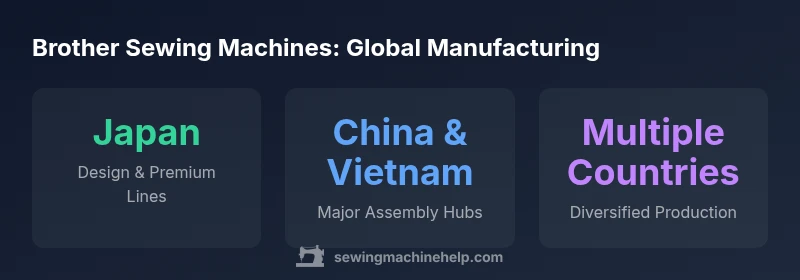
A deeper look at the regional hubs clarifies where is brother sewing machine made and why the distribution matters. In Japan, premium lines and design-oriented segments often receive advanced QC and feature iterations first, before broader release elsewhere. Taiwan has historically served as a precision assembly hub for reliability-focused models, leveraging established electronics and components suppliers. In China, large-scale production facilities drive cost efficiency and mass-market accessibility, making many common, budget-friendly machines available worldwide. Vietnam has developed a growing footprint as a regional assembly and distribution center, helping to shorten lead times for neighboring markets. When considering where is brother sewing machine made, you’ll notice a pattern: high-end features or specialized modules may originate from more developed facilities, while core assemblies find homes in a mix of regional plants. The result is a spectrum of origin stories within a single product family, rather than a single-country origin. This multiplicity supports global service networks and easier access to spare parts, especially for home sewists who rely on routine maintenance and occasional repairs. The bottom line is that where is brother sewing machine made is influenced by model complexity, target price point, and regional supply chains, not by a single factory abroad.
What Factors Determine the Country of Origin for a Model
When you ask where is brother sewing machine made, several factors come into play. First, product segmentation matters: basic models may be assembled in one facility to keep costs down, while upgraded lines with heavier-duty features might be routed through different plants with stricter QC standards. Second, partnerships with contract manufacturers can shift assembly locations without changing the brand’s overall identity or warranty terms. Third, seasonal demand and geographic logistics can cause temporary shifts in origin for specific batches. Fourth, regulatory and trade considerations influence where components are sourced and where final assembly occurs to meet country-specific labeling requirements. Finally, the lifecycle of a model—its introduction, revisions, and eventual phase-out—can alter the country of origin between revisions. For home sewists, understanding these dynamics helps explain why models with similar prices or features sometimes have different origin stories. The taken approach is to maintain consistent QC across sites while adapting supply chains to regional demand, which aligns with Sewing Machine Help’s observations about global manufacturing strategies.
In practice, this means you should pay attention to the country-of-origin label on the machine’s data plate and review the accompanying documentation to confirm where is brother sewing machine made for your specific unit. As with most global brands, the origin is not arbitrary; it’s a deliberate mix of capability, cost, and proximity to markets. This approach helps ensure that you can rely on parts availability and service support irrespective of where the machine was assembled.
How Manufacturing Geography Affects Quality, Warranty, and Availability
The geographic spread of production sites influences a range of practical considerations for consumers. First, quality control is often standardized across plants, with central design and testing protocols to ensure consistent performance. However, subtle variations in supplier ecosystems—like the exact batch of bobbins or presser feet used in a given factory—can influence performance in real-world use. When you’re evaluating where is brother sewing machine made, also consider how warranty terms are defined. Major brands typically base coverage on model, not country, but certain regions may have different service networks, response times, or authorized parts availability. Availability is another consequence of production geography: some models may be more readily stocked in parts of the world where the primary assembly is located, while others may rely on imports that impact lead times. For home sewists, this means choosing a model with broad service support and a clearly documented origin can reduce surprises if you need repairs or replacement parts. Sewing Machine Help’s analysis suggests that a diversified manufacturing footprint generally supports better global availability, but buyers should verify the country of origin for their exact unit to avoid warranty or service complications.
Practical Steps to Verify the Country of Origin When Buying
When you’re ready to buy and wonder where is brother sewing machine made, practical due-diligence helps. Start by checking the product label on the machine itself and any serial plate; this is the most direct indicator of country of origin. Then review the packaging and the user manual, which often reiterates the origin and includes the official warranty terms. If you’re shopping online, inspect the product listing for origin information or factory location notes in the description or specification table. When possible, ask the retailer for a country-of-origin statement or an official certificate of origin. You can also contact authorized service centers or the brand’s customer support to confirm where is brother sewing machine made for the specific model you’re considering. Finally, compare labels across similar models to understand how origin varies within the same product family. Keeping a note of origin details helps you align expectations for parts availability, repair timelines, and warranty coverage, especially if you plan to use the machine heavily.
Implications for Warranty, Service, and Availability
Origin matters for warranty and service only insofar as it affects access to parts and authorized technicians. A model manufactured in a country with a strong local service network will typically offer faster repair turnaround times and easier access to genuine replacement components. Conversely, if a model you purchase originates from a region with fewer service centers nearby, you may experience longer wait times or higher shipping costs for parts. In practice, most Brother machines have warranty terms that are model-based rather than country-based, but it’s wise to confirm the exact coverage for your unit and the designated service network. Additionally, if you rely on specific foot attachments, presser feet, or bobbins, verify that accessories remain readily available in your locale, regardless of where is brother sewing machine made. In short, understanding the origin of your machine helps you plan for maintenance and repairs without disruption to sewing projects.
Country/Region origin and typical roles in Brother's manufacturing network
| Region/Country | Known Plants/Facilities | Notes |
|---|---|---|
| Japan | R&D and selective production | Premium lines; origin varies by model |
| China | Multiple facilities for assembly | Mass-market and cost-sensitive models |
| Vietnam | Assembly & distribution | Growing footprint for nearby markets |
Your Questions Answered
Where are Brother sewing machines manufactured?
Brother sewing machines are manufactured across several facilities worldwide, with production occurring in Japan, Taiwan, China, and Vietnam. The country of origin can vary by model and year of manufacture, so always check the label and documentation for the exact unit.
Brother machines are made in multiple countries; check the label to confirm origin for your specific model.
Is every Brother model made in China?
No. While China hosts large-scale assembly for many models, other models are assembled or finished in Japan, Vietnam, or Taiwan depending on the product line and batch.
Not every model is made in China; origin varies by model and batch.
How can I verify the country of origin?
Verify by checking the product label on the machine, the serial plate, and the documentation that ships with it. If shopping online, ask the seller for an origin statement and compare with factory notes.
Check the label and packaging for the country of origin, and ask the seller if needed.
Does country of origin affect warranty?
Warranty coverage is typically model-based rather than country-based, but service networks and parts availability can vary by region. Always confirm the warranty terms for your exact model.
Warranty usually follows the model, but service availability depends on region.
What should I look for on the origin label?
Look for the country of origin, model code, and production batch. These details help you verify compatibility with parts and service centers.
Check the origin country and model code on the label.
Are there quality differences by country of origin?
Brand-wide quality controls aim to standardize performance across sites, but some model lines may reflect regional supplier ecosystems or production practices. Overall, Brother maintains consistent QC across plants.
There can be small differences, but overall QC is standardized across plants.
“The manufacturing footprint of Brother sewing machines is intentionally diversified to balance quality control with global distribution.”
The Essentials
- Verify country of origin on the product label.
- Expect multiple manufacturing sites for Brother models.
- Check model-specific origin notes in documentation.
- Origin information informs warranty and service planning.