Janome AirThread 2000D: A Practical How-To for 2026
Comprehensive how-to for the Janome AirThread 2000D, covering setup, threading, bobbin work, tension, maintenance, and troubleshooting for home sewists and beginners.


Definition: The Janome AirThread 2000D is a versatile domestic sewing machine that uses an air-threading system to simplify upper threading and can handle both sewing and lightweight embroidery tasks. This guide explains setup, threading, tension, and common troubleshooting so home sewists can achieve reliable stitches with less frustration. Whether you’re assembling your first project or refreshing a legacy unit, this overview sets the stage for deeper steps.
Overview of the Janome AirThread 2000D and Its Role in Home Sewing
According to Sewing Machine Help, the janome airthread 2000d represents a practical balance between ease of use and capability for everyday projects. At its core, the device combines a sturdy sewing platform with an air threading mechanism that minimizes the typical struggle of threading upper threads. This integration is especially advantageous for beginners who want reliable stitches without wrestling with tangled threads. For hobbyists, the machine remains capable enough to tackle a range of fabrics—from lightweight cottons to medium-weight wovens—without frequent thread breaks. In this guide, you’ll discover how to set up, thread, adjust tension, and troubleshoot the most common issues, all with clear, actionable steps. The language here is designed for home sewists who want practical, repeatable results rather than esoteric settings. By focusing on the core tasks of setup, threading, and maintenance, you’ll gain confidence using the janome airthread 2000d and build a foundation for more advanced techniques. The goal is to help you move from curiosity to consistent outcomes with a machine that is approachable yet capable for a variety of everyday sewing tasks.
Whether you are piecing quilt blocks or mending garments, this material anchors your knowledge in real-world practice. The following sections break down each action into digestible tasks, with tips that prevent common missteps and encourage safe handling of the machine. Keep in mind that proper care—such as keeping the area clean and using appropriate needles and threads—supports long-term performance. As you read, look for how air threading reduces setup time, how tension interacts with different fabric types, and how routine maintenance prevents thread nests and jams. The aim is not to overwhelm but to empower you to achieve reliable stitches with minimal friction.
Over time, you’ll develop a mental model of how the janome airthread 2000d behaves across typical projects. This model will help you anticipate when to adjust tension, switch feet, or swap to a different needle size. The content that follows translates the machine’s features into concrete steps you can perform safely and with confidence. Remember that practice—paired with careful reading of the manual and adherence to recommended maintenance—will yield smoother results and more enjoyable sewing sessions.
Tools & Materials
- Power cord and foot pedal(Ensure the machine is unplugged during initial setup and when changing parts.)
- Spool threads (top) and matching bobbin threads(Choose compatible weights for the fabric you plan to sew.)
- Bobbin case and empty bobbins(Have extra bobbins wound to avoid interruptions.)
- Sewing machine oil or spray (light)(Used for maintenance as recommended in the manual.)
- Lint brush or small soft brush(Clean dust and lint from feed dogs and the bobbin area.)
- Needles appropriate for fabric type(Stock a range (e.g., universal and jersey needles) for versatility.)
- Scissors and thread snips(Keep sharp tools for clean thread cuts.)
- Tweezers or small pliers(Helpful for removing lint or rethreading tight paths.)
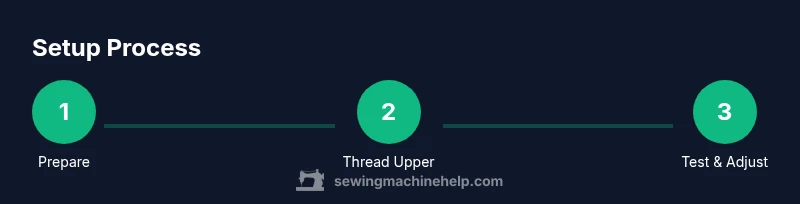
Steps
Estimated time: 60 minutes
- 1
Prepare workspace and power up
Clear your table, plug in the machine, and make sure the area is well lit. Powering up safely allows you to verify that the machine is running normally before you start threading. If you hear unusual noises, stop and consult the manual.
Tip: Place the machine on a stable propping surface to prevent wobble while stitching. - 2
Thread the upper path using the air threading system
Open the tension unit and locate the air-threading lever. Engage the lever as you guide the upper thread through the threading path, then release to let air carry the thread into the eye of the needle. Check that the thread sits cleanly in the tension discs.
Tip: Never force the thread; if it doesn’t glide, re-check the path and the lever position. - 3
Thread the lower path and insert the bobbin
Wind the bobbin evenly and place it in the bobbin case following the directional arrows. Pull the bobbin thread through the slot and hold it gently as you begin stitching to prevent tangling. Test the bobbin tension with a small scrap.
Tip: Ensure the bobbin is correctly oriented; a misaligned bobbin causes bird’s-nest stitches. - 4
Test stitch and adjust tension
Set a simple straight stitch and run a short test on scrap fabric. Observe stitch balance between the upper and bobbin threads. If the upper thread dominates, loosen the upper tension; if the bobbin shows, increase the upper tension or adjust the bobbin setup.
Tip: Make small tension adjustments and test again; large changes can disrupt overall stitching. - 5
Select presser foot and fabric appropriate settings
Attach a foot suitable for your project (e.g., standard foot for seams,/or walking foot for thicker fabrics). Choose the needle type and stitch length appropriate for your fabric and project.
Tip: Consult the fabric’s care label and start with conservative stitch length to avoid fabric damage. - 6
Run a final test and clean up
Sew a small sample swatch to confirm consistent stitch quality. Power off and clean lint around the bobbin area after stitching to maintain performance.
Tip: Document any adjustments you made for future reference.
Your Questions Answered
What is the Janome AirThread 2000D best used for?
The Janome AirThread 2000D is well-suited for everyday sewing tasks with a focus on reliable threading and easy setup. It supports a range of fabrics and is accessible to beginners while offering features appreciated by more experienced sewists.
Great for everyday sewing and learning. It’s designed to help you thread easily and achieve consistent stitches.
How do I thread the air threading system on the Janome AirThread 2000D?
Engage the air-threading lever, guide the upper thread through the path, and release so air pulls the thread into the needle eye. Check tension once threaded and test with scrap fabric.
Use the air-threading lever and ensure the thread is correctly guided before testing.
What maintenance does the Janome AirThread 2000D require?
Regularly clean lint from the bobbin area, oil as recommended in the manual, and replace needles when dull or bent. A clean machine stitches more reliably and extends the life of components.
Keep it clean and oiled, replace worn needles, and test periodically.
Can I use the machine for embroidery tasks?
The machine is primarily a sewing tool with basic embroidery capability. For dedicated embroidery projects, use appropriate settings, stabilizers, and the correct needle types as described in the manual.
It works for light embroidery with the right attachments and settings.
What should I do if I encounter thread nests?
Pause, remove the fabric, re-thread both upper and bobbin paths, and re-test on scrap. Recheck needle size and fabric compatibility before resuming.
Stop, re-thread, and test on scrap to prevent further issues.
Watch Video
The Essentials
- Learn to differentiate upper and bobbin thread paths.
- Use air threading to reduce setup time and frustration.
- Always test on scrap fabric before sewing a final piece.
- Keep the bobbin correctly oriented to avoid nesting.