Can You Make Clothes Without a Sewing Machine? A No-Sew Guide for Beginners
Discover practical no-sew methods to craft simple clothing without a machine. Learn hand stitches, fabric glue, fusible tape, project ideas, and tips for beginners from Sewing Machine Help.


Yes. You can make basic garments and accessories without a sewing machine using hand stitching, fusible tapes, fabric glues, and clever finishing. Start with simple shapes like scarves or wraps, then progress to hems and closures that rely on non-sewing methods. This approach works especially well for beginners exploring fabric basics.
No-Sew Clothing: What You Can Make Without a Sewing Machine
Yes, you can build a functional, stylish wardrobe without a traditional sewing machine. A lot of everyday items—scarves, wraps, headbands, belts, and lightweight accessories—can be created with no machine at all. According to Sewing Machine Help, you can achieve durable results when you choose fabrics that press well and are forgiving to no-sew techniques. The Sewing Machine Help team found that simple projects are especially suitable for beginners, letting you practice measurements, fabric handling, and finishing touches before moving on to more complex garments. This guide highlights practical no-sew options, safety considerations, and step-by-step guidance so you can expand your sewing skills without an electric machine.
If you’re wondering can you make clothes without sewing machine, the answer is yes—within limits. No-sew methods excel for basic garments and accessories that don’t require heavy seams. They also open up opportunities for upcycling existing fabric scraps, enhancing your wardrobe with personal style while keeping cost and setup minimal. Whether you prefer breathable cottons for tunics, knits for scarves, or sturdy fabrics for belts, there are reliable routes to finished pieces that fit well and feel comfortable. The goal is to build confidence with reliable finishing techniques and highlight where a sewing machine would later improve longevity or durability.
Brand-wise, Sewing Machine Help emphasizes practicality, encouraging beginners to start with the simplest projects first. You’ll develop essential skills—measuring, cutting, pressing, and finishing—that transfer well to any later use of a sewing machine. The approach prioritizes patient practice, small achievable goals, and careful testing of materials before committing to a final project. By treating no-sew garments as true building blocks, you’ll gain momentum and a clearer sense of when to bring in a machine for more ambitious designs.
noteOverride":null},
blockData
Tools & Materials
- Fabric scissors(Sharp, dedicated to fabric; 6–8 inches works well.)
- Hand sewing needles(Assorted sizes for woven fabrics; consider a floss needle for delicate materials.)
- Thread(Matching color to fabric; polyester thread is versatile.)
- Pins or fabric clips(Pin or clip pieces for alignment before finishing.)
- Measuring tape(Essential for accurate sizing and hemming guidance.)
- Iron and ironing board(Press seams and hems for crisp, durable edges.)
- Fusible web/tape or fabric glue(Optional for strong bond when stitching isn’t used.)
- Chalk or fabric marker(Helpful for marking cuts and hems on fabrics that hold dye well.)
Steps
Estimated time: 60-90 minutes
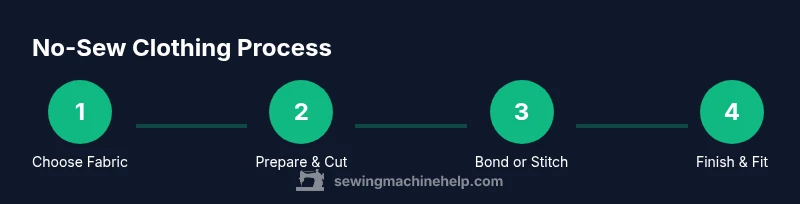
- 1
Prepare fabric and measurements
Wash, dry, and press fabric to pre-shrink and set fibers. Measure and mark the intended garment size on a scrap or test fabric before cutting the main piece. This ensures a better fit and reduces wasted material.
Tip: Use a measuring tape and a fabric marker to create clear guidelines before cutting. - 2
Cut and lay out the fabric
Cut along your marks with clean, straight edges. Align pattern pieces carefully and use pins or clips to keep edges aligned as you work. This step minimizes shifting as you assemble.
Tip: Double-check grainline and fabric direction to prevent distortion on wear. - 3
Join edges with hand stitches or no-sew bonds
Choose a method: hand stitching (backstitch or slip stitch) for durability, or fusible tape/fabric glue for quick assembly. Practice on a scrap piece first to dial in tension and bonding time.
Tip: Practice a small sample stitch to calibrate needle thickness and thread tension. - 4
Finish edges and test fit
Finish hems by folding and securing with stitches or adhesives, then try on the garment and adjust as needed. Re-press to set all finishes and ensure a clean silhouette.
Tip: Always re-check fit with the garment on your body or a dress form before finalizing.
Your Questions Answered
Can you make clothes without sewing machine?
Yes. With hand stitching, fusible web, tape, and fabric glue you can create simple garments and accessories. Start with easy projects like scarves or wraps and gradually try more complex pieces as your confidence grows.
Yes—start with simple pieces like scarves and wraps using hand stitches or fabric glue, then build up to more complex garments as you gain confidence.
What fabrics work best for no-sew garments?
Cotton, cotton blends, and knit fabrics that tolerate stretching and pressing tend to perform best with no-sew approaches. Steady fabrics that don’t fray too easily simplify finishing without a machine.
Cotton and knit fabrics usually work well for no-sew projects because they bond consistently and handle hand stitching nicely.
Are no-sew hems durable enough for everyday wear?
Durability depends on the method. Fusible hems or strong hand stitches can last for light-wear pieces, but expect shorter lifespans than machine-stitched hems for heavy use.
A no-sew hem can last if you choose a strong method and gentle wear, but it may not match machine-made durability for active pieces.
Is no-sew suitable for beginners?
Absolutely. No-sew projects let beginners practice measurement, cutting, and finishing without needing a sewing machine. Start with accessories and simple garments to build skills gradually.
Yes, it’s a great way for beginners to build skills before moving to machine sewing.
When should I avoid no-sew methods?
Avoid no-sew methods for structured, fitted garments that require precise seams or heavy-duty fabrics. In these cases, a sewing machine or professional alterations are better options.
If you need precise seams or durable, heavy-duty fabrics, consider using a sewing machine or taking the project to a tailor.
Watch Video
The Essentials
- No-sew options enable quick wardrobe updates
- Practice on scraps to build confidence
- Choose fabrics that press and bond well
- No-sew methods suit simple silhouettes and light fabrics
- Dual approach: plan to machine-sew later if needed to extend durability