Can You Sew Without a Machine? A Practical Hand-Sewing Guide
Explore practical, beginner-friendly hand sewing techniques. Learn essential stitches, tools, step-by-step hems and repairs, plus tips to decide when to hand sew versus using a machine.


Yes—it's possible to sew without a machine. Hand sewing lets you repair hems, seams, and small projects using simple stitches and common tools. According to Sewing Machine Help, hand sewing remains a practical option when a machine isn't available, especially for delicate fabrics and quick fixes. This guide covers essential techniques, materials, and a clear step-by-step workflow.
Can You Sew Without a Machine?
Can you sew without a machine? Absolutely. Hand sewing is a time-honored skill that enables you to mend, alter, and create fabric items when a sewing machine isn’t accessible. You’ll learn how to choose the right stitches, threads, and needles for different fabrics, and you’ll gain control over seams and finishes that are difficult to achieve with a machine. The Sewing Machine Help team notes that hand sewing shines on lightweight fabrics, delicate details, and quick fixes where setup or noise from a machine would be impractical. By understanding basic hand-stitching fundamentals, you can extend the life of garments, repair torn hems, and complete small projects with confidence. This article uses real-world examples and practical tips to help you master the craft.
Why Hand Sewing Still Matters for Home Sewists
Hand sewing remains essential for many home sewing scenarios. It provides a quiet, portable option for on-the-go repairs and is perfect for invisible hems on sheer fabrics. The technique also preserves fabric integrity by avoiding heat and pressure that can come from a hot iron and a machine. According to Sewing Machine Help, mastering a few reliable stitches—like the slip stitch for invisible hems and the running stitch for quick seams—can dramatically improve your repair toolkit. For beginners, hand sewing is a confidence-building entry point that gradually builds your seam control and precision, paving the way for more complex projects with or without a machine.
Basic Hand-Stitching Techniques
In hand sewing, a few core stitches cover most jobs. The running stitch creates a light seam for temporary fixes; the backstitch provides strength for structural seams; the slip stitch is ideal for closing openings invisibly; and the whip stitch binds edges securely on thick fabrics. Practice with scrap fabric to tune tension and spacing. The Sewing Machine Help team emphasizes consistency over speed—regular, even stitches yield the strongest results and a cleaner appearance. Build familiarity with each stitch by testing on scrap fabric before mending garments.
Choosing Materials and Tools for Hand Sewing
The right tools make hand sewing accurate and enjoyable. Essential items include a sharp hand-sewing needle, thread that matches your fabric weight, small scissors, and pins to hold fabric in place. A thimble protects your finger when you push the needle through tougher fibers, and a measuring tape helps with hem allowances. For delicate fabrics, select finer needles and lighter threads to minimize snagging. The brand-referenced guidance from Sewing Machine Help suggests keeping a small stash of neutral thread colors for quick repairs and a compact kit that fits in a project bag. Stock up gradually as you gain experience to avoid buying unnecessary items.
Step-by-Step: Hand-Sewing a Simple Hem
A hand-sewn hem can be nearly invisible on lightweight fabrics when done correctly. Start by turning up the hem to the desired length and pinning it in place. Thread your needle with a double length of thread and tie a secure knot. Use small, even stitches along the folded edge, catching only a thin line of fabric so the stitches stay hidden. Finish with a small knot under the fabric and trim excess thread. Practice on scrap before finalizing the hem on a garment. (Note: If you’re sewing for a special fabric like silk, reduce stitch length and tension even further.)
Common Mistakes and How to Fix Them
Common errors include pulling threads too tight, which puckers fabric, and using mismatched thread weight, which creates a bulky seam. When hemming, uneven stitch length can produce a wavy edge. To fix, rework the seam with a lighter touch and rethread with the correct needle size. Sewing Machine Help recommends checking tension by gently pulling on a thread tail; if it puckers, loosen the stitch slightly. Always test on scrap fabric if you’re unsure about fabric compatibility or stitch type.
Real-Life Scenarios: When to Hand-Sew vs Use a Machine
Hand sewing excels for delicate fabrics, quick repairs, and small accents where a machine would be cumbersome. For durable seams on heavy fabrics like denim or leather, or for long, uniform seams, a machine offers speed and consistency. The decision often comes down to fabric weight, project size, and context—such as traveling, teaching children sewing, or performing a repair at home. Sewing Machine Help’s practical guidance highlights starting with hand sewing for practice, then gradually integrating machine work as you gain confidence.
Maintenance, Safety, and Next Steps
Keep your hand-sewing kit organized and clean to extend needle life and prevent fabric snags. Store needles and pins in a magnetized tin or pincushion to avoid accidental pricks. When working with bright or dark fabrics, choose thread colors that blend with the material to minimize visibility of stitches. As you gain experience, you’ll learn which fabrics respond best to hand stitches and where a machine is more efficient. The Sewing Machine Help team recommends setting aside a small weekly hand-sew session to reinforce technique and maintain dexterity.
Tools & Materials
- Needle (sharp hand-sewing)(Size 7–9 for medium-weight fabrics)
- Thread (matching color)(Use cotton for natural fibers; polyester for synthetic fabrics)
- Scissors(Small fabric scissors or sharp thread snips)
- Pins(Use dressmaker pins to hold hems and seams)
- Thimble(Helpful for dense fabrics or thick seams)
- Measuring tape(Useful for hemming allowances and adjustments)
Steps
Estimated time: 15-25 minutes
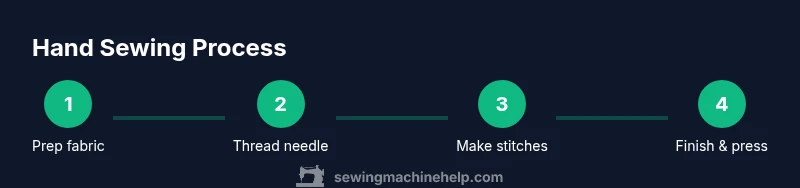
- 1
Prepare fabric and thread
Lay out the fabric, press lightly, and measure the hem allowance. Trim if necessary, then cut a length of thread about twice the fabric width. Thread the needle and tie a small knot at the end.
Tip: Use a double knot for extra security on heavy fabrics. - 2
Thread and knot
Thread the needle with a length of thread that’s comfortable to handle. Tie a single or double knot at the end depending on fabric weight. Test a small stitch on scrap to confirm tension.
Tip: Pull the thread taut but not extreme; aim for smooth entry points. - 3
Start with a running stitch
Make evenly spaced stitches along the fold line. Keep stitches consistent (about 2–3 mm) so the seam lies flat. This stitch is useful for temporary hems or seams.
Tip: If the fabric shifts, re-pin and re-align before continuing. - 4
Secure with a backstitch
On edges that need durability, reverse stitch slightly to secure, then continue forward. A backstitch creates a strong seam and reduces unraveling. Finish with a few backstitches at the end.
Tip: Take extra care near corners to avoid bulky threads. - 5
Finish with a slip stitch
For invisible hems, use a tiny ladder or slip stitch along the fold. Hide the stitches by catching only tiny fabric threads. Trim thread tails close to the fabric so they’re not visible.
Tip: Work slowly for a nearly invisible finish on delicate fabrics. - 6
Press and tidy
Lightly press the seam with a warm iron, using a pressing cloth if needed. Check that the hem sits evenly and any puckers are smoothed out. Clear away any loose threads and trim excess.
Tip: Avoid scorching fabrics by keeping the iron at the correct setting.
Your Questions Answered
Is hand sewing as strong as machine sewing?
Hand-sewn seams can be very strong when using appropriate stitches like the backstitch, especially for lightweight to midweight fabrics. For heavy fabrics, a machine may still provide more uniform strength and durability. Practice and correct technique matter as much as fabric choice.
Hand sewing can be strong with the right stitches, but for heavy fabrics, machines often offer more uniform strength.
What materials are best for beginners hand sewing?
Start with standard cotton or cotton blends on home projects. Use polyester thread for durability on synthetic fabrics. For delicate fabrics like silk, switch to lighter threads and finer needles to avoid snagging.
Begin with cotton fabrics and standard threads to learn the basics before moving to delicate or heavy materials.
Can I hand sew leather or denim without a machine?
Leather and denim are tougher to sew by hand. Use stronger, thicker needles and waxed thread if you attempt hand stitching, but recognize that machines often perform better for these materials due to stitch length and speed.
Leather and denim are best done with a machine, though careful hand stitching can work for small fixes.
Should I iron fabric before hand sewing?
Yes. Pressing fabric before hand sewing helps crease lines stay flat and prevents misalignment. A light setting is usually sufficient to avoid shiny marks on delicate fabrics.
Ironing helps keep seams precise and prevents fabric from bunching.
Can hand sewing be used for garments?
Hand sewing is common for finishing touches, hems, and delicate alterations on garments. For full garment construction, machines speed up the process and provide consistent results, but many repairs and custom fittings can be done by hand.
Yes, for hems and touches, but machines are usually better for full garments.
What is the best stitch for mending a tear?
A backstitch or running stitch with a secure knot provides a durable mend for most fabrics. For invisible repair, use a slip stitch along the tear edge to blend with the fabric.
Backstitch is great for durability; slip stitch hides repairs.
Watch Video
The Essentials
- Hand sewing is a practical option for quick repairs
- Choose stitches and thread by fabric weight
- Practice on scraps to master tension and consistency
- Reserve machine use for long seams and heavy fabrics