Does Sewing Machine Come With Thread? A Practical Guide for Beginners
Discover whether sewing machines include thread, what to expect in beginner bundles, and how to choose the right thread. Practical guidance from Sewing Machine Help, 2026, with actionable tips for new sewers.


According to Sewing Machine Help, does sewing machine come with thread? In most cases, a new machine ships without thread to avoid waste and to support universal thread choices. Some beginner bundles include a small starter spool set, but many models require you to purchase thread separately. Always check the manual for recommended spool weight and fiber type.
Does a sewing machine come with thread? What to expect at checkout
Sewing machines are often marketed as complete systems, yet the question ‘does the sewing machine come with thread’ is surprisingly common among new buyers. In practice, most machines ship without thread. The reason is simple: users will work with different fabrics and stitch types, each requiring different thread weights and fibers. Including thread could waste inventory if the spool isn’t suitable for every project. When you buy a machine, treat thread as an essential accessory rather than an included guarantee. If you spot a starter or promotional bundle, read the listing carefully to confirm whether a small spool set is included and which weights and fibers are covered. This detail is especially important for beginners learning tension and stitch quality, since thread choice directly affects results.
Starter kits vs. bare machines: what’s commonly included
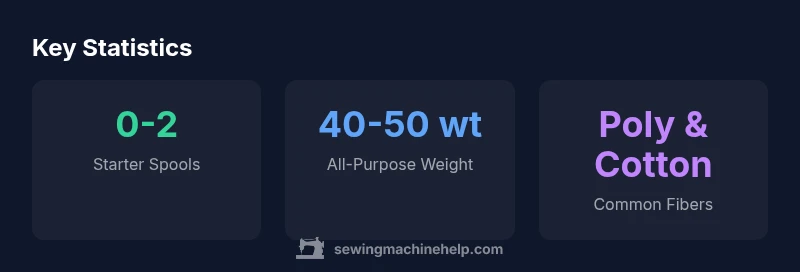
Many vendors offer beginner bundles that couple a machine with a few spools, needles, and possibly a basic notions kit. These kits can be helpful for new sewists who want to start right away, but the contents vary widely by retailer and model. Some bundles include one or two spools of polyester or cotton blend thread, while others may omit thread entirely and focus on tools. If your goal is to begin sewing without delay, prioritize a bundle that explicitly lists the thread colors, weights, and fiber content. If you already own a stash of thread, a bare machine with no thread can still be a solid choice—allowing you to tailor your thread selection to each project.
How thread inclusion varies by machine type
Domestic, budget-friendly machines often arrive with little to no thread, while higher-end consumer models may offer a starter kit that includes basic spools. Portable and computerized machines follow similar patterns, but industrial machines almost never include thread since their use cases demand specialty threads and heavier weights. In all cases, verify the manual or product page for any thread-related inclusions. The variation is not about quality alone; it’s about the intended user, project scope, and typical fabric types the machine is built to handle.
Choosing the right thread for your first projects
The right thread depends on fabric and stitch type. For general sewing on cotton, a mid-weight polyester thread is a reliable default. For delicate fabrics like silk, you might select a fine cotton or silk thread. For denim or heavy fabric, you’ll likely use a heavier thread and possibly a thicker needle. Start by identifying your project’s fabric and stitch type, then consult the machine’s user guide for recommended thread weight ranges and fiber options. This approach minimizes skipped stitches and lint buildup, keeping your early projects enjoyable and frustration-free.
How to verify compatibility: weights, fibers, and needles
Thread weight is usually expressed as a numeric value (weight) on the spool. Common all-purpose threads sit around weight 40–50 for many fabrics. Cotton threads work well on natural fibers, while polyester blends offer strength and flexibility for many synthetics. Always align thread weight with the fabric guidelines and the needle size, since mismatches can cause shredding or breakage. If you’re unsure, test on a scrap piece before sewing a full seam. Your machine’s manual will confirm the recommended range and fiber compatibility for your model.
Practical steps to start sewing without included thread
- Inspect your machine’s manual for approved thread types and weights. 2) Purchase a basic starter set or a single all-purpose spool to begin. 3) Practice on a scrap fabric to dial in tension and stitch length. 4) Keep a small stash of matching spools for your most-used fabrics. 5) When you advance to specialized projects, add thread options that reflect those fibers. These steps help you build confidence while avoiding common tension issues.
Model comparison: thread inclusion and starter spool counts
| Model Type | Does Thread Included? | Starter Spool Count | Recommended Thread Weight | Notes |
|---|---|---|---|---|
| Entry-level domestic | No | 0 | 40-50 wt | Typically requires separate thread purchase |
| Mid-range domestic | Sometimes | 1-2 | 40-60 wt | Starter set common in promotions |
| Portable/computerized | Usually | 0-1 | 40-50 wt | Refer to manual for specifics |
| Industrial | No standard, varies | N/A | Industrial thread specs | Professional buyers may receive kit separately |
Your Questions Answered
Do all sewing machines come with thread?
No—thread is often sold separately. Some bundles may include a small starter set, but inclusion varies by model and retailer. Always verify the listing or manual.
No; most machines don’t include thread, but check the bundle details.
What should I buy if my machine didn’t come with thread?
Start with a basic all-purpose polyester thread in a neutral color. Check your fabric guide for weight and fiber recommendations, and batch test on scraps to ensure smooth tension.
Get a simple, general-purpose polyester thread and test on scraps.
Are starter thread bundles worth it for beginners?
They can be helpful to get you sewing quickly, but read the contents to avoid duplicates and ensure the weights fit your fabrics.
Yes, if clearly listed and aligned with your projects.
How do I know which weight thread to use?
Fabric guidelines usually specify a weight range. For beginners, starting with weight around 40–50 is common for many fabrics; always test on scraps.
Refer to fabric guidelines and test on scrap fabric.
Can I reuse thread from old projects?
Yes, if the thread is clean, unworn, and not tangled. Avoid lint buildup and inspect for frays before reusing.
Yes, if it’s in good condition.
What if my machine requires a specific thread type?
Check the manual for compatible fibers (cotton, polyester, rayon) and match with the machine’s needle and fabric. Using incompatible thread can cause snapping or skipped stitches.
Follow the manual for compatibility.
“Thread choice is as critical as stitch type; always align fiber, weight, and fabric with your machine’s guidance.”
The Essentials
- Know that most machines ship without thread
- Check listings for starter spools before purchase
- Match thread weight to fabric and needle size
- Consult the user manual for model-specific guidance
- Consider a beginner bundle if it clearly lists included thread