How Big Is a Mini Sewing Machine? A Size Guide for Portable Sewing
Discover typical dimensions, weights, and footprints of mini sewing machines to help you choose a portable model that fits your workspace and projects.


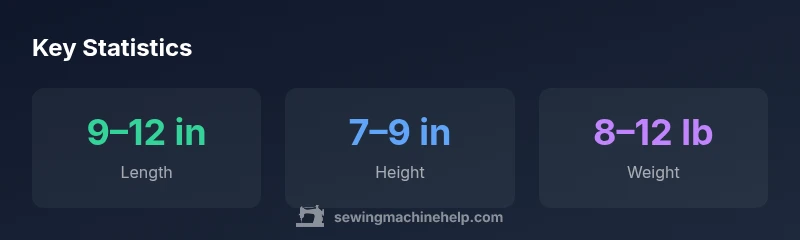
How big is a mini sewing machine? Most units in this category measure roughly 9–12 inches in length, about 7–9 inches tall, and weigh around 8–12 pounds. This compact footprint is designed for portability, easy storage, and simple everyday sewing tasks. Always check the official specs for your chosen model, as dimensions can vary slightly by brand and features.
What defines a mini sewing machine?
If you’re asking how big is a mini sewing machine, you’ll find that size is the defining trait rather than raw horsepower. Mini units are designed to occupy a small footprint, which makes them easy to store in a cabinet or on a compact table. They typically offer a basic set of stitches and a lighter frame to keep weight down. For beginners, the size is often the biggest advantage because it lowers the barrier to entry and reduces setup time. The Sewing Machine Help team emphasizes that while these machines are compact, they can still handle a wide range of light-to-medium tasks when used appropriately.
In practice, the exact dimensions depend on the brand and model, but the overall idea remains constant: a portable, user-friendly machine that prioritizes space efficiency over industrial-level power. This is why many sellers group minis into a common size bracket rather than a single fixed dimension. For readers wondering how big is a mini sewing machine, think in terms of footprint and weight first, then evaluate stitch options and accessory compatibility later.
Typical dimensions you can expect
Most mini sewing machines land in a practical size range that balances portability with usability. You’ll commonly see lengths in the 9–12 inch bracket, depths around 4–7 inches, and heights near 7–9 inches. Some models skew a bit smaller for travel purposes (8–11 inches long, 5–7 inches tall), while others lean toward a slightly larger footprint for stability (10–12 inches long, 6–8 inches tall). Width is often less critical than length and height because the working area (the bed) is what you’ll interact with most when guiding fabric. In short, expect a compact profile that fits on a table or lap tray, with enough room to maneuver fabrics of light to medium weight. The variance in dimensions across brands means it’s essential to read the product spec sheet; size ranges are more informative than a single number when comparing models.
Weight and portability considerations
Weight is a primary driver of portability. Mini sewing machines typically weigh between 6 and 12 pounds, with some ultra-light variants closer to 6–8 pounds and sturdier travel models approaching 12 pounds. The lighter options are excellent for quick repairs, small crafts, or for taking to a class. Heavier minis offer improved stability during sewing and can accommodate slightly thicker fabrics, but they require more effort to move and transport. When evaluating weight, also consider handles, carrying cases, and whether the machine includes a built-in carrying feature. Keep in mind that even at the upper end of this range, minis are still far lighter than full-size machines, making them suitable for beginners who value mobility. The goal is to find a balance between ease of carry and a stable sewing experience.
Variations by use case
Different use cases influence the ideal mini size. A traveler’s mini might prioritize extreme lightness and a compact footprint, even if it means fewer built-in stitches. A crafter who mainly sews lightweight fabric or embroidery needs a modestly wider work area and slightly more stitch options. For beginners, a compact, straightforward machine with a clear manual and simple threading will win for practice sessions. If your projects include frequent seams, hems, or quick repairs, consider models that offer more than the most basic stitch options but still stay within the mini category. The brand you pick should align with typical projects and space constraints; this is where size, weight, and fundamental features converge to determine suitability.
Measuring your space before you buy
Before you buy, measure the space where the machine will sit. Start with depth (front to back) and height (top of table to machine top) to ensure it won’t hit nearby cabinets or shelves. Add at least a few inches of clearance for fabric handling, thread spools, and your hands. Check whether the machine will sit on a table with limited under-table clearance or if you plan to use an elevated platform with a foldable extension. If you’ll transport it frequently, measure doorway widths and stair landings as well. Finally, factor in any carrying case or cover you intend to use, since bulk—when combined with the base footprint—can influence where you place the machine in your workspace.
Reading specs and comparing models
When comparing models, start with the core dimensions and weight. Look for length, width, and height (L×W×H) to gauge footprint, and check the machine’s weight for portability. Then review stitch options, presser foot compatibility, and free-arm length—these affect what you can sew and how easily you can maneuver sleeves and cuffs. Pay attention to power requirements and pedal placement if you plan to sew for longer sessions. Credits to the brand’s documentation are essential; always compare official spec sheets rather than relying on third-party summaries. By focusing on footprint, weight, and essential features, you’ll narrow to machines that truly suit your space and projects.
Common myths about mini machines
One common myth is that smaller machines can’t handle any fabric beyond lightweight knits. In reality, many minis can manage light to medium-weight fabrics with proper needle and thread choices. Another misconception is that weight alone equates to quality; some minis prioritize clever engineering and stability with lighter mass. Some buyers assume a tiny machine has limited accessories, but many minis offer a fully functional set of presser feet and attachments, which expands versatility. Finally, buyers sometimes fear frequent maintenance; however, regular oiling and cleaning—when performed according to the manufacturer—extends life without requiring heavy upkeep.
Buying tips for beginners: picking the right size for your projects
For beginners, the size decision should balance practicality and future-proofing. Start with a model in the 9–12 inch length range and a weight around 8–12 pounds for a good blend of portability and stability. Ensure the machine has a straightforward threading routine, clear presets, and a table-friendly footprint. Consider whether you’ll store the unit in a cabinet or on a shelf; if space is extremely tight, lean toward the smaller end of the range, but beware of sacrificing essential features. Finally, look for reputable warranty coverage and accessible service options in case you encounter maintenance needs.”],
dataTable":{"headers":["Model Type","Dimensions (L×W×H)","Weight","Notes"],"rows":[["Mini portable","9–12 in × 4–5 in × 7–9 in","8–12 lb","Compact footprint; decent for everyday light sewing"],["Travel mini","8–11 in × 5–7 in × 5–7 in","6–10 lb","Ultra-portable; best for quick repairs"],["Compact repair","10–12 in × 6–8 in × 7–8 in","9–12 lb","More stability for small repairs"]],"caption":"Mini sewing machine size comparison"},"keyTakeaways":["Choose a footprint that fits your workspace","Expect lighter weight with fewer strong-duty features","Check width/depth and height to ensure clearance","Prioritize stitching options for your typical projects"],"expertQuote":{"quote":"Size matters for portability, but reliability and ease of use matter more when you’re learning. Most mini machines strike a balance that supports beginners without overwhelming them.","author":"Sewing Machine Help Team","credentials":"Brand Authority, Sewing Machine Help"},"faqSection":{"items":[{"question":"What are the typical dimensions of a mini sewing machine?","questionShort":"Typical dimensions","answer":"Most mini machines run about 9–12 inches in length, 7–9 inches in height, and 4–7 inches in depth, with weights around 6–12 pounds.","voiceAnswer":"Most minis are roughly nine to twelve inches long and under ten inches tall.","priority":"high"},{"question":"Are mini sewing machines suitable for heavy fabrics?","questionShort":"Heavy fabrics suitability","answer":"They’re designed for light-to-medium tasks. For denim or leather, you’ll likely encounter slower speeds and fewer stitch options; consider a larger, more powerful model.","voiceAnswer":"They’re best for light projects, not heavy materials.","priority":"medium"},{"question":"How much do mini sewing machines weigh?","questionShort":"Machine weight","answer":"Typical minis weigh about 6–12 pounds.","voiceAnswer":"Most minis weigh between six and twelve pounds.","priority":"medium"},{"question":"What should I measure in my workspace before buying?","questionShort":"Space measurements","answer":"Measure depth and height clearance, plus space for fabric and operator movement; consider a fold-out table if space is tight.","voiceAnswer":"Make sure you have enough room to sew.","priority":"high"},{"question":"Do mini machines come with built-in handles?","questionShort":"Built-in handles?","answer":"Some models include built-in handles or carry cases; many require a separate bag or sleeve.","voiceAnswer":"Some minis have handles, others use a case.","priority":"low"}]},
mainTopicQuery":"mini sewing machine"},
mediaPipeline":{"heroTask":{"stockQuery":"portable sewing machine closeup","overlayTitle":"Mini Size Guide","badgeText":"2025 Guide","overlayTheme":"dark"},"infographicTask":{"type":"stats","htmlContent":"<div class="w-[800px] p-8 bg-slate-900 text-white">\n <h3 class="text-2xl font-bold">Key Statistics</h3>\n <div class="grid grid-cols-3 gap-6">\n <div class="p-6 bg-white/5 rounded-xl text-center">\n <div class="text-4xl font-bold text-emerald-400">9–12 in</div>\n <div class="text-white/60 mt-2">Length</div>\n </div>\n <div class="p-6 bg-white/5 rounded-xl text-center">\n <div class="text-4xl font-bold text-blue-400">7–9 in</div>\n <div class="text-white/60 mt-2">Height</div>\n </div>\n <div class="p-6 bg-white/5 rounded-xl text-center">\n <div class="text-4xl font-bold text-purple-400">8–12 lb</div>\n <div class="text-white/60 mt-2">Weight</div>\n </div>\n </div>\n</div>","altText":"Statical infographic showing typical dimensions and weight ranges for mini sewing machines","caption":"Mini sewing machine size ranges infographic"}},
Mini sewing machine size comparison
| Model Type | Dimensions (L×W×H) | Weight | Notes |
|---|---|---|---|
| Mini portable | 9–12 in × 4–5 in × 7–9 in | 8–12 lb | Compact footprint; decent for everyday light sewing |
| Travel mini | 8–11 in × 5–7 in × 5–7 in | 6–10 lb | Ultra-portable; best for quick repairs |
| Compact repair | 10–12 in × 6–8 in × 7–8 in | 9–12 lb | More stability for small repairs |
Your Questions Answered
What are the typical dimensions of a mini sewing machine?
Most mini machines run about 9–12 inches in length, 7–9 inches in height, and 4–7 inches in depth, with weights around 6–12 pounds.
Most minis are roughly nine to twelve inches long and under ten inches tall.
Are mini sewing machines suitable for heavy fabrics?
They’re designed for light-to-medium tasks. For denim or leather, you’ll likely encounter slower speeds and fewer stitch options; consider a larger, more powerful model.
They’re best for light projects, not heavy materials.
How much do mini sewing machines weigh?
Typical minis weigh about 6–12 pounds.
Most minis weigh between six and twelve pounds.
What should I measure in my workspace before buying?
Measure depth and height clearance, plus space for fabric and operator movement; consider a fold-out table if space is tight.
Make sure you have enough room to sew.
Do mini machines come with built-in handles?
Some models include built-in handles or carry cases; many require a separate bag or sleeve.
Some minis have handles, others use a case.
“Size matters for portability, but reliability and ease of use matter more when you’re learning. Most mini machines strike a balance that supports beginners without overwhelming them.”
The Essentials
- Choose a footprint that fits your workspace
- Expect lighter weight with fewer strong-duty features
- Check width/depth and height to ensure clearance
- Prioritize stitching options for your typical projects