How to Get Sewing Machine: A Practical Guide for Beginners
Learn how to get sewing machine that fits your goals and budget. This step-by-step guide covers choosing between new vs used, essential beginner features, buying venues, and a verification checklist from Sewing Machine Help.


By the end of this guide you’ll know how to get sewing machine that fits your goals, budget, and skill level. You’ll learn how to choose between new and used options, identify essential beginner features, find trusted retailers, and verify machine condition before purchase. Follow this step-by-step approach to enter sewing confidently and start learning with the right tool.
What you want from a sewing machine: Types and use cases
If you’re just starting out, the first step in how to get sewing machine is understanding the types and what they’re best at. Mechanical machines rely on knobs and levers, electronic models add preset stitches, and computerized machines offer automated functions and more stitch variety. For beginners, a dependable mechanical or entry-level electronic model is usually sufficient. Consider the kinds of projects you plan to tackle: simple hems and straight seams call for basic stitches, while quilting or decorative work benefits from more stitch options and adjustable pressure. Define your main goals (e.g., garment construction, craft projects, repairs) and your budget before you shop. This clarity helps you avoid overpaying for features you won’t use. According to Sewing Machine Help, starting with a clear goal and budget helps beginners avoid buyer’s remorse when learning how to get sewing machine. Also think about portability, noise, and the size of your workspace. A lighter machine is easier to move, but may vibrate more if mounted on a table with thin padding. In the end, the best machine is the one that fits your typical projects and your daily setup.
What you want from a sewing machine: Types and use cases
If you’re just starting out, the first step in how to get sewing machine is understanding the types and what they’re best at. Mechanical machines rely on knobs and levers, electronic models add preset stitches, and computerized machines offer automated functions and more stitch variety. For beginners, a dependable mechanical or entry-level electronic model is usually sufficient. Consider the kinds of projects you plan to tackle: simple hems and straight seams call for basic stitches, while quilting or decorative work benefits from more stitch options and adjustable pressure. Define your main goals (e.g., garment construction, craft projects, repairs) and your budget before you shop. This clarity helps you avoid overpaying for features you won’t use. According to Sewing Machine Help, starting with a clear goal and budget helps beginners avoid buyer’s remorse when learning how to get sewing machine. Also think about portability, noise, and the size of your workspace. A lighter machine is easier to move, but may vibrate more if mounted on a table with thin padding. In the end, the best machine is the one that fits your typical projects and your daily setup.
How to balance quality, price, and features
When you’re learning how to get sewing machine, you’ll encounter a trade-off between price and capability. Aim for a machine with solid stitch quality, good thread tension, and reliable bobbin systems. For beginners, a handful of essential features beats a flashy spec sheet: adjustable stitch length, reliable feed dogs, a simple reverse stitch, quilter-friendly bobbin winding, and a clearly labeled manual. Don’t be swayed by the number of built-in stitches alone; ensure you can actually use them without frustration. Prioritize durability and local service options, so you’re not stranded if parts wear or a belt slips. A practical approach is to shortlist 3–5 models that fit your budget and try them in person if possible. This hands-on test is an invaluable part of determining how to get sewing machine that will grow with you, not outpace you.
How to balance quality, price, and features
When you’re learning how to get sewing machine, you’ll encounter a trade-off between price and capability. Aim for a machine with solid stitch quality, good thread tension, and reliable bobbin systems. For beginners, a handful of essential features beats a flashy spec sheet: adjustable stitch length, reliable feed dogs, a simple reverse stitch, quilter-friendly bobbin winding, and a clearly labeled manual. Don’t be swayed by the number of built-in stitches alone; ensure you can actually use them without frustration. Prioritize durability and local service options, so you’re not stranded if parts wear or a belt slips. A practical approach is to shortlist 3–5 models that fit your budget and try them in person if possible. This hands-on test is an invaluable part of determining how to get sewing machine that will grow with you.
Where to buy: retailers, online marketplaces, and local shops
The best places to buy a sewing machine vary by buyer type. Local sewing shops offer expert guidance, test drives, and easy returns, which can be priceless when you’re learning how to get sewing machine. Large retail chains often have competitive pricing and stock a wide range of models, but the staff may not be as specialized. Online marketplaces provide convenience and detailed reviews, yet you should verify seller reputations and the machine’s return policy. If you’re unsure how to get sewing machine, start with reputable retailers that offer a visible warranty, easy returns, and options to service locally. Always read the model’s manual in advance and check that you’re buying the correct foot attachments and bobbins for your machine. For many beginners, a trusted local shop paired with a solid online source is the best path to a satisfying setup.
Where to buy: retailers, online marketplaces, and local shops
The best places to buy a sewing machine vary by buyer type. Local sewing shops offer expert guidance, test drives, and easy returns, which can be priceless when you’re learning how to get sewing machine. Large retail chains often have competitive pricing and stock a wide range of models, but the staff may not be as specialized. Online marketplaces provide convenience and detailed reviews, yet you should verify seller reputations and the machine’s return policy. If you’re unsure how to get sewing machine, start with reputable retailers that offer a visible warranty, easy returns, and options to service locally. Always read the model’s manual in advance and check that you’re buying the correct foot attachments and bobbins for your machine. For many beginners, a trusted local shop paired with a solid online source is the best path to a satisfying setup.
How to verify built quality and signs of wear in a used machine
If you’re considering a used sewing machine, you must verify the condition before purchase. Look for smooth operation during a test run, listen for grinding or squeaking, and check that the needle moves up and down without binding. Inspect the belt, motor noise, and belt tension; worn belts are a red flag. Open the bobbin cover and examine the bobbin case for rust or rough edges. Ensure the foot pedal responds gradually and that the machine sews both forward and reverse stitches cleanly. Ask for a recent service record and any available warranty on the used unit. If you’re unsure how to get sewing machine in good shape, bring a friend who has sewing experience or request a demonstration from the seller. A careful inspection saves you from costly repairs later.
How to verify built quality and signs of wear in a used machine
If you’re considering a used sewing machine, you must verify the condition before purchase. Look for smooth operation during a test run, listen for grinding or squeaking, and check that the needle moves up and down without binding. Inspect the belt, motor noise, and belt tension; worn belts are a red flag. Open the bobbin cover and examine the bobbin case for rust or rough edges. Ensure the foot pedal responds gradually and that the machine sews both forward and reverse stitches cleanly. Ask for a recent service record and any available warranty on the used unit. If you’re unsure how to get sewing machine in good shape, bring a friend who has sewing experience or request a demonstration from the seller. A careful inspection saves you from costly repairs later.
Authoritative sources for buying guidance and maintenance
For quality guidance, check reputable sources on buying and care. The Sewing Machine Help team recommends consulting official consumer protection and university extension resources to learn general best practices when evaluating electronics and small appliances. These sources offer reliable, non-brand-specific advice that can help you form a solid foundation for your purchase decision.
Authoritative sources for buying guidance and maintenance
For quality guidance, check reputable sources on buying and care. The Sewing Machine Help team recommends consulting official consumer protection and university extension resources to learn general best practices when evaluating electronics and small appliances. These sources offer reliable, non-brand-specific advice that can help you form a solid foundation for your purchase decision.
Tools & Materials
- Sewing machine user manual(Keep for troubleshooting and maintenance.)
- Basic screwdriver set(Small Phillips and flathead; for tension adjustments.)
- Lint brush or soft brush(Clean lint from bobbin area.)
- Replacement needles (assorted sizes)(Sizes 80/12 to 90/14 for general fabrics.)
- Bobbin winder and extra bobbins(Have spare bobbins wound and ready.)
- Sewing machine oil(Use minimal oil; refer to manual.)
- Measuring tape and fabric chalk(For testing stitches and hems.)
- Good lighting and workspace(Comfortable, well-lit area.)
- Thimble and seam ripper(Helpful for beginners.)
Steps
Estimated time: 30-60 minutes
- 1
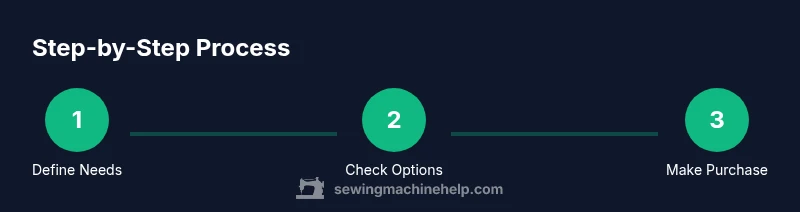
Define goals and budget
Clarify the kinds of projects you plan to tackle and set a realistic price range. This helps you avoid overpaying for features you won’t use and steers you toward models that will grow with you.
Tip: Write down your top three project types and a ceiling price before you shop. - 2
Identify suitable machine types
Evaluate whether a mechanical, electronic, or basic computerized model best fits your projects and budget. If you’re starting with simple garments and repairs, a dependable mechanical or entry-level electronic model is often ideal.
Tip: Ask about the availability of service and parts in your area so maintenance is easy later. - 3
Check new vs used options
Compare price, warranty, and condition. Used machines can offer great value if they run smoothly and have a recent service history; new machines provide warranty and latest safety features.
Tip: Request a demonstration or test stitch in-store to confirm smooth operation. - 4
Test and compare features
Assess stitch options, tension, feed dogs, needle threading, and user interface. Prioritize features you’ll actually use rather than every bell and whistle.
Tip: Make notes on ease of use, weight, and noise level during a test run. - 5
Verify warranty and return policy
Read warranty terms, what’s covered, and how to claim it. Confirm the return policy in case the machine doesn’t meet expectations.
Tip: Choose retailers offering at least a 30–90 day trial and local support. - 6
Make the purchase and set up
Buy the machine, organize accessories, and follow the manual to set up the basics—threading path, bobbin winding, and initial stitch test.
Tip: Keep all receipts and model numbers for future service.
Your Questions Answered
What is the difference between mechanical and computerized sewing machines?
Mechanical machines are typically simpler and cheaper, with manual controls. Computerized models offer more stitch options and automatic features but can be pricier and require firmware updates. For beginners, a solid mechanical model with essential stitches is often sufficient.
Mechanical machines are simpler and cheaper, while computerized ones give more stitches and automation. For beginners, start with a reliable mechanical model with essential stitches.
Should I buy a new or used sewing machine?
New machines come with full warranties and the latest safety features. Used machines can be a great value if they’re well maintained and tested. Weigh the trade-offs between price, warranty, and service options.
New machines have warranties; used ones can be cheaper but require careful checking and testing.
What is a fair price range for a beginner sewing machine?
Beginners typically find good options in a broad range, for example roughly between a few hundred dollars to around one thousand, depending on features and brand. Focus on reliability and service availability rather than chasing the cheapest model.
Expect a few hundred to around a thousand dollars for a solid beginner machine, depending on features.
How can I tell if a used machine is in good working condition?
Test the machine if possible: run a few stitches, check for smooth motion, observe the bobbin area, and inspect for rust. Ask for a recent service record and confirm that parts and belt are in good condition.
Test the machine, listen for smooth operation, and ask about recent servicing.
What basic maintenance should I perform after buying?
Follow the manual for oiling intervals, needle changes, and cleaning. Regularly clean lint from the bobbin area, replace needles, and keep the machine covered when not in use to protect it.
Oil as advised, keep it clean, and change needles regularly.
Watch Video
The Essentials
- Define needs and budget before shopping.
- Prioritize beginner-friendly features over flashy specs.
- Inspect used machines thoroughly and test run when possible.
- Choose trusted retailers with clear warranties and support.