Buy a Sewing Machine: A Practical Guide for Beginners
Step-by-step guidance to choose and buy a sewing machine, with feature comparisons, budgeting tips, in-store testing, and maintenance basics for home sewists.


In this guide, you’ll learn how to buy a sewing machine that fits your needs and budget. You will identify your project types, compare mechanical and computerized models, choose reliable brands, and test machines in-store or online. By the end, you’ll have a clear buying plan and practical steps to evaluate features, warranties, and service options.
Why buying a sewing machine matters for home sewers
Owning a sewing machine empowers you to bring ideas to life faster, with consistent results and greater control over fabric choices, fit, and finish. For beginners, a reliable machine reduces frustration, speeds up learning, and encourages experimentation. According to Sewing Machine Help, investing in a quality starter machine can save time and minimize frustration as skills grow. A good machine also helps you complete projects at home, avoiding frequent trips to a sewing studio or paid services. Over time, your investment pays off through savings on mending, hemming, and creative projects. When choosing a machine, think about your typical fabrics, preferred stitches, and how much you value features like automatic needle threading, speed control, and quiet operation.
Use this as your baseline: you want dependable performance, clear manuals, and accessible service.
Assessing your projects and space
Begin by listing the types of projects you expect to tackle in the next 6–12 months. Simple hems, garment repairs, and basic alterations are common starting points. If you plan thicker fabrics (denim, canvas) or quilting, you’ll prioritize sturdier construction and more robust presser feet. Measure your workspace: consider desk height, chair comfort, and a stable surface for a steadier sewing experience. Also note lighting, power outlets, and noise tolerance. This upfront clarity helps you filter models quickly and avoid buyer’s remorse. Sewing Machine Help’s approach emphasizes aligning machine capability with real-world use, not just marketing features.
Core features to compare for beginners
For beginners, prioritize features that reduce friction and enhance learning:
- Stitch variety: Basic straight/zigzag plus a handful of utility stitches.
- Threading ease: Auto needle threader and clear threading path.
- Presser foot options: Simple feet set for common tasks; volume of optional feet depends on the projects you plan.
- Speed control: A stable, adjustable speed helps you develop control.
- Bobbin loading: Top-loading or drop-in bobbin with easy access.
- Light and visibility: A well-lit harp area and a clear view of the stitch area.
Avoid feature overload; choose models that balance essential functions with reliability. The goal is a machine you enjoy using, not one that requires a manual to operate every day.
Mechanical vs computerized: pros and cons
Mechanical machines are straightforward, durable, and often cheaper. They’re excellent for beginners who want tactile control and fewer settings to manage. Computerized machines add automatic features, precision, and broader stitch libraries, which can speed up complex tasks. For beginners, a mid-range computerized model may offer helpful presets while keeping the learning curve manageable. Consider your comfort with technology and the types of projects you love. If you value simplicity, a reliable mechanical option is a solid start; if you crave versatility and automation, a user-friendly computerized model can be worthwhile.
Shopping channels: where to buy
You have multiple purchasing avenues:
- Local sewing shops: Great for hands-on testing, expert advice, and after-sales service.
- Big-box retailers: Often have a broad selection and competitive pricing, but staff expertise may vary.
- Online retailers: Convenience and access to reviews, but you’ll rely on photos and return policies.
- Used market: Can offer cost savings, but assess wear, maintenance history, and warranty suitability.
Each channel has pros and cons. Sewing Machine Help suggests visiting a store if possible to handle the model and assess noise, vibration, and stitch quality firsthand. If buying online, choose reputable retailers with clear return policies and solid customer support.
How to test a machine in-store or online
Testing is your best predictor of long-term satisfaction:
- Run a few practice stitches on lightweight and medium-weight fabrics.
- Check noise levels and stability during operation.
- Test thread tension by sewing a sample seam and a zigzag stitch, then inspect the back side.
- Try threading, bobbin winding, and changing feet if those features matter to you.
- Verify warranty coverage, service options, and availability of replacement parts.
If shopping online, read customer videos and reviews about real-world usability and check if retailers offer virtual demos.
Budget ranges and value: getting the best value
Prices vary by brand, features, and durability. For beginners, typical ranges may span entry-level models through mid-range machines:
- Entry level: $150–$300 — basic stitches, reliable performance, good for learning.
- Mid-range: $300–$700 — more stitch variety, better threading systems, and enhanced reliability.
- Upper-mid/Pro-sumer: $700–$1000+ — extensive stitch libraries, higher speed, and advanced features.
Aim for a model with durable components, good warranty, and easy access to service. Remember that the lowest price isn’t always the best value if it compromises reliability or support.
Safety, warranties, and service plans
Before purchasing, understand the warranty length, what it covers, and how service is handled (in-house or via authorized centers). Ask about parts availability, typical turnaround times, and whether the retailer offers maintenance packages. A solid warranty and accessible support reduce risk and improve long-term satisfaction. Read model reviews for reliability patterns and check whether the manufacturer has a strong service network in your area. The investment in a machine you can service locally saves time and stress.
Final decision and maintenance plan
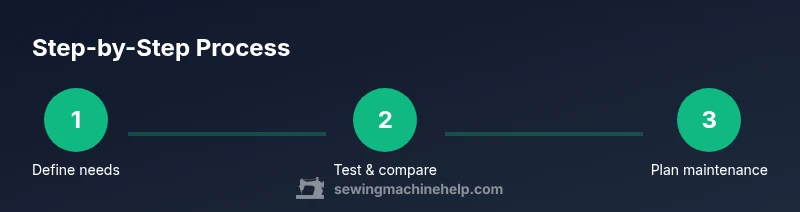
Conclude by aligning your needs, budget, and testing outcomes. Create a short checklist: does the machine feel comfortable to operate? is the thread path easy to follow? is there reliable local service? After purchase, establish a maintenance routine: clean the bobbin area, oil per the manual schedule, replace needles regularly, and store accessories in a dedicated box. The Sewing Machine Help team recommends choosing a model you’ll enjoy using every week, with a plan for regular upkeep to extend its life and protect your skills.
Authoritative sources and practical references
- This guide references consumer safety and product testing principles from government and major publications to help you make informed decisions. See https://www.ftc.gov for consumer protection guidelines and https://www.cpsc.gov for safety information. For independent reviews and reliability data, consider https://www.consumerreports.org.
Tools & Materials
- Measuring tape (2–3 meters)(Fabric and project planning)
- Fabric scissors(Sharp, dedicated for fabric)
- Seam ripper(For quick fixes during practice)
- Bobbin set (assorted)(Extra bobbins compatible with chosen model)
- Sewing machine oil (low-viscosity)(Check manual; few drops after long storage)
- Needle pack (assorted sizes)(Sizes like 70/10, 80/12 for variety)
Steps
Estimated time: 2-4 hours
- 1
Define your needs and space
List the types of projects you’ll tackle in the next 6–12 months and measure your workspace to ensure a comfortable setup. Clarifying use helps filter models quickly and prevent buyer’s remorse.
Tip: Write a quick 'must-have' vs. 'nice-to-have' list before visiting stores. - 2
Research compatible models
Filter models by budget, stitch variety, and user-friendly features such as auto-threading and easy bobbin loading. Read multiple reviews to gauge reliability and customer support.
Tip: Prioritize brands with robust parts availability in your region. - 3
Set a realistic budget
Choose a price range that balances features with long-term value. Entry-level machines often cover basic needs; mid-range models add durability and more stitches for growth.
Tip: Consider maintenance costs and foot accessory bundles when evaluating value. - 4
Visit stores or reputable websites
Test-hand models to assess noise, vibe, and ease of use. In-store staff can demonstrate threading and foot changes live.
Tip: Bring a sample fabric and ask for a live demo of your common tasks. - 5
Test core features hands-on
Sew straight lines, try a zigzag stitch, and switch feet. Check light visibility, needle threading, and tension adjustments.
Tip: Notice if the machine stalls or vibrates during heavy fabric work. - 6
Review warranty and service options
Confirm coverage duration, what’s included (parts, labor), and whether service centers are nearby. Check return policies if buying online.
Tip: Ask about options for annual maintenance or bundled service plans. - 7
Make your decision and plan maintenance
Choose the model that best fits your projects and budget. Create a simple maintenance routine and designate a storage space for accessories.
Tip: Set a reminder to oil and clean after every few hours of sewing.
Your Questions Answered
What features should a beginner look for in a sewing machine?
Beginners should prioritize straightforward threading, a few basic stitches, adjustable speed, good visibility, and a reliable warranty. A model with auto-threading and drop-in bobbin can simplify the learning curve.
A beginner should look for easy threading, a handful of stitches, adjustable speed, and a solid warranty for peace of mind.
Is a computerized machine worth it for beginners?
Computerized machines offer presets and automatic features that can speed up learning and provide versatility. For many beginners, a user-friendly computerized model provides the best balance of control and convenience.
For many beginners, a user-friendly computerized model provides a good balance of control and convenience.
Should I buy a used sewing machine?
Used machines can save money, but they may need immediate maintenance or have limited parts. If choosing used, inspect the belt, motor, and stitch quality and buy from a trusted seller with a return option.
Used machines can be a bargain, but check the motor, belts, and stitch quality, and buy from a trusted seller.
How much should I expect to spend on a first sewing machine?
For beginners, plan for a range from entry-level to mid-range depending on features. A practical starting point is to aim for a model in the mid-range that offers durability and basic advanced features.
A practical starting point is a mid-range model with durable parts and essential features.
What warranty should come with a new machine?
Most new machines come with a manufacturer’s warranty covering parts and workmanship for a limited period. Check what is excluded, and whether local service centers are available.
Most new machines include a parts-and-workmanship warranty; verify coverage and local service options.
Can I upgrade later with more accessories or feet?
Yes. Many machines support a wide range of feet and accessories. Check compatibility and availability of replacement parts and accessories when selecting a model.
Yes, most machines support additional feet and accessories; confirm compatibility before purchase.
What maintenance should I perform after buying a machine?
Establish a simple routine: clean lint from the bobbin area, oil as recommended by the manual, and replace needles regularly. Proper storage helps preserve tension and stitch quality.
Keep it clean, oil as instructed, and replace needles regularly to keep stitches consistent.
Is brand reputation important when buying?
Brand reputation matters for availability of spare parts and service. Look for models with solid support networks and positive long-term reliability reviews.
Brand reputation helps ensure parts and service are accessible over time.
Watch Video
The Essentials
- Identify your project scope before buying.
- Test-key features: threading, light, and stitch options.
- Balance budget with long-term maintenance and service.
- Choose a model with reliable parts and accessible support.
- Plan a basic maintenance routine after purchase.