How to Hem Jeans with a Sewing Machine: A Step-by-Step Guide
Learn how to hem jeans using a sewing machine with a denim needle, sturdy stitch, and precise measuring. This practical guide covers materials, step-by-step techniques, tips, and finishing methods for durable, clean hems.


You can hem jeans with a sewing machine by selecting a denim needle, matching thread, and a straight stitch or gentle zigzag. Begin by trying on the jeans, marking the desired hem length, then folding twice for a crisp edge. Pin, sew along the fold, and finish with a clean edge for a durable, professional look.
Why hemming jeans correctly matters
If you're learning how to hem jeans with a sewing machine, you’ll want a durable finish that withstands washing and repeated wearing. Jeans are heavy-weight denim that tends to fray at raw edges, so choosing the right stitch type and finishing method dramatically affects longevity and appearance. In this section we explore how to decide between double-fold and single-fold hems, how to align the hem with the original line, and why a well-executed hem improves overall fit. For home sewists and beginners, the goal is a hem that looks intentional, wears well, and can be adjusted if needed. We also cover how to test tension on denim fabric, which can behave differently than lightweight cotton.
A solid hem starts with preparation: select the right needle, thread, and stitch, then measure precisely and press firmly. By following these steps, you’ll avoid common issues like puckering, uneven edges, or hem creep after washing. Remember that the goal is a neat edge that lies flat against the leg and remains durable through multiple trips through the machine washing cycle.
Choosing the right needle and thread for denim
Denim work demands gear that can handle thick fabric without skipping stitches. Start with a denim needle, commonly sized around 90/14 to 100/16, to penetrate multiple layers of denim reliably. Pair it with a sturdy, medium-to-high-tensile thread such as a polyester or a polyester-cotton blend; this helps resist snagging and seam slippage during wear and washing. For color, match the thread to the denim as closely as possible so the inside stitching remains discreet. If your machine struggles with denser fabric, switch to a walking foot or reduce speed to keep fabric feeding evenly. When hemming stretch-demin, consider a small amount of stretch in the stitch choice to avoid popping out of shape. By selecting the proper needle and thread, you set up a durable foundation for the hem and reduce the need for resewing later.
Preparing your jeans: measuring, marking, and pressing
Accurate measurement and a clean crease are the backbone of a professional hem. Start by trying the jeans on to determine the desired length, then mark the hem on the inside of each leg so the mark remains hidden. Use a measuring tape and a marking tool that shows clearly on denim, such as a fabric chalk that rubs away. Create a single reference line for a single-fold hem or two lines for a double-fold hem, ensuring both legs are even. Before sewing, press the crease firmly with a hot iron and a pressing cloth to set the fold. This prevents the fabric from shifting as you sew and improves the final edge alignment. If the jeans have a break or a cuff, account for that when marking the hem.
Step-by-step: mark and fold (Part A)
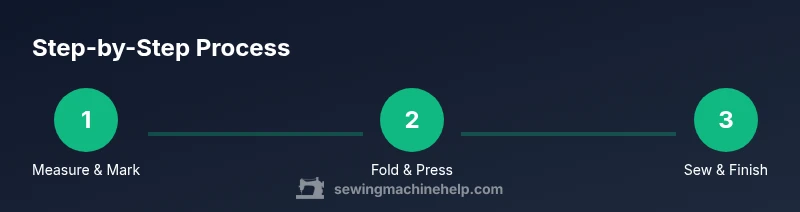
- Mark the hem length on both legs consistently and verify symmetry between the two pants. Fold the edge up to the marked line and press, creating a crisp crease. For double-fold hems, fold once, press, then fold again to the final hem position and press again. This creates a neat, bulky-free edge that sews smoothly and lies flat against the leg. Align the crease with the original seam to maintain a natural look. A well-creased hem reduces the chance of the edge peeking out as you move.
Step-by-step: pin, baste, and sew (Part B)
Pin or clip the folded edge in position around the entire hem, placing pins perpendicular to the fold so they stay in place. If you prefer, use a temporary baste stitch to hold the hem before final stitching. Sew along the folded edge with a straight stitch or a small zigzag that accommodates denim thickness without breaking the thread. Slow, steady feeding is crucial; denim can shift easily if the feed dogs lose grip. Backstitch at the beginning and end to secure the seam and reduce pull-out over time.
Finishing touches: pressing, trimming, and edge finishes
Once the stitching is complete, press the hem again to set the stitches and flatten any bulky corners. Trim loose threads and, if desired, finish the inner edge with a narrow zigzag or a serger for extra durability. A final press with steam will help the hem settle into place and look professional from the outside. If you used a single-fold hem, you can blind-hem on the inside to hide stitches, but keep in mind that denim often requires visible stitching for strength and reliability. Regularly check the hem after washing to ensure no seam creep has occurred and re-press as needed.
Common mistakes and how to avoid them
Hemming denim challenges beginners most often with misaligned hems, puckering, or thread breakage. To avoid these issues, always test tension and stitch length on scrap denim first. Use the correct needle and avoid forcing thick fabric through a small needle plate. Keep the hem edge crisp by pressing frequently and using pins or clips to prevent shifting. If the hem looks uneven, re-check measurements, re-crease, and re-sew on a fresh line. Finally, choose a thread color that blends with the denim to maintain a clean appearance from the outside.
How to adjust for different jean styles (skinny, bootcut, relaxed)
Different jean silhouettes require small adjustments to the hem length and fold. Skinny jeans often need the smallest hem, with less bulk at the edge, while bootcut and relaxed jeans may look better with a slightly wider hem to maintain balance with leg opening. Always re-measure after trying on the jeans and consider the footwear you expect to wear with them. For very bulky denim (e.g., double- or triple-fold hems), a heavy-duty needle and stronger thread are advisable, along with a walking foot to prevent fabric creep. The key is to maintain consistent hem width across both legs and to ensure the hem sits flush against the ankle.
Troubleshooting denim hemming challenges
If the hem puckers, check your stitch length, foot pressure, and needle selection. Denim can be sensitive to tension, so adjust accordingly and test again on scrap before continuing. If the fabric shifts, switch to a walking foot or use more pins to secure alignment. For stubborn edges that refuse to lie flat, re-cut a bit of the fold and re-press before resewing. Lastly, if the edge begins to unravel after washing, reinforce with a second pass along the same line or consider finishing with a narrow serged edge for extra durability.
Tools & Materials
- Sewing machine(Set to straight stitch or light zigzag; ensure working needle plate is clean)
- Denim needle(Size around 90/14 to 100/16; use for heavy fabric)
- All-purpose polyester thread(Color to match denim; avoid cotton thread on stretch denim)
- Measuring tape(Measure twice, mark once)
- Chalk or fabric marker(Mark hem length on the inside to stay hidden)
- Pins or clips(Hold folded hem in place)
- Iron and ironing board(Press creases for a clean finish)
- Scissors or rotary cutter(Trim threads and fabric edges)
- Seam ripper(For quick fixes)
- Dressmaker's chalk or marking pencil(Optional marker for precision)
Steps
Estimated time: 45-60 minutes
- 1
Prepare your sewing setup
Clear the workspace, thread the machine with the denim needle and test on scrap denim to verify tension. This ensures the machine handles heavy fabric without skipped stitches.
Tip: Test on scrap denim first to avoid surprises on your jeans. - 2
Measure and mark the hem length
Wear the jeans and mark the desired length on the inside of each leg. For a uniform look, measure from both legs.
Tip: Always mark on the inside to keep the outside clean. - 3
Fold the hem and press a crease
Fold the fabric to the needed hem allowance and press with a hot iron. For a double-fold hem, fold again and press a second crease.
Tip: Use a tailor’s clapper or a firm press to set the crease. - 4
Pin the folded edge in place
Secure the hem with pins or clips at regular intervals. Leave a small easing allowance if the fabric has stretch.
Tip: Pin from the outside so you can monitor edge alignment. - 5
Sew along the folded edge
Sew along the folded edge using a straight stitch or a short zigzag to accommodate denim thickness.
Tip: Use a longer stitch length around 2.4–3.0 mm for better fold stability. - 6
Reinforce or finish the edge as needed
Backstitch at the start and end, or sew a second closer topstitch for durability.
Tip: Backstitch to secure ends and avoid unraveling. - 7
Press the finished hem again
Press the hem to set the stitches and create a crisp finish. Let it cool before trimming threads.
Tip: Avoid scorching the fabric by using steam wisely. - 8
Fit and fine-tune as necessary
Turn the jeans inside out and try them on. If you need length adjustment, trim and re-press, then re-stitch.
Tip: Make small adjustments; tiny changes are easier to fix.
Your Questions Answered
Can I hem jeans with a home sewing machine if they have stretch denim?
Yes, but use a stretch-friendly stitch and a slightly longer stitch length. Adjust machine tension to avoid puckering and consider a zigzag stitch if the fabric shifts.
Yes. Use a stretch-friendly stitch and longer length to prevent puckering.
What stitch should I use for denim hems?
A straight stitch or a narrow zigzag works well. For very heavy denim, a short zigzag or triple-stitch can add durability.
Use a straight stitch or light zigzag for denim hems.
Should I use a walking foot?
A walking foot helps feed denim evenly, reducing shifting and puckering. If you don't have one, sew slowly and guide the fabric with both hands.
Yes, a walking foot helps. If not available, go slow.
Can I shorten jeans without trimming the original hem?
Yes, you can fold the existing hem inward and re-sew along a new line. This preserves the original edge and reduces bulk.
Yes, fold the hem inward and re-sew.
How do I hide the stitching on the inside?
Carefully align the folded edge so the stitching sits on the inside. Using a thread that matches the denim helps it blend in.
Hide the stitch by aligning folds and matching thread.
What about machine tension issues when sewing denim?
Check that needle and thread are compatible and that the pressure foot isn't too tight. Test on scrap denim if you encounter skipped stitches or loops.
Check needle/thread compatibility and test on scrap.
Watch Video
The Essentials
- Measure twice, hem once
- Use a denim needle and proper stitch
- Press thoroughly for a crisp finish
- Trim and secure any loose threads
- Test on scrap fabric before final hemming