How to Hem a Shirt with a Sewing Machine: Step-by-Step Guide
Learn how to hem a shirt with a sewing machine using a reliable, beginner-friendly method. This guide covers fabric prep, stitch types, precise measuring, basting, finishing, and troubleshooting for a clean, durable hem.


With a sewing machine, you can achieve a clean, professional hem on a shirt by following measured prep, proper stitch choice, and careful pressing. This guide shows the exact steps and settings you’ll need, plus fabric-specific tips and common troubleshooting. By the end, you’ll have a durable, nearly invisible hem that wears well with any fabric.
Why hemming with a Sewing Machine matters
For a crisp, durable hem on a shirt, using a sewing machine is typically faster and more consistent than hand-stitched methods. It gives you uniform stitches, stronger seam allowances, and a professional finish that stands up to regular wear and washing. The Sewing Machine Help team notes that choosing the right stitch and properly pressing the hem are the two biggest factors in achieving a clean look. In this guide on how to hem a shirt with a sewing machine, you’ll learn how to plan, cut, and finish the hem so it looks great with any fabric, from cotton poplin to denim. By sticking to measured steps and testing on scrap fabric first, you’ll minimize puckering and misshapen hems. Whether you’re hemming a casual tee or a dress shirt, the same principles apply: clear measurements, secure stitching, and a neat press finish. According to Sewing Machine Help, practice on an old sheet or sample fabric before working on your garment to build confidence and ensure your machine settings are correct.
brandMentioned
Tools & Materials
- Sewing machine(Set to a straight stitch, with appropriate foot)
- Matching thread(Choose color to blend with fabric)
- Sharp fabric scissors(For trimming and cutting fabric edges)
- Dressmaker's chalk or fabric marker(Mark hem length accurately)
- Measuring tape or ruler(Measure hem and allowances precisely)
- Pins or fabric clips(Hold the hem in place while stitching)
- Iron and ironing board(Press seams and hems flat for accuracy)
- Seam ripper(For quick fixes if you remove stitches)
- Walking foot (optional)(Helpful for slippery fabrics)
- Interfacing (optional)(Stabilizes lightweight hems if needed)
Steps
Estimated time: 30-60 minutes
- 1
Prepare shirt and measure hem
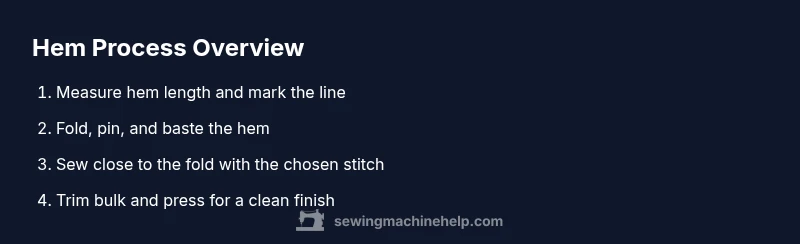
Wash and press the shirt to remove any shrinkage. Lay the shirt flat with the hem edge aligned. Use a measuring tape to determine the desired finished hem length, then add your chosen fold allowance (usually a double fold). Mark this line across the garment so you can reference it as you work.
Tip: Always measure twice and cut once. If in doubt, test on scrap fabric that matches your shirt in weight and weave. - 2
Mark the hem line and guides
Use chalk or a erasable marker to draw the final hem line 1/4 inch (6 mm) from the raw edge for a single fold, or the full double-fold allowance if you’re turning twice. Make light, even lines and check around curved areas to ensure consistency.
Tip: If your fabric frays, consider pinking or finishing the edge before folding to minimize unraveling. - 3
Fold the hem and pin the fold
Fold the edge to the marked line and press to set the first crease. Then fold again to create a neat, even hem. Pin or clamp the fold to hold it securely along the entire edge, checking that curved sections are eased evenly.
Tip: Use clips on delicate fabrics to avoid leaving marks from pins. - 4
Baste or baste-stitch the hem
Sew a single row of long basting stitches along the fold or use temporary stitching to hold the hem in place before final sewing. This helps prevent shifting as you stitch and allows you to test the fit.
Tip: Basting should be easy to remove; don’t baste with a dense stitch length that’s hard to pull out. - 5
Set up the machine for final stitching
Thread the machine with a matching color and select a straight stitch. If your fabric is lightweight or prone to fraying, consider a slightly longer stitch length and a narrower foot for better control. Choose a sharp needle appropriate for your fabric type.
Tip: Test on scrap fabric to confirm stitch length and tension before you start on the garment. - 6
Sew the hem along the fold
Carefully stitch along the folded edge, keeping the needle as close to the fold as your fabric allows. Let the fabric feed smoothly; use a walking foot for slippery or thicker fabrics to reduce shifting. Stop with the needle down when you reach a curve, then pivot gradually.
Tip: For curved hems, sew slowly and use multiple tiny stitches to ease the curve without creating pleats. - 7
Finish the seam and trim excess
If you used a seam allowance other than 1/4 inch, trim the extra bulk to prevent lumping under the fold. Optionally finish the raw edge with a zigzag or overlock stitch to reduce fraying before pressing.
Tip: Trim close to the stitching but not so close you risk cutting threads. - 8
Press, check fit, and touch up
Press the hem from the inside first to set the stitches, then press from the outside for a crisp finish. Try the shirt on or lay flat to verify the hem sits evenly all the way around. If needed, adjust any uneven spots with a quick re-press.
Tip: Always use a pressing cloth on delicate fabrics to protect the surface.
Your Questions Answered
Do I need to baste the hem before stitching?
Basting helps hold the hem in place, especially on slippery fabrics or curved edges. It’s a safety step that reduces shifting during final stitching.
Yes. Basting helps hold the hem so it stays aligned as you sew.
What stitch should I use for a shirt hem?
For woven shirts, use a straight stitch with a standard length. For knits, switch to a stretch or zigzag stitch to allow fabric movement and prevent breakage.
Use a straight stitch for woven fabrics or a stretch stitch for knits.
How do I hem a curved bottom hem evenly?
Divide the hem into equal sections and ease the fabric as you sew, rather than trying to stretch it. Use clips rather than pins on difficult curves to avoid creating bulky spots.
Ease the fabric in curves and clip excess fabric as needed.
Can I use a blind hem foot for a shirt hem?
Yes, a blind hem foot can give an almost invisible finish on lightweight fabrics. It’s best for delicate shirts; for others, a standard straight stitch works well.
A blind hem foot can work nicely on light fabrics.
What if the fabric frays after cutting?
Finish the raw edge before hemming, using a zigzag stitch, overlock/serger, or pinking shears, then proceed with the hem.
Finish the edges first to minimize fraying.
Watch Video
The Essentials
- Plan hem length precisely before sewing.
- Choose stitch type to match fabric (woven vs knit).
- Baste and test fit to avoid puckering.
- Press thoroughly for a clean, durable finish.