Hem Pants with a Sewing Machine: Step-by-Step Guide
Learn to hem pants with a sewing machine using a clear, step-by-step process. Tools, fabric prep, seams, finishes, and troubleshooting for home sewists.


Learn how to hem pants with a sewing machine using a clean, stable setup and precise measurements. This guide covers fabric prep, needle and stitch selection, and a step-by-step hemming process for various lengths. It’s ideal for beginners and DIY enthusiasts. You'll learn marking, pinning, pressing, seam allowances, and how to hide knots.
Why hemming pants with a sewing machine matters
According to Sewing Machine Help, a clean hem begins with careful preparation and a stable machine setup. A durable hem can dramatically improve the fit and appearance of ready-to-wear or DIY garments. When you hem pants with a sewing machine, you gain speed, consistency, and a professional finish that hand-stitching alone rarely matches. The Sewing Machine Help team emphasizes that a reliable hem starts with a stable setup, accurate measurements, and selecting the right needle and stitch for the fabric. By planning your approach and testing on scrap fabric first, you reduce puckering and misalignment.
In this guide, you’ll find practical steps you can follow in your home workspace. We’ll cover fabric prep and tool setup, the best stitches for common fabrics, and finishing techniques that keep hems flat and secure through wear and washing. Whether you’re shortening jeans, chinos, or lightweight trousers, a well-executed machine hem will look neat and hold up under daily use. Remember that patience and measurement discipline are more valuable than fancy equipment. Even with a basic home sewing setup, you can achieve professional results if you follow a consistent method provided by Sewing Machine Help.
Essential tools and materials you’ll want handy
Having the right tools at arm's reach makes hemming faster and more accurate. Start with a solid pair of sharp scissors for trimming, a measuring tape to confirm exact lengths, and a fabric marker to mark the hem line. Pinning or basting before stitching keeps the fabric aligned and prevents shift. An iron or pressing method helps set creases before you sew. For most pants hems, a standard sewing machine with adjustable stitch length is essential, along with matching thread. Denim or thick fabrics benefit from a stronger needle and, optionally, a walking foot. Keep a small pair of snips and a seam ripper nearby for quick fixes. The right setup reduces friction and helps the hem stay flat during wear.
Preparing fabric and machine setup
Before stitching, inspect the fabric and choose the appropriate needle and stitch. Sewing Machine Help analysis shows that using the right needle and stitch can dramatically affect seam durability. Start by washing and drying the fabric to avoid later shrinkage, then press the hem to create a crisp edge. Set your machine to a shorter stitch length to minimize fabric creep, and consider a slightly longer stitch for denim to prevent thread breakage. If your fabric tends to shift, attach a walking foot or use bumper pins to guide the edge. Mark the hemline on both legs so you can align the edge evenly when you fold. A little planning here saves time on the actual hemming.
Hemming methods for different fabrics
Different fabrics require different hemming approaches. For light cotton and blends, a straight-stitched folded hem with a light basting can create a nearly invisible finish on woven fabrics. For denim or thicker twills, you might use a wider hem and a topstitch for extra durability, possibly with a denim needle and longer stitch length. Stretch fabrics benefit from a stretch stitch or small zigzag to allow movement without puckering. Always test your method on scrap fabric first. A well-chosen stitch, combined with even feeding, helps the hem stay flat and wrinkle-free when worn.
Finishing touches and pressing for a crisp hem
Pressing is the unsung hero of a good hem. After folding the hem to the intended length, press firmly along the fold to set the crease. Then sew close to the fold, keeping the line consistent. After stitching, press again to flatten any tension changes and set the thread. For visible hems, consider a tiny topstitch along the edge for added durability and a polished look. If the fabric frays, finish the raw edge with a narrow zigzag or overlock stitch before folding. These finishing touches ensure your hem looks professional through washes and wear.
Common mistakes and how to fix them
Common errors include uneven hems, fabric shifting, puckered stitches, and overly tight tension. To fix uneven hems, re-measure both legs and re-mark before resewing. If the fabric shifts while sewing, stop and re-align the edge, or enable a basting stitch temporarily. Puckered stitches can indicate too-tight tension or using a needle not suited to the fabric; adjust tension or change the needle. Always test on scrap fabric before committing to the final garment to prevent permanent mistakes. With careful setup, you’ll minimize these issues.
Troubleshooting and long-term care
If a hem starts to loosen after washing, check your stitch length and ensure you used a proper needle for the fabric. Re-sew any loose spots with a fresh thread and verify that the hems press flat after drying. Store your sewing machine with the proper oiling and cleaning routine to maintain stitch quality. Regularly check bobbin tension and replace worn needles. Proper care extends the life of the hem and the garment, reducing the need for rework.
Practice projects to build confidence
Start with a pair of inexpensive cotton pants or old jeans to build confidence. Practice at different lengths to understand how the hem behaves when the leg moves. Try a plain straight hem, then a small topstitch along the edge for durability. Document your measurements and test the finished hems by bending and sitting to simulate daily use. Once you’re comfortable, graduate to more challenging fabrics or longer hems. Repetition builds consistency and a neat finish.
Tools & Materials
- Sharp fabric scissors(For trimming seams and fabric edges)
- Measuring tape (60 inches minimum)(To confirm hem length on both legs)
- Chalk or fabric marker(Mark hem line and reference points)
- Pins or fabric clips(Hold fabric securely while sewing)
- Seam gauge (optional)(Helpful for small hems and level checks)
- Sewing machine with adjustable stitch length(Set stitch length appropriate for fabric)
- Matching sewing thread(Color to blend with fabric)
- Walking foot (optional)(Reduces shifting on thick fabrics)
- Iron and ironing board(Press before/after to set folds)
Steps
Estimated time: 60-90 minutes
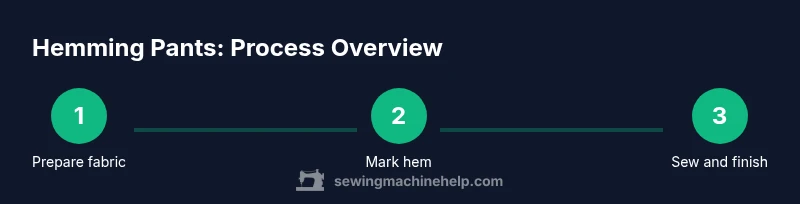
- 1
Prepare the fabric and garment
Lay the pants flat and press the existing hem to release wrinkles. Decide the final hem length based on your style (e.g., ankle length or floor-length) and mark the new hem line on both legs with chalk. Smooth out any creases so the fabric lies flat as you work.
Tip: Always press the hem first to create a crisp crease that guides your folding. - 2
Measure and mark the hem
Use a measuring tape to determine the desired hem length from the floor or a reference point. Mark evenly on both legs, then compare lengths to ensure symmetry. Clip or pin the fold to hold the line in place during sewing.
Tip: Mark from the outside edge to keep the hem even when folded. - 3
Thread the machine and set stitch length
Thread with a color-matching thread and select a stitch length appropriate for the fabric (shorter for lighter fabrics, longer for denser ones). Practice on scrap fabric and adjust tension if you notice puckering or skipped stitches.
Tip: Test with a few stitches on scrap fabric to dial in tension. - 4
Install the needle and foot
Choose a needle suitable for your fabric (e.g., universal 80/12 for most woven fabrics, jeans needle for denim). Attach a standard foot or a walking foot if needed for thicker materials. Ensure the needle is securely installed.
Tip: Use a fresh needle to prevent skipped stitches. - 5
Pin or baste the hem
Pin or baste along the marked line to keep the fold aligned while you sew. If basting, use a longer stitch; remove the baste after sewing. Align both legs carefully for final equality.
Tip: Basting helps you test fit before permanent stitching. - 6
Sew the hem along the mark
Sew close to the folded edge, maintaining a straight line. Keep the fabric taut but not stretched. Backstitch at the start and end to secure the seam.
Tip: Sew slowly, using the edge guide to stay even. - 7
Press the hem and check fit
Press the seam allowance toward the inside and then press the outer fold to set the crease. Try on and verify the length, adjusting if necessary.
Tip: A sharp press makes the hem look professional and lie flat. - 8
Finish and test wash
Finish any raw edges if needed and wash-test the hem to ensure no shrinkage or movement. Inspect both legs for symmetry and adjust if needed.
Tip: Confirm hem depth after washing since fabrics can shrink.
Your Questions Answered
Can I hem stretch fabrics on a home sewing machine?
Yes, you can hem stretch fabrics, but use a stretch stitch or a narrow zigzag and test tension on scrap fabric first. Consider a ballpoint needle to avoid snags.
Yes—use a stretch stitch or a narrow zigzag and test on scrap fabric first. A ballpoint needle helps prevent runs.
What needle is best for denim hems?
For denim, use a jeans needle size 14-16 and a longer stitch, with a walking foot if possible. Test on scraps before sewing the real hem.
For denim, choose a jeans needle and a longer stitch, testing first on scraps.
How do I know how much to hem?
Decide the desired final length based on your footwear and style, then measure from the floor to the hem. Compare both legs and adjust if needed.
Decide length, measure from the floor, and check both legs for symmetry.
Should I press during the hemming process?
Yes, press after folding the hem to set the crease, and press again after stitching to flatten the seam. Good pressing improves the final look.
Absolutely—press after folding, then again after stitching for a crisp finish.
Can I use a rolled hem on pants with a sewing machine?
Rolled hems are possible with a specialized foot and stitch, but for most pants a standard hem with topstitching offers greater durability.
Rolled hems can be done with the right foot, but usually a standard hem is more durable.
Watch Video
The Essentials
- Measure twice, hem once.
- Choose the right needle and stitch for fabric.
- Pressing is essential for a crisp finish.
- Test on scrap fabric before final hem.
- The Sewing Machine Help team recommends practicing on scrap fabric before finishing real garments.