How to Hem Pants with a Sewing Machine
Learn how to hem pants with a sewing machine. This comprehensive guide covers hem methods, machine setup, fabric considerations, and troubleshooting for a clean, professional look.


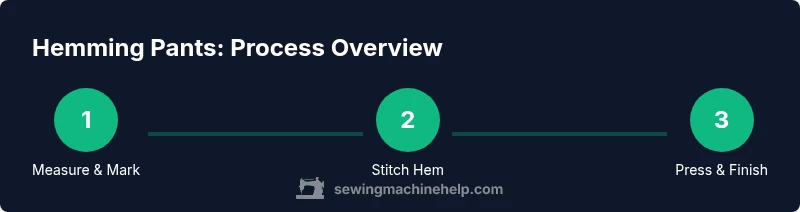
With a standard home sewing machine, you can neatly hem pants using a double-fold or blind-hem method. Start by measuring the hem length, mark with chalk, then press. Choose a straight stitch with a preferred stitch length, or a narrow zigzag for knit fabrics. Test on scrap fabric, adjust the needle and thread, then sew and press for a crisp finish.
Hemming pants: a practical skill for home sewists
Using a sewing machine to hem pants is a practical skill that most home sewists can master with a clear plan. According to Sewing Machine Help, hemming is less about magic and more about choosing the right method, preparing the fabric, and setting up the machine correctly. The goal is a neat, even edge that remembers to hang naturally when worn. In this section you’ll learn how the hem choice depends on fabric type, the pants’ style, and your finishing preferences. You’ll also see how professional techniques translate to a home sewing setup, so you can achieve a tailored look without leaving your workspace. The reader should feel encouraged to practice on scraps first, then move to the actual garment. The key is to balance precision with practical adjustments, so you avoid a rushed hem that puckers or twists.
Tools and Materials You'll Need
Before you begin, gather the items below so you’re not interrupted mid-hem. Having the right tools makes the process smoother and helps you achieve a professional finish. The list mixes essentials with useful add-ons, so you can tailor your setup to woven pants, stretch fabrics, or lightweight denim. As you work, keep a scrap fabric handy to test stitches and tension. This prep step is the quiet foundation for a confident hem.
Preparing the Garment: Measuring, Marking, and Pressing
Accurate measurements are the backbone of a good hem. Start by deciding how much to take off the pant leg and where the final length should sit when worn. Use a flexible tape measure to determine the desired hemline, then transfer that measurement to the fabric with chalk or a erasable marker. Fold the hem to the marked line and press it firmly with a hot, steam-ready iron. This creates a crisp crease and ensures the fabric doesn’t shift while you sew. If you’re working with slippery fabrics, clip or pin the folded edge to keep it aligned. For best results, check the hem against the other leg and adjust so both sides match.
Machine Setup for Hemming
Prepare your machine by threading with a color-matching thread and inserting a needle appropriate for the fabric weight. If you’re hemming woven pants, a standard straight stitch with a length around 2.5–3.0 mm provides a clean, durable hem; for stretch fabrics, a narrow zigzag or a small stretch stitch can prevent puckering. Attach the closest hemming foot you have (double-fold or blind-hem foot if available) to guide the fold and keep stitches close to the folded edge. Test on scrap fabric to verify stitch density and edge alignment. Check that the pressure foot isn’t pinching the fabric and that the bobbin is wound evenly.
Hemming Methods: Double Fold, Blind Hem, and Narrow Hem
There are several reliable hemming options, and the best choice depends on fabric and the desired look. A classic double-fold hem folds the fabric twice and stitches along the lower edge for a strong, nearly invisible finish on woven fabrics. A blind hem uses careful stitching close to the fabric’s face while keeping the thread beneath mostly hidden, ideal for light-weight or dress pants. A narrow hem is perfect for lightweight fabrics or activewear where bulk must be minimized. Each method has its own setup: for a double-fold, measure the double turn and press firmly; for a blind hem, practice catching only the outer edge with the needle; for a narrow hem, reduce stitch length and use a fine needle. Your choice shapes the hem’s durability and appearance.
Finishing, Pressing, and Finishing Details
After stitching, press the seam flat first from the outside to set the stitches. Then press from the inside to flatten the fold and reduce bulk. A pin or clip can help keep the hem in place as you press. If the fabric frays, finish the raw edge before hemming with a quick zigzag or overcast stitch. For darker fabrics, consider a light press to avoid scorching and to preserve color. Finally, hang the pants for a few hours to relax the fabric before wearing, ensuring the hem sits evenly and doesn’t creep.
Troubleshooting Common Issues
If the hem puckers, the stitch length may be too long or the tension on the underside is too tight. Re-thread the machine, ensure the needle isn’t bent, and test on scrap. If the fabric shifts or ripples, re-pin more securely or use a walking foot when working with slippery materials. For bulky fabrics or denim, consider a longer stitch or a slightly wider hem allowance to compensate for thickness. If threads show on the right side, you may be catching too much fabric or the needle is too thick for the chosen fabric. In such cases, switch to a lighter needle and re-test on scrap.
Practice, Fabric Variations, and Next Steps
Practice makes perfect, especially when hemming pants in different fabrics. Start with a mid-weight cotton or twill to build confidence before moving to lightweight chiffon or heavy denim. Each fabric behaves differently when pressed and stitched; adjust your hem allowance, stitch type, and presser foot accordingly. Once you’re comfortable, try hemming three pairs of pants with varying lengths to develop consistency. Over time, you’ll build a small repertoire of hems—double fold for sturdy dress pants, blind hem for casual trousers, and a narrow hem for activewear or lightweight fabrics.
Quick Reference: Common Hem Widths and Edges
- Standard woven hems: 10–12 mm fold width, double fold preferred for durability
- Knit fabrics: narrower hems with stretch stitches or a narrow zigzag to accommodate stretch
- Lightweight fabrics: minimal bulk through a narrow hem or rolled edge
- Heavy fabrics: allow extra hem depth or use a wider hem to reduce stiffness
Final Checklist Before You Wear
- Hem length matches both legs and sits correctly when wearing
- All stitches are secure with no loose threads
- Fabric edges are properly finished to minimize fraying
- The hem looks even from all angles under natural light
- A last press helps set the finish and gives a polished appearance
Tools & Materials
- Sharp fabric scissors(For trimming threads and trimming fabric edges)
- Pins or fabric clips(Secure the hem as you work)
- Measuring tape(Check hem length accurately)
- Chalk or erasable fabric marker(Mark hemline and fold lines)
- Iron and ironing board(Press folds flat for accuracy)
- Sewing machine with appropriate foot(Use straight or zigzag foot; consider a hem foot if available)
- Needle: universal 70/10 or 80/12(Choose weight suitable for fabric)
- Thread: matching color (polyester or cotton-blend)(Balanced weight for durable stitches)
- Seam ripper(Useful if you need to redo the hem)
- Walking foot (optional)(Helpful for slippery fabrics)
- Measuring gauge or clear ruler(Keeps hems precise)
Steps
Estimated time: 60-90 minutes
- 1
Prepare the hem length and mark
Put on the pants and determine the desired hem length. Mark the hemline with chalk or a fabric marker, keeping both legs even. This mark serves as your guide for pressing and stitching.
Tip: Double-check length by folding both legs together and ensuring symmetric marks. - 2
Pin or baste the fold
Fold the edge to the marked hemline and pin or baste at regular intervals. This holds the fold in place while you sew and prevents shifting.
Tip: Begin with a light baste across the fold to avoid creating tension during stitching. - 3
Set up the machine for the hem
Thread the machine with the chosen needle and thread. Attach the appropriate foot (straight- or blind-hem foot) and set stitch length to around 2.5–3.0 mm for woven fabrics.
Tip: Test stitch on scrap fabric to confirm tension and edge alignment before working on your garment. - 4
Sew the hem edge
Sew along the folded edge, keeping the needle close to the fold. For a double-fold hem, sew first along the inner fold, then along the outer edge for a secure finish.
Tip: Use a guiding guide on the presser foot or a ruler to maintain a consistent seam allowance. - 5
Press and finish
Press the hem from the outside to set stitches, then press from the inside to flatten the fold. Trim any loose threads and inspect the hem for evenness.
Tip: Place a press cloth on delicate fabrics to avoid shine or scorching. - 6
Final check
Try on the pants and confirm the hem length and drape. Ensure both legs are even, and the hem sits cleanly above or on the shoes as desired.
Tip: If needed, adjust and re-press before finishing the project.
Your Questions Answered
Can I hem pants without removing the original hem?
Yes, for simple fabrics you can fold the existing edge again and stitch along the new fold. This adds length without altering the lower edge. For thick or structured fabrics, it helps to trim the original hem slightly and re-finish.
You can hem without removing the original hem by folding again and stitching along the new fold, but be mindful of fabric thickness.
What stitch type is best for woven fabrics?
A straight stitch with a mid-range length usually works best for woven pants. If the fabric frays, finish the edge first with a zigzag or overcast stitch. For lightweight fabrics, a small zigzag can help prevent puckering.
For woven fabrics, start with a straight stitch and adjust as needed to prevent puckering.
How do I prevent puckering on delicate fabrics?
Use a sharp needle appropriate for the fabric, a lighter stitch and ensure the fabric is properly supported. A stabilizer or tissue under the hemline can help on very delicate textiles. Always test on scrap before final stitching.
Pucker comes from tension and unsupported fabric; test first and use appropriate needle and stabilizer.
What if I need a narrow hem for lightweight fabrics?
A narrow hem or rolled hem is ideal for light fabrics. Fold a small edge, press, then stitch with a fine needle and a short stitch length. This keeps the hem from becoming bulky while maintaining a clean edge.
Use a narrow or rolled hem with a fine needle for lightweight fabrics.
Can hemming be done on knit fabrics?
Yes, knits can be hemmed with a stretch stitch or a narrow zigzag to preserve stretch. Use a ballpoint needle to avoid snagging, and test how the fabric behaves after bending.
Knit hems require stretch stitches and a ballpoint needle for best results.
How do I finish a curved hem neatly?
Take extra care along curved edges by easing fabric slightly as you sew. Pin parallel to the seam and sew slowly to maintain an even curve. Press regularly to keep shape.
Curved hems need careful easing and steady speed for an even edge.
Watch Video
The Essentials
- Measure twice, hem once to avoid trimming errors
- Choose hem method based on fabric and look
- Test on scrap fabric before sewing on the garment
- Press thoroughly for a professional finish
- Verify evenness by trying on and inspecting both legs