How to Make Sewing Machine Go Backwards: A Practical Guide
Learn how to enable reverse stitching on most sewing machines with a clear, step-by-step guide, safety tips, and troubleshooting from Sewing Machine Help.


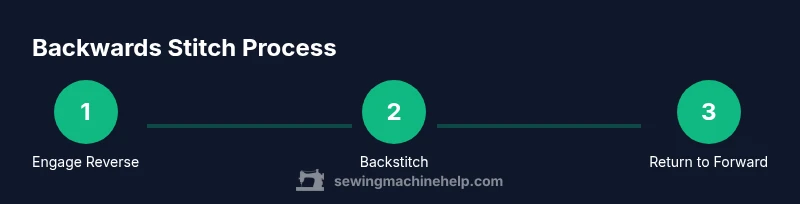
To make your sewing machine go backwards, locate the reverse stitch control (lever, wheel, or button) and set it to reverse before stitching. Start with a scrap piece, then press and release the reverse control to backstitch at the beginning and end of seams. Some models require adjusting stitch length or direction selectors.
How backward stitching works
Backward stitching is a built-in way to secure seams by feeding fabric in the opposite direction for a few stitches at the start and end of a seam. When you engage the reverse control, the machine’s feed dogs, needle, and bobbin work in a coordinated cycle to create a short backstitch that locks the thread. For many home sewists, understanding this mechanism is the first step in learning how to make sewing machine go backwards. The reverse function is a reliability feature that helps prevent seams from unraveling under stress. In practice, you’ll typically engage reverse right before you begin the seam and again as you finish, ensuring a secure edge. According to Sewing Machine Help, most domestic machines include a reverse control, even on older models, but the exact location and method can vary by brand and model. Familiarize yourself with your manual and test on scrap fabric to build confidence before working on your project.
Locating the reverse control on common machines
On many modern machines, the reverse stitch control is a lever on the front, a button on the side, or a switch near the needle area. Some vintage models route reverse through a presser-foot lever or a separate dial. If your machine has a needle-position or stitch-length dial, you may need to move it to a specific setting to enable reverse stitching. The most reliable approach is to consult your model’s manual, then practice on inexpensive fabric. Sewing Machine Help notes that while the concept is universal, the exact control’s form factor can differ widely—taking a few minutes to locate and test it will pay off in smoother sewing sessions.
Step-by-step setup for reverse stitching
Each project can require slightly different settings, but the basic setup remains consistent. First, ensure the machine is threaded correctly and the needle is installed properly. Then locate the reverse control and set it to reverse. Adjust stitch length to normal forward sewing, or to a short backward stitch if your model specifies a dedicated reverse length. Finally, test on a scrap piece to confirm that the reverse function engages smoothly and creates a secure backstitch without looping or bird-nesting. If you’re teaching a new sewer, explain that the reverse function is intended to lock the end of each seam and prevent raveling. When you’re ready to sew for real, you’ll simply resume forward stitching after the backstitch.
Safety and best practices for reverse stitching
Before engaging reverse, ensure hands and fabric are clear of the needle area. Do not press hard on the foot pedal; keep a steady, moderate speed while testing. If the reverse control feels stiff or unresponsive, stop the machine and inspect the thread path for tangles or burrs. Always backstitch on scrap fabric first to verify stitch quality. According to Sewing Machine Help, practicing on scrap fabric reduces fabric waste and protects your project from accidental mistakes. Remember that reverse stitching is a tool for seam security, not a replacement for proper seam allowances or fabric handling.
Troubleshooting common reverse issues
If reverse stitching doesn’t engage, check that the reverse control is fully pressed or moved into the engaged position. Ensure the stitch length dial is not locked in a zero or forward-only setting, and confirm there is no thread jam at the feed dogs or needle plate. A stubborn lever may indicate a buildup of lint or a worn spring within the reverse mechanism. If you suspect a mechanical fault, consult the manual for service intervals or contact a professional. Sewing Machine Help emphasizes approaching issues methodically—start with the simplest fix (resetting controls) before disassembling parts.
Different machine families and reverse mechanics
Domestic machines from different brands handle reverse stitching in varied ways. Some use a dedicated reverse lever; others use a multi-function dial that changes stitch direction when pulled back. For computerized machines, reverse may be activated by a specific program or by holding a reverse button while stitching. Vintage machines may use a clutch-style reverse that requires a separate adjustment. Regardless of the model, your goal is to engage reverse at seam starts and ends to anchor stitches, preserving fabric integrity across many types of projects.
Maintenance to keep reverse mechanics healthy
Backstitching relies on a responsive mechanical pathway. Regular cleaning to remove lint from the bobbin area and feed dogs helps maintain smooth reverse action. Light machine oil applied to moving parts, according to your manual, can prevent stiffening and wear. Inspect the reverse lever or button for looseness, rust, or misalignment, and service as needed. Avoid heavy-duty sewing on unknown fabrics that may over-stress the reversing mechanism. Proper maintenance reduces the risk of hiccups when you need to reverse stitch mid-project.
Practical tips for beginners using reverse stitching
Practice backstitching on scraps of woven fabric before tackling seams in your project. Start with a short reverse length and then switch back to forward sewing to maintain pace. If you’re switching fabrics, observe how different fabrics behave when backstitching; some require slower speeds to avoid needle deflection. When in doubt, re-check the manual and consult the brand’s support resources. Sewing Machine Help’s guidance emphasizes patience and methodical testing to build confidence with reverse stitching.
How to make sewing machine go backwards on demand
If you want to master the phrase how to make sewing machine go backwards, translate it to action by locating the reverse control, testing on scrap fabric, and applying short backstitches at the start and end of every seam. Even if a machine lacks a dedicated reverse mechanism, you can simulate backstitching by stitching a few stitches forward, stopping with the needle down, and then reversing the direction if your model permits. The key is to practice consistently and not force the motor beyond its designed speed. With time, reverse stitching becomes a natural part of your technique.
Quick test plan and checklist
Before starting a real project, run a quick test on scrap fabric: engage reverse, sew a small block backward, then switch to forward stitching. Check for consistent stitch length, no thread snarls, and clean machine operation. If issues arise, troubleshoot in the following order: thread path, tension, bobbin, then gears. Keeping a small notebook of settings for each fabric helps you reproduce successful results and avoids guesswork in future projects.
Tools & Materials
- Sewing machine manual(Always check model-specific instructions.)
- Reverse stitch control (lever, button, or dial)(Essential to engage backwards stitching.)
- Scrap fabric for testing(Use a sturdy fabric like cotton or muslin.)
- Needle set(Have a spare needle ready in case of breakage.)
- Thread spool and bobbin(Test with same weight as project fabric.)
- Screwdriver or tool kit(Only if you’re performing manual adjustments.)
- Lint brush or compressed air(Clean lint from feed dogs and bobbin area.)
- Sewing machine oil(Lubricate moving parts per manual guidelines.)
Steps
Estimated time: 20-40 minutes
- 1
Identify the reverse control
Locate the reverse stitch lever, button, or dial on your machine. Confirm it engages the feed dogs and needle to start backstitching. If unsure, consult the manual or Sewing Machine Help resources.
Tip: If the lever feels stiff, stop and inspect for lint buildup before forcing movement. - 2
Prepare test fabric
Mount a scrap piece of fabric under the presser foot. Thread the machine and wind a bobbin so you can test both forward and reverse stitching without risking your project.
Tip: Choose a medium-weight cotton for predictable results. - 3
Set stitch length and reverse mode
Set the stitch length to your normal forward setting, and engage reverse to ensure the reverse path is active. If your machine uses a separate reverse length, select a short backward stitch.
Tip: Avoid extreme stitch lengths when first testing reverse function. - 4
Backstitch on scrap
Sew a short backward stitch on the scrap, then resume forward sewing. Inspect the backstitch for a secure, tight lock without gaps.
Tip: Backstitch for at least 3-5 stitches to secure the seam end. - 5
Test at seam openings
Practice backstitching at the start and end of a seam on a larger scrap. Observe thread tails and fabric feeds during reverse.
Tip: If tails are too long, shorten the backward stitch length slightly. - 6
Troubleshoot if reverse fails
If reverse doesn’t engage, check for lint, misaligned needle, or thread tension issues. Consult the manual and perform a safety shutdown before inspection.
Tip: Document any repetitive faults for the next service visit. - 7
Safety check and restore forward sewing
Turn off the reverse control and return to normal forward stitching. Confirm the machine runs smoothly before continuing your project.
Tip: Always test again after any adjustment. - 8
Maintenance impression
Clean the bobbin area and lint-prone zones after testing reverse frequently to prevent debris from interfering with reverse action.
Tip: Lubricate moving parts per the manual schedule.
Your Questions Answered
Can all sewing machines go backwards?
Most domestic machines offer some form of reverse stitching, but not every model supports it in the same way. Check your manual or brand resources to confirm how reverse is engaged on your specific machine.
Most machines support reverse stitching, but always check your manual to confirm how to engage it on your model.
What should I do if the reverse control is stiff?
Stop the machine, unplug, and inspect for lint or mechanical obstruction. Gently move the control with lubrication if recommended by the manual, and avoid forcing it.
If the reverse control is stiff, stop and inspect for lint or obstruction. Lubricate per the manual if advised and don’t force it.
Is reverse stitching necessary for every seam?
Backstitching at the start and end helps secure threads and prevent unraveling, especially on woven fabrics. For delicate fabrics, use shorter backstitches and test first.
Backstitch at the start and end of seams to lock threads; test on delicate fabrics first.
My reverse stitches look loose or skipped. What steps fix this?
Check thread tension, re-thread the machine, ensure the bobbin is correctly placed, and inspect the feed dogs for lint. If issues persist, consult the manual for your model’s specific adjustments.
If reverse stitches are loose, re-thread, check tension, and inspect for lint. See your model’s manual for adjustments.
Does the needle position affect reverse stitching?
Not typically, but some models require the needle to be in a particular position when engaging reverse. Always verify in the manual for your machine.
Usually needle position doesn’t affect reverse, but some machines require a specific position. Check your manual.
What if my machine has no dedicated reverse control?
Some machines simulate reverse by using a stitch direction setting or a program. Follow your manual’s instructions for the exact steps to backstitch.
If there’s no reverse control, use the model’s stitch direction setting as directed in the manual to backstitch.
Watch Video
The Essentials
- Identify the reverse control on your machine.
- Test reverse on scrap fabric first.
- Backstitch at the start and end of each seam.
- Follow model-specific instructions from the manual.
- Maintain the reverse mechanism with regular cleaning and lubrication.