How to Set a Sewing Machine for Thick Fabric Effectively
Learn practical, tested steps to optimize your sewing machine for thick fabrics like denim and canvas. From needle choice to tension, stitch length, and testing on scraps, achieve reliable results with confidence.


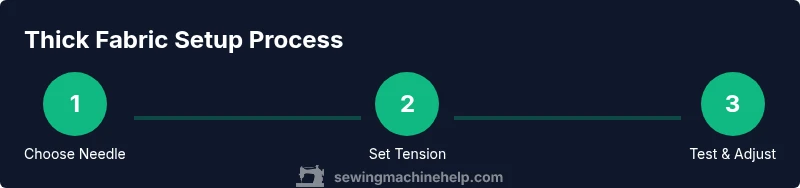
In this guide you will learn how to set sewing machine for thick fabric safely and effectively. You’ll choose the right needle and thread, adjust tension, increase presser foot pressure, and set stitch length appropriate for dense material. You’ll also test on scrap fabric, select suitable stitches, and troubleshoot common issues like skipped stitches.
Why Thick Fabric Demands Special Settings
Thick fabrics such as denim, canvas, and upholstery textiles push more fabric through the machine than light-weight materials. Understanding how to set sewing machine for thick fabric helps prevent skipped stitches, loose seams, and needle breaks. Start by gauging the fabric’s density, selecting a sturdy needle and thread, and adjusting tension and presser foot pressure. Always test on a scrap before committing to your project. According to Sewing Machine Help, testing on scraps and documenting your settings builds consistency and confidence, especially for beginners working with dense materials.
Tools, Needles, and Footing You'll Need
Before you begin, assemble the right tools: a heavy-duty needle (e.g., size 90/14 or 100/16), heavy-duty thread, and a compatible presser foot such as a walking foot. You may also need a thick fabric needle, a thimble, fabric chalk, and extra scrap fabric for testing. Make sure your machine is clean, the bobbin is wound correctly, and you have spare needles at the ready. Optional accessories like a clear foot can help see stitch lines on dense fabrics.
Basic Machine Setup for Thick Fabric
Set up the machine with these baseline adjustments: install a sharp ballpoint or universal needle in the upper position, raise the needle if needed to avoid thread nesting, and select a longer stitch length for dense fabric. Use a walking foot if your machine supports it to feed fabric evenly. Reduce the feed tension slightly if fabric is shifting excessively, but test to confirm it won’t cause loose stitches. Plug in and power on, re-thread the machine, and do a quick bobbin check.
Step-by-Step: Preparing the Fabric and Machine
Inspect fabric for loose threads and trim uneven edges to prevent snagging. Align fabric edges and pin or clip layers to prevent slipping. Thread the machine with the correct upper thread path and ensure the bobbin is properly wound and threaded. Do a quick test stitch on a scrap piece to verify tension, stitch length, and foot pressure. If the test shows skipped stitches or puckering, adjust gradually and re-test until the feed is smooth.
Adjusting Tension and Stitch Length for Thick Fabrics
Thick fabrics require a balanced tension so stitches sit flat without looping. Start with a slightly looser upper thread tension than normal and monitor bobbin tension. Increase stitch length to longer than standard (2.5–3.5 mm as a reference) depending on fabric density; this reduces perforation and helps feed dogs manage bulk. When sewing multiple layers, slow down the sewing speed to maintain control and accuracy.
Needle Selection and Presser Foot Choices
For thick fabrics, choose a heavy-duty needle designed for dense materials. A walking foot is highly recommended to prevent layers from shifting. If you’re sewing with leather or very heavy upholstery, consider a denim needle and a taller presser foot height. Ensure the needle is installed securely and isn’t bent; a bent needle can cause skipped stitches or fabric damage.
Common Stitch Choices for Thick Materials
Straight stitches work well for seams that endure stress, while a wide zigzag can accommodate slight fabric stretch. For many thick fabrics, a dense straight stitch with longer length provides durability without bunching. If edge finishing is needed, a wide stitch or overedge stitch can help reduce fraying. Always test several options on a scrap before finalizing.
Test Swatches and Troubleshooting
Always sew a multi-layer test swatch that mimics your project before committing to the final piece. If you notice thread breaks, recheck needle size and threading path. If fabric puckers, reassess tension and stitch length, and consider a walking foot or a different needle. Document the settings that work best for future projects.
Maintenance and Safety for Thick Fabric Sewing
Thick fabrics can produce more lint and fabric dust. Clean the bobbin area and feed dogs after finishing projects to maintain smooth operation. Use eye protection if you are cutting multiple layers and store needles safely. Slow down when feeding dense fabrics to reduce the risk of needle bending or breaking. Regularly inspect your machine’s belts and oil points if your model requires routine maintenance.
Tools & Materials
- Needle: heavy-duty (e.g., size 90/14 or 100/16)(Ballpoint or universal needle recommended for dense fabrics; denim needle for very heavy material.)
- Thread: heavy-duty polyester or cotton-wrapped core(Match needle size and fabric weight; avoid thin threads.)
- Presser Foot: walking foot or extra-high foot(Walking foot helps feed multiple layers evenly.)
- Bobbin: high-quality bobbin with appropriate thread(Wound evenly; ensure correct insertion.)
- Scissors, pins or clips, fabric chalk(Sharp scissors; clips help avoid pinholes in dense fabric.)
- Fabric scraps for test swatches(Use similar density to final project.)
- Thimble and seam ripper(Optional but handy for dense work.)
Steps
Estimated time: 45-60 minutes
- 1
Prepare the machine and thread
Power on, re-thread the machine, and verify the upper and bobbin threads are correctly nested. Install the heavy-duty needle securely and verify there is no burr on the needle. This minimizes skipped stitches when feeding thick fabric.
Tip: Double-check thread path to avoid nesting or bird-nesting under the fabric. - 2
Install appropriate needle and foot
If you expect multiple layers, attach a walking foot and ensure the needle size matches the fabric density. Raise the presser foot slightly during needle insertion to prevent needle absorption of fabric.
Tip: A walking foot can dramatically improve feeding of bulky layers. - 3
Rethread and test
Rethread the machine with the correct upper thread path and test on a scrap swatch that matches your project. Look for even stitches and no puckering or looping.
Tip: If you see looping, recheck tension and thread path. - 4
Set tension and stitch length
Start with a looser upper tension than usual and a longer stitch length appropriate for dense fabric. Adjust gradually in small increments while testing on scraps.
Tip: Document the working settings for future projects. - 5
Sew a test seam
Sew a small seam on scrap, watch feed and seams for uniformity. If fabric shifts, re-pin and consider reducing speed.
Tip: Move slowly over bulk to avoid needle bending. - 6
Proceed to final project
When test results are satisfactory, continue sewing with consistent speed and frequent stops to ensure nothing shifts.
Tip: Take breaks if the fabric fatigues pin or shifts.
Your Questions Answered
What needle size is best for thick fabrics like denim?
For denim and similar dense fabrics, use a heavy-duty needle such as 90/14 or 100/16. Test on scraps to confirm stitch formation and avoid skipped stitches.
Use a heavy-duty needle like 90/14 or 100/16 and test on scraps first.
Should I use a walking foot for thick fabric?
Yes. A walking foot helps pull multiple layers evenly through the needle, reducing fabric shift and puckering.
Yes—use a walking foot to feed dense layers evenly.
Can I adjust tension to fix skipped stitches on thick fabric?
Yes. Start with a slightly looser upper tension and test; adjust bobbin tension if needed. Each fabric may require different settings.
Loosen the top tension a bit and test, adjusting as needed.
Is a longer stitch length better for thick fabrics?
A longer stitch length reduces bulk and helps fabric feed, usually around 2.5–3.5 mm depending on density.
Yes, longer stitches are generally better for thick fabrics.
What should I do if the needle hits the fabric?
Stop sewing, remove fabric, re-thread, and ensure you are using the correct needle for the material. Check for burrs on the needle.
Stop, rethread, and switch to the appropriate needle if needed.
Watch Video
The Essentials
- Choose the right needle and thread for dense fabrics.
- Test on scrap fabric before final sewing.
- Use a walking foot for multi-layer feeding.
- Adjust tension and stitch length gradually and document results.
- Sew slowly when handling several layers to maintain control.